4.1 - Excretion in flowering plants
Excretion (highlighted in yellow)
Day Night
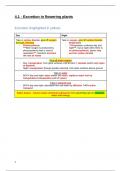
Take in carbon dioxide, give off oxygen Take in oxygen, give off carbon dioxide
(through stomata) - Respiration
- Photosynthesis - ***Respiration continues day and
- ***More oxygen is produced by night***, but at night when there is
photosynthesis than is used in no photosynthesis, plants only
respiration***, therefore excretes excrete carbon dioxide
the rest as waste
Give off water vapour
- Day: transpiration, from plant surfaces, ESPECIALLY stomata (which only open
at daytime)
- Night: transpiration (though greatly reduced), from plant surfaces above ground
Take in water
- BOTH day and night: water drawn into roots, replaces water lost by
transpiration (transpiration pull of xylem)
Take in mineral ions
- BOTH day and night: absorbed from soil water by diffusion THEN active
transport
Fallen leaves - remove waste chemical substances from plant/help plant to conserve
water and energy
1
Excretion (highlighted in yellow)
Day Night
Take in carbon dioxide, give off oxygen Take in oxygen, give off carbon dioxide
(through stomata) - Respiration
- Photosynthesis - ***Respiration continues day and
- ***More oxygen is produced by night***, but at night when there is
photosynthesis than is used in no photosynthesis, plants only
respiration***, therefore excretes excrete carbon dioxide
the rest as waste
Give off water vapour
- Day: transpiration, from plant surfaces, ESPECIALLY stomata (which only open
at daytime)
- Night: transpiration (though greatly reduced), from plant surfaces above ground
Take in water
- BOTH day and night: water drawn into roots, replaces water lost by
transpiration (transpiration pull of xylem)
Take in mineral ions
- BOTH day and night: absorbed from soil water by diffusion THEN active
transport
Fallen leaves - remove waste chemical substances from plant/help plant to conserve
water and energy
1