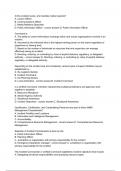
At the incident scene, who handles media inquiries?
A. Liaison Officer
B. Communications Officer
C. Media Relations Specialist
D. Public Information Officer - correct answer-D. Public Information Officer
Command is:
A. The ability to control information exchange within and across organizations involved in an
incident.
B. Assumed by the individual who is the highest-ranking person on the scene regardless of
experience or training level.
C. Based on the number of individuals or resources that one supervisor can manage
effectively during an incident.
D. Directing, ordering, or controlling by virtue of explicit statutory, regulatory, or delegated
authority. - correct answer-D. Directing, ordering, or controlling by virtue of explicit statutory,
regulatory, or delegated authority.
Depending on the incident size and complexity, various types of support facilities may be
established by:
A. the Logistics Section
B. Incident Command
C. the Planning Section
D. Local Authorities - correct answer-B. Incident Command
In a Unified Command, members representing multiple jurisdictions and agencies work
together to establish:
A. Resource Allocations
B. Shared Agency Authority
C. Situational Awareness
D. Incident Objectives - correct answer-C. Situational Awareness
Qualification, Certification, and Credentialing Personnel are part of which NIMS
Management Characteristic?
A. Incident Facilities and Locations
B. Information and Intelligence Management
C. Accountability
D. Comprehensive Resource Management - correct answer-D. Comprehensive Resource
Management
Selection of Incident Commanders is done by the:
A. Public Information Officer
B. Planning Officer
C. Jurisdiction or organization with primary responsibility for the incident
D. Emergency Operations manager - correct answer-C. Jurisdiction or organization with
primary responsibility for the incident
The Incident Commander or Unified Command establishes incident objectives that include:
A. Delegating functional responsibilities and specifying resource types.
A. Liaison Officer
B. Communications Officer
C. Media Relations Specialist
D. Public Information Officer - correct answer-D. Public Information Officer
Command is:
A. The ability to control information exchange within and across organizations involved in an
incident.
B. Assumed by the individual who is the highest-ranking person on the scene regardless of
experience or training level.
C. Based on the number of individuals or resources that one supervisor can manage
effectively during an incident.
D. Directing, ordering, or controlling by virtue of explicit statutory, regulatory, or delegated
authority. - correct answer-D. Directing, ordering, or controlling by virtue of explicit statutory,
regulatory, or delegated authority.
Depending on the incident size and complexity, various types of support facilities may be
established by:
A. the Logistics Section
B. Incident Command
C. the Planning Section
D. Local Authorities - correct answer-B. Incident Command
In a Unified Command, members representing multiple jurisdictions and agencies work
together to establish:
A. Resource Allocations
B. Shared Agency Authority
C. Situational Awareness
D. Incident Objectives - correct answer-C. Situational Awareness
Qualification, Certification, and Credentialing Personnel are part of which NIMS
Management Characteristic?
A. Incident Facilities and Locations
B. Information and Intelligence Management
C. Accountability
D. Comprehensive Resource Management - correct answer-D. Comprehensive Resource
Management
Selection of Incident Commanders is done by the:
A. Public Information Officer
B. Planning Officer
C. Jurisdiction or organization with primary responsibility for the incident
D. Emergency Operations manager - correct answer-C. Jurisdiction or organization with
primary responsibility for the incident
The Incident Commander or Unified Command establishes incident objectives that include:
A. Delegating functional responsibilities and specifying resource types.