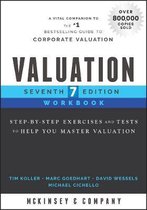
BOOK SUMMARY ADVANCED CORPORATE FINANCE
Chapter 3, Fundamental Principles of Value Creation
The conversion of revenues into cash flows – and earnings – is a function of a company’s return on invested capital
(ROIC) and its revenue growth. The amount of value a company creates is governed ultimately by its ROIC,
revenue growth, and ability to sustain both over time. Only if ROIC exceeds the cost of capital will growth increase
a company’s value.
Free cash flow is what’s left over for investors once investments have been subtracted from earnings. We can value
a company by discounting their future free cash flows at a discount rate that reflects what investors expect to earn
from investing in the companies – the cost of capital. It can also be expressed as price-to-earnings ratio (P/Es). Two
companies with the same earnings and growth rates can have different earning multiples due to different cash
flows. The differences in ROIC are what drives difference in investment rates.
𝐺𝑟𝑜𝑤𝑡ℎ = 𝑅𝑂𝐼𝐶 × 𝐼𝑛𝑣𝑒𝑠𝑡𝑚𝑒𝑛𝑡 𝑅𝑎𝑡𝑒
𝐶𝑎𝑠ℎ 𝐹𝑙𝑜𝑤 = 𝐸𝑎𝑟𝑛𝑖𝑛𝑔𝑠 × (1 − 𝐼𝑛𝑣𝑒𝑠𝑡𝑚𝑒𝑛𝑡 𝑅𝑎𝑡𝑒)
𝐶𝑎𝑠ℎ 𝐹𝑙𝑜𝑤 = 𝐸𝑎𝑟𝑛𝑖𝑛𝑔𝑠 × (1 − 𝐺𝑟𝑜𝑤𝑡ℎ/𝑅𝑂𝐼𝐶)
Since these variables are mathematically tied, a company’s performance can be described with any two variables.
Usually, it is described with growth and ROIC as you can analyze these across time and versus peers.
As growth slows at any level of ROIC, the cash generated per dollar of NOPAT (Net Operating Profit After Taxes)
increases. This is why even maturing companies experiencing slowing growth can pay out much larger amounts
of their earnings to investors. Companies with high ROIC tend to generate lots of cash flow as long as they are
growing modestly.
When simplifying some assumptions – i.e. that a company grows at a constant rate and maintains a constant ROIC
- the discounted cash flow can be reduced to a simple formula, the value driver formula.
𝑔
𝑁𝑂𝑃𝐴𝑇!"# D1 − 𝑅𝑂𝐼𝐶 E
𝑉𝑎𝑙𝑢𝑒 =
𝑊𝐴𝐶𝐶 − 𝑔
Improving ROIC, for any level of growth, always increases value because it reduces the investment required for
growth. The impact of growth is ambiguous, as it appears in both the numerator and denominator. Thus, a higher
ROIC is always good, because it means that the company doesn’t have to invest as much to achieve a given level
of growth. The same cannot be said of growth. When ROIC is high, faster growth increases value. But when ROIC
is lower than the company’s cost of capital, faster growth destroys value. When return on capital is lower than the
cost of capital, growing faster means investing more at a value-destroying return. Where ROIC equals the cost of
capital, we can draw the dividing line between creating and destroying value through growth, value is neither
created nor destroyed, regardless of the growth rate. Companies already earning a high ROIC can generate more
additional value by increasing their rate of growth, rather than their ROIC. Low-ROIC companies will generate
relatively more value by focusing on increasing their ROIC.
However, not all growth is equally value-creating, a company must understand the pecking order of growth-
related value creation that applies to its industry and company type. New products typically create more value for
shareholders, while acquisitions typically create the least, due to differences in returns on capital for the different
types of growth.
Growth strategies based on organic new-product development frequently have the highest returns because they
don’t require much new capital, compared to acquisitions which require that the entire investment be made up
front. The interaction between growth and ROIC is a key factor to consider when assessing the likely impact of a
particular investment on a company’s overall ROIC.
A company can increase ROIC by either improving profit margins or improving capital productivity. For future
growth, it does not matter which of these two is chosen, however, for current operation it does. At moderate ROIC
levels, a 1%-point increase in ROIC through margin improvement will have a moderately higher impact on value
relative to improving capital productivity. At high levels of ROIC, improving ROIC by increasing margins will
create much more value than an equivalent ROIC increase by improving capital productivity.
, 𝐸𝑐𝑜𝑛𝑜𝑚𝑖𝑐 𝑃𝑟𝑜𝑓𝑖𝑡 = 𝐼𝑛𝑣𝑒𝑠𝑡𝑒𝑑 𝐶𝑎𝑝𝑖𝑡𝑎𝑙 × (𝑅𝑂𝐼𝐶 − 𝐶𝑜𝑠𝑡 𝑂𝑓 𝐶𝑎𝑝𝑖𝑡𝑎𝑙)
Economic profit combines ROIC and size into a currency metric and measures the value created by a company in
a single period. It is the spread between the return on invested capital and the cost of capital times the amount of
invested capital. It is also useful for comparing the value creation of different companies or business units.
Measuring performance in terms of economic profit encourages a company to undertake investments that earn
more than their cost of capital, even if their return is lower than the current average return. A second method to
value a company is by discounting its projected economic profit at the cost of capital and adding the starting
invested capital.
𝑉𝑎𝑙𝑢𝑒 = 𝑆𝑡𝑎𝑟𝑡𝑖𝑛𝑔 𝐼𝑛𝑣𝑒𝑠𝑡𝑒𝑑 𝐶𝑎𝑝𝑖𝑡𝑎𝑙 + 𝑃𝑉(𝑃𝑟𝑜𝑗𝑒𝑐𝑡𝑒𝑑 𝐸𝑐𝑜𝑛𝑜𝑚𝑖𝑐 𝑃𝑟𝑜𝑓𝑖𝑡)
Anything that does not increase cash flows does not create value. That means value is conserved when a company
changes the ownership or claims to its cash flows but does not change the total available cash flows. Similarly,
changing the appearance of the cash flows without actually changing the cash flows, does not change the value of
a company. Even though there is no cash effect when executive stock options are issued, they reduce the cash flow
available to existing shareholders by diluting their ownership when the options are exercised. Thus, executives do
not need to worry about any effects that changes in stock option accounting would have on their share price.
Executives should focus on increasing cash flows rather than finding gimmicks that merely redistribute value
among investors.
*Three examples in book where applying the conservation of value principle can be useful: share repurchases, acquisitions, and
financial engineering.*
Terminology and Equations of Chapter 3
- NOPAT (Net Operating Profit After Taxes) represents the profits generated from the company’s core
operations after subtracting the income taxes related to those core operations.
𝑵𝑶𝑷𝑨𝑻 = 𝑰𝒏𝒗𝒆𝒔𝒕𝒆𝒅 𝑪𝒂𝒑𝒊𝒕𝒂𝒍 × 𝑹𝑶𝑰𝑪
- Invested Capital represents the cumulative amount the business has invested in its core operations –
primarily property, plant, and equipment and working capital.
- Net Investment is the increase in invested capital from one year to the next:
𝑵𝒆𝒕 𝑰𝒏𝒗𝒆𝒔𝒕𝒎𝒆𝒏𝒕 = 𝑰𝒏𝒗𝒆𝒔𝒕𝒆𝒅 𝑪𝒂𝒑𝒊𝒕𝒂𝒍𝒕%𝟏 − 𝑰𝒏𝒗𝒆𝒔𝒕𝒆𝒅 𝑪𝒂𝒑𝒊𝒕𝒂𝒍𝒕
- Free Cash Flow (FCF) is the cash flow generated by the core operations of the business after deducting
investments in new capital:
𝑭𝑪𝑭 = 𝑵𝑶𝑷𝑨𝑻 − 𝑵𝒆𝒕 𝑰𝒏𝒗𝒆𝒔𝒕𝒎𝒆𝒏𝒕
𝑭𝑪𝑭 = 𝑵𝑶𝑷𝑨𝑻 − (𝑵𝑶𝑷𝑨𝑻 × 𝑰𝑹)
𝑭𝑪𝑭 = 𝑵𝑶𝑷𝑨𝑻(𝟏 − 𝑰𝑹)
𝒈
𝑭𝑪𝑭 = 𝑵𝑶𝑷𝑨𝑻 D𝟏 − E
𝑹𝑶𝑰𝑪
- Return On Invested Capital (ROIC) is the return the company earns on each dollar invested in the
business:
𝑵𝑶𝑷𝑨𝑻
𝑹𝑶𝑰𝑪 =
𝑰𝒏𝒗𝒆𝒔𝒕𝒆𝒅 𝑪𝒂𝒑𝒊𝒕𝒂𝒍
It can be defined in two ways: as the return on all capital or as the return on new, or incremental, capital.
- Investment Rate (IR) is the proportion of NOPAT invested back into the business:
𝑵𝒆𝒕 𝑰𝒏𝒗𝒆𝒔𝒕𝒎𝒆𝒏𝒕
𝑰𝑹 =
𝑵𝑶𝑷𝑨𝑻
- Weighted Average Cost of Capital (WACC) is the rate of return that investors expect to earn from
investing in the company and therefore the appropriate discount rate for the free cash flow.
- Growth (g) is the rate at which the company’s NOPAT and cash flow grow each year.
𝑭𝑪𝑭𝒕"𝟏
- 𝑽𝒂𝒍𝒖𝒆 =
𝑾𝑨𝑪𝑪+𝒈
𝒈
𝑵𝑶𝑷𝑨𝑻𝒕"𝟏 1𝟏+ 2
- 𝑽𝒂𝒍𝒖𝒆 = 𝑾𝑨𝑪𝑪+𝒈
𝑹𝑶𝑰𝑪
- 𝒈 = 𝑹𝑶𝑰𝑪 × 𝑰𝑹
Chapter 3, Fundamental Principles of Value Creation
The conversion of revenues into cash flows – and earnings – is a function of a company’s return on invested capital
(ROIC) and its revenue growth. The amount of value a company creates is governed ultimately by its ROIC,
revenue growth, and ability to sustain both over time. Only if ROIC exceeds the cost of capital will growth increase
a company’s value.
Free cash flow is what’s left over for investors once investments have been subtracted from earnings. We can value
a company by discounting their future free cash flows at a discount rate that reflects what investors expect to earn
from investing in the companies – the cost of capital. It can also be expressed as price-to-earnings ratio (P/Es). Two
companies with the same earnings and growth rates can have different earning multiples due to different cash
flows. The differences in ROIC are what drives difference in investment rates.
𝐺𝑟𝑜𝑤𝑡ℎ = 𝑅𝑂𝐼𝐶 × 𝐼𝑛𝑣𝑒𝑠𝑡𝑚𝑒𝑛𝑡 𝑅𝑎𝑡𝑒
𝐶𝑎𝑠ℎ 𝐹𝑙𝑜𝑤 = 𝐸𝑎𝑟𝑛𝑖𝑛𝑔𝑠 × (1 − 𝐼𝑛𝑣𝑒𝑠𝑡𝑚𝑒𝑛𝑡 𝑅𝑎𝑡𝑒)
𝐶𝑎𝑠ℎ 𝐹𝑙𝑜𝑤 = 𝐸𝑎𝑟𝑛𝑖𝑛𝑔𝑠 × (1 − 𝐺𝑟𝑜𝑤𝑡ℎ/𝑅𝑂𝐼𝐶)
Since these variables are mathematically tied, a company’s performance can be described with any two variables.
Usually, it is described with growth and ROIC as you can analyze these across time and versus peers.
As growth slows at any level of ROIC, the cash generated per dollar of NOPAT (Net Operating Profit After Taxes)
increases. This is why even maturing companies experiencing slowing growth can pay out much larger amounts
of their earnings to investors. Companies with high ROIC tend to generate lots of cash flow as long as they are
growing modestly.
When simplifying some assumptions – i.e. that a company grows at a constant rate and maintains a constant ROIC
- the discounted cash flow can be reduced to a simple formula, the value driver formula.
𝑔
𝑁𝑂𝑃𝐴𝑇!"# D1 − 𝑅𝑂𝐼𝐶 E
𝑉𝑎𝑙𝑢𝑒 =
𝑊𝐴𝐶𝐶 − 𝑔
Improving ROIC, for any level of growth, always increases value because it reduces the investment required for
growth. The impact of growth is ambiguous, as it appears in both the numerator and denominator. Thus, a higher
ROIC is always good, because it means that the company doesn’t have to invest as much to achieve a given level
of growth. The same cannot be said of growth. When ROIC is high, faster growth increases value. But when ROIC
is lower than the company’s cost of capital, faster growth destroys value. When return on capital is lower than the
cost of capital, growing faster means investing more at a value-destroying return. Where ROIC equals the cost of
capital, we can draw the dividing line between creating and destroying value through growth, value is neither
created nor destroyed, regardless of the growth rate. Companies already earning a high ROIC can generate more
additional value by increasing their rate of growth, rather than their ROIC. Low-ROIC companies will generate
relatively more value by focusing on increasing their ROIC.
However, not all growth is equally value-creating, a company must understand the pecking order of growth-
related value creation that applies to its industry and company type. New products typically create more value for
shareholders, while acquisitions typically create the least, due to differences in returns on capital for the different
types of growth.
Growth strategies based on organic new-product development frequently have the highest returns because they
don’t require much new capital, compared to acquisitions which require that the entire investment be made up
front. The interaction between growth and ROIC is a key factor to consider when assessing the likely impact of a
particular investment on a company’s overall ROIC.
A company can increase ROIC by either improving profit margins or improving capital productivity. For future
growth, it does not matter which of these two is chosen, however, for current operation it does. At moderate ROIC
levels, a 1%-point increase in ROIC through margin improvement will have a moderately higher impact on value
relative to improving capital productivity. At high levels of ROIC, improving ROIC by increasing margins will
create much more value than an equivalent ROIC increase by improving capital productivity.
, 𝐸𝑐𝑜𝑛𝑜𝑚𝑖𝑐 𝑃𝑟𝑜𝑓𝑖𝑡 = 𝐼𝑛𝑣𝑒𝑠𝑡𝑒𝑑 𝐶𝑎𝑝𝑖𝑡𝑎𝑙 × (𝑅𝑂𝐼𝐶 − 𝐶𝑜𝑠𝑡 𝑂𝑓 𝐶𝑎𝑝𝑖𝑡𝑎𝑙)
Economic profit combines ROIC and size into a currency metric and measures the value created by a company in
a single period. It is the spread between the return on invested capital and the cost of capital times the amount of
invested capital. It is also useful for comparing the value creation of different companies or business units.
Measuring performance in terms of economic profit encourages a company to undertake investments that earn
more than their cost of capital, even if their return is lower than the current average return. A second method to
value a company is by discounting its projected economic profit at the cost of capital and adding the starting
invested capital.
𝑉𝑎𝑙𝑢𝑒 = 𝑆𝑡𝑎𝑟𝑡𝑖𝑛𝑔 𝐼𝑛𝑣𝑒𝑠𝑡𝑒𝑑 𝐶𝑎𝑝𝑖𝑡𝑎𝑙 + 𝑃𝑉(𝑃𝑟𝑜𝑗𝑒𝑐𝑡𝑒𝑑 𝐸𝑐𝑜𝑛𝑜𝑚𝑖𝑐 𝑃𝑟𝑜𝑓𝑖𝑡)
Anything that does not increase cash flows does not create value. That means value is conserved when a company
changes the ownership or claims to its cash flows but does not change the total available cash flows. Similarly,
changing the appearance of the cash flows without actually changing the cash flows, does not change the value of
a company. Even though there is no cash effect when executive stock options are issued, they reduce the cash flow
available to existing shareholders by diluting their ownership when the options are exercised. Thus, executives do
not need to worry about any effects that changes in stock option accounting would have on their share price.
Executives should focus on increasing cash flows rather than finding gimmicks that merely redistribute value
among investors.
*Three examples in book where applying the conservation of value principle can be useful: share repurchases, acquisitions, and
financial engineering.*
Terminology and Equations of Chapter 3
- NOPAT (Net Operating Profit After Taxes) represents the profits generated from the company’s core
operations after subtracting the income taxes related to those core operations.
𝑵𝑶𝑷𝑨𝑻 = 𝑰𝒏𝒗𝒆𝒔𝒕𝒆𝒅 𝑪𝒂𝒑𝒊𝒕𝒂𝒍 × 𝑹𝑶𝑰𝑪
- Invested Capital represents the cumulative amount the business has invested in its core operations –
primarily property, plant, and equipment and working capital.
- Net Investment is the increase in invested capital from one year to the next:
𝑵𝒆𝒕 𝑰𝒏𝒗𝒆𝒔𝒕𝒎𝒆𝒏𝒕 = 𝑰𝒏𝒗𝒆𝒔𝒕𝒆𝒅 𝑪𝒂𝒑𝒊𝒕𝒂𝒍𝒕%𝟏 − 𝑰𝒏𝒗𝒆𝒔𝒕𝒆𝒅 𝑪𝒂𝒑𝒊𝒕𝒂𝒍𝒕
- Free Cash Flow (FCF) is the cash flow generated by the core operations of the business after deducting
investments in new capital:
𝑭𝑪𝑭 = 𝑵𝑶𝑷𝑨𝑻 − 𝑵𝒆𝒕 𝑰𝒏𝒗𝒆𝒔𝒕𝒎𝒆𝒏𝒕
𝑭𝑪𝑭 = 𝑵𝑶𝑷𝑨𝑻 − (𝑵𝑶𝑷𝑨𝑻 × 𝑰𝑹)
𝑭𝑪𝑭 = 𝑵𝑶𝑷𝑨𝑻(𝟏 − 𝑰𝑹)
𝒈
𝑭𝑪𝑭 = 𝑵𝑶𝑷𝑨𝑻 D𝟏 − E
𝑹𝑶𝑰𝑪
- Return On Invested Capital (ROIC) is the return the company earns on each dollar invested in the
business:
𝑵𝑶𝑷𝑨𝑻
𝑹𝑶𝑰𝑪 =
𝑰𝒏𝒗𝒆𝒔𝒕𝒆𝒅 𝑪𝒂𝒑𝒊𝒕𝒂𝒍
It can be defined in two ways: as the return on all capital or as the return on new, or incremental, capital.
- Investment Rate (IR) is the proportion of NOPAT invested back into the business:
𝑵𝒆𝒕 𝑰𝒏𝒗𝒆𝒔𝒕𝒎𝒆𝒏𝒕
𝑰𝑹 =
𝑵𝑶𝑷𝑨𝑻
- Weighted Average Cost of Capital (WACC) is the rate of return that investors expect to earn from
investing in the company and therefore the appropriate discount rate for the free cash flow.
- Growth (g) is the rate at which the company’s NOPAT and cash flow grow each year.
𝑭𝑪𝑭𝒕"𝟏
- 𝑽𝒂𝒍𝒖𝒆 =
𝑾𝑨𝑪𝑪+𝒈
𝒈
𝑵𝑶𝑷𝑨𝑻𝒕"𝟏 1𝟏+ 2
- 𝑽𝒂𝒍𝒖𝒆 = 𝑾𝑨𝑪𝑪+𝒈
𝑹𝑶𝑰𝑪
- 𝒈 = 𝑹𝑶𝑰𝑪 × 𝑰𝑹