Complete Solution Manual Financial Accounting Tools
for Business Decision Making 10th Edition Kimmel
Weygandt Mitchell
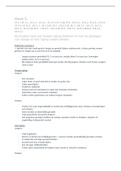
sole proprietorship - ANSWER a business owned by one person
Pros of a sole proprietorship - ANSWER •It is simple to set up
• It gives you control over the business, and
• More favorable tax treatment than corporations
Cons of forming a sole proprietorship - ANSWER The proprietor is personally liable
for all debts and legal obligations of the business
Partnership - ANSWER A business owned by two or more persons associated as
partners.
Reason for setting up a partnership - ANSWER One individual does not have
enough economic resources to initiate or expand the business.
Pros of forming a partnership - ANSWER • Partners sometimes bring unique skills
or resources to the partnership
• More favorable tax treatment than corporations
Cons of forming a partnership - ANSWER Partners are personally liable for all
debts and legal obligations of the business
Corporation - ANSWER A business organized as a separate legal entity owned by
stockholders
Pros of forming a corporation - ANSWER • Shares of stock are easy to sell (transfer
ownership)
• Individuals can become stock holders by investing relatively small amounts of
money
• It is easier for corporations to raise funds
• Corporate stockholders have no personal legal liability
Cons of forming a corporation - ANSWER • Corporate stockholders generally pay
higher taxes
What is the purpose of financial information? - ANSWER To provide inputs for
decision-making.
What is accounting? - ANSWER The information system that identifies, records and
communicates the economic events of an organization to interested users.
Who are the users of financial information? - ANSWER They can be divided
broadly into two groups: internal users and external users.
for Business Decision Making 10th Edition Kimmel
Weygandt Mitchell
sole proprietorship - ANSWER a business owned by one person
Pros of a sole proprietorship - ANSWER •It is simple to set up
• It gives you control over the business, and
• More favorable tax treatment than corporations
Cons of forming a sole proprietorship - ANSWER The proprietor is personally liable
for all debts and legal obligations of the business
Partnership - ANSWER A business owned by two or more persons associated as
partners.
Reason for setting up a partnership - ANSWER One individual does not have
enough economic resources to initiate or expand the business.
Pros of forming a partnership - ANSWER • Partners sometimes bring unique skills
or resources to the partnership
• More favorable tax treatment than corporations
Cons of forming a partnership - ANSWER Partners are personally liable for all
debts and legal obligations of the business
Corporation - ANSWER A business organized as a separate legal entity owned by
stockholders
Pros of forming a corporation - ANSWER • Shares of stock are easy to sell (transfer
ownership)
• Individuals can become stock holders by investing relatively small amounts of
money
• It is easier for corporations to raise funds
• Corporate stockholders have no personal legal liability
Cons of forming a corporation - ANSWER • Corporate stockholders generally pay
higher taxes
What is the purpose of financial information? - ANSWER To provide inputs for
decision-making.
What is accounting? - ANSWER The information system that identifies, records and
communicates the economic events of an organization to interested users.
Who are the users of financial information? - ANSWER They can be divided
broadly into two groups: internal users and external users.