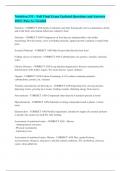
Nutrition 331 – Full Final Exam Updated Questions and Answers 100% Pass A+ Graded
Nutrition 331 – Full Final Exam Updated Questions and Answers 100% Pass A+ Graded Nutrition - CORRECT ANS-Study of nutrients and other biologically active compounds in foods and in the body; also human behaviours related to food Nutrients - CORRECT ANS-Components of food that are indispensable to the bodies functioning. Provide energy, serve as building material, support growth, maintain or repair body parts. Essential Nutrients - CORRECT ANS-Must be provided directly from food 6 Major classes of nutrients - CORRECT ANS-Carbohydrates, fat, protein, vitamins, minerals, water Chronic Diseases - CORRECT ANS-Long-duration degenerative diseases characterized by deterioration of the bodies organs. EX: heart disease, cancer, diabetes. Organic - CORRECT ANS-Carbon Containing. 4 of 6 carbon containing nutrients: carbohydrates, protein, fat, vitamins Vitamins and minerals aid the body in - CORRECT ANS-Digesting food, moving muscles, disposing wastes, growing new tissues, healing wounds, obtaining energy from macros Non-nutrients - CORRECT ANS-Compounds other than the 6 nutrients present in foods Phytochemicals - CORRECT ANS-Naturally occuring compounds found in plants, (colour, taste) Element diets - CORRECT ANS-Purified ingredients, intended to supply all essential nutrients to people who cannot eat food EX: tube feeding Assessment of nutritional status - CORRECT ANS-- History - Anthropometric measures - Physical examination - Laboratory tests Assessment of nutritional status: History - CORRECT ANS-Diet, medical history, socioeconomic (finances, education ) and diet-related conditions. EX: alcoholism, anorexia, cancer, drug addiction) Anthropometric measures - CORRECT ANS-Physical characteristics of the body, such as height and weight. Physical Examination - CORRECT ANS-Various parts of the body inspected. Hair, eyes, skin, tongue, fingernails. Can provide evidence of deficiencies, imbalances and toxicity status Laboratory Tests - CORRECT ANS-Samples of bodily fluids, such as blood or urine and analyze them in a lab. Biochemical abnormalities occur long before clinical or physical symptoms appear. Do not indicate whether the cause is primary or secondary deficiencies Primary and secondary deficiencies - CORRECT ANS-Inadequate dietary intake Inefficient absorptions and excessive exertion Collecting diet information (4 methods) - CORRECT ANS-- Diet history - Food diary - Twenty four hour recall - Food frequency Food composition databases - CORRECT ANS-Lists average nutrient composition of foods. Content influenced by: - Variety or strain of food - Geographic location and season of production - Mineral content of soil - Stage of maturity at harvest - Method of processing - Method and length of time of storage - Method of cooking Limitations of Food Composition tables - CORRECT ANS-- Several nutrients are not included (eg. fatty acids and trace minerals) - Not all foods have been tested for all nutrients - Nutrient data is a approximation - Not always completely absorbed by body - Mixed dishes vary widely in nutrient composition To reduce changes by random chance in intervention studies, researchers apply - CORRECT ANS-- Large test groups ( 30 or more people) - Randomly placed in groups - Two groups compared at start and finish Intervention studied without control group is called - CORRECT ANS-Uncontrolled - Much less reliable Clinical trial ( Randomized control trials) - CORRECT ANS-Studies carried out on healthy subjects with an aim of preventing disease, or sick people to test treatment Anecdotal Evidence - CORRECT ANS-Simplest, least reliable for studying the role of diet in disease EX: A woman who smokes during pregnancy births a healthy baby. While a woman who doesn't smoke births a baby with downs syndrome. Could suggest smoking prevents down syndrome Epidemiology - CORRECT ANS-study of the patterns, causes, and effects of health and disease conditions in defined populations. Four types of epidemiology studies - CORRECT ANS-- Population - Historical - Case-control - Cohort Population Studies - CORRECT ANS-Compare disease patterns with various factors, including food consumption, on a country-wide basis. EX: Hypothetical potato consumption and pancreatic cancer example Historical Studies - CORRECT ANS-History of disease can reveal important clues about the cause of the disease. EX: Relationship between lung smoking and cancer. Cohort Study (prospective study) - CORRECT ANS-Large number of subjects are recruited. Normally in good health, in terms of the disease being studied. Track subjects over years, until enough of them develop the disease being studied. Case Control - CORRECT ANS-Recruitment of subjects and data collection are done AFTER that disease has developed Biochemical and physiological studies - CORRECT ANS-Study of chemicals and vital processes occurring in living organisms
Written for
- Institution
- NUTR 331
- Course
- NUTR 331
Document information
- Uploaded on
- June 15, 2024
- Number of pages
- 53
- Written in
- 2023/2024
- Type
- Exam (elaborations)
- Contains
- Questions & answers
Subjects
-
nutrition 331 full final exam updated questions

Document also available in package deal