Contents
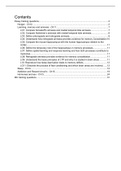
Essay training questions..............................................................................................................2
Hunger - Ch12......................................................................................................................... 2
Learning, memory and amnesia - Ch11..................................................................................7
LO1: Compare Korsakoff’s amnesia and medial temporal lobe amnesia............................7
LO2: Compare Alzheimer’s amnesia with medial temporal lobe amnesia...........................8
LO3: Define anterograde and retrograde amnesia..............................................................9
LO4: Understand how retrograde amnesia provides evidence for memory Consolidation 10
LO5: Compare the mouse hippocampus with the human hippocampus relative to the
cortex................................................................................................................................ 11
LO6: Define the temporary role of the hippocampus in memory processes......................11
LO7: Define spatial learning and response learning and how both processes contribute to
memories.......................................................................................................................... 11
LO8: Retrograde amnesia provides evidence for memory consolidation..........................11
LO9: Understand the basic principles of LTP and why it is studied in brain slices............11
L10: Reproduce how sleep deprivation leads to memory deficits......................................12
LO11: Describe the process of fear conditioning and which brain areas are involved.......12
Sleep - Ch14......................................................................................................................... 12
Addiction and Reward circuit’s - Ch15...................................................................................19
Hormones and sex - Ch13.....................................................................................................24
MC training questions................................................................................................................ 31
,Essay training questions
Hunger - Ch12
1. Why is the reward system activated when we eat?
For thousands of years, the goal was to eat whatever food you came across. Because you had
to survive periods without food, you had to eat large amounts of food whenever something was
available. There was an evolutionary pressure to eat as much as possible and save energy.
When you ate, your reward system is activated. (Venus of Willendorf as the beauty standard
portrays this)
2. What is the homeostatic mechanism?
Your body tells you how much energy you need → You eat exactly what the body
requires. If you get infused with food, you will eat the additional calories needed
based on what you got infused = HOMEOSTATIC. Eating on basis of what you need.
3. Describe the dual center hypothesis and what scientist think of it nowadays:
The dual center hypothesis states that two systems regulate food intake.
VMH: satiety center (ventral medial hypothalamus) → lesion in the VMH: a dramatic
increase in food intake and body weight, reduced activity
LHA: hunger → lesion in the LHA: anorexia, weight loss
,Nowadays the belief is that there are more areas involved:
- In brainstem
- Hypothalamus (unrestrained eaters)
- Sensory input
- Input from liver e.d.
- In higher levels of the brain (restrained eaters)
Homeostatic: hunger-satiety feeding behavior, in the hypothalamus
4. Describe the glucostatic theory
This theory states that your glucose levels determine when you eat. → “—the idea
being that we become hungry when our blood glucose levels drop significantly
below their set point and that we become satiated when eating returns our blood
glucose levels to their set point.”
Mayer: maintenance of glucose availability is crucial for life because glucose is the
most important energy substrate (for the brain) → glucose sensors in the
hypothalamus.
In experiments it showed that when animals have low blood glucose, they start to eat, so yes.
But in humans, this was also measured. No other factors (time, air, temperature smell). When
glucose went down the humans asked for food. So yes.
However, in humans other factors also play a role in when we are going to eat. So this theory
doesn’t determine our hunger.
5. Describe the lipostatic theory
“According to this theory, every person has a set point for body fat, and deviations from this set
point produce compensatory adjustments in the level of eating that return levels of body fat to
their set point. The most frequently cited support for the theory is the fact that the body weights
of adults stay relatively constant.”
The liver gives signals to the brain about the amount of fatty acids.
So: we can detect glucose and free fatty acids, when they are low we are eating.
6. Describe the aminostatic theory
The aminostatic theory proposes that amino acids in the blood have a significant role in defining
satiety.
7. What is Pinel’s idea about the relevance of the theories such as the glucostatic and
lipostatic?
, He feels that there are several major weaknesses with these theories:
● For any warm-blooded species to survive under natural conditions, it needs a hunger
and eating system that prevents energy deficits, rather than one that merely responds to
them once they have developed. From this perspective, it is difficult to imagine how a
hunger and feeding system based entirely on set points could have evolved in mammals
● The problem is that reductions in blood glucose of the magnitude needed to reliably
induce eating rarely occur naturally. Also, efforts to reduce meal size by having
volunteers unknowingly consume a high-calorie drink before eating have been
unsuccessful.
● Set-point theories of hunger and eating are deficient because they fail to recognize the
major influences on hunger and eating of such important factors as taste, learning, and
social influences
8. What is an important hormone that regulates short-term food intake? And could this be a
treatment/prevention of obesity?
When food comes into the gut, CCK is released which:
- stimulates the secretion of the exocrine and endocrine pancreas
- stimulates pepsinogen secretion
- inhibits HCl-Sekretion
- causes gallbladder contraction
- trophic effect on the pancreas
- inhibits gastric emptying
- has satiety effect → experiments with rats. When a rat would start eating, he
would get injected with CCK. This caused a decrease in meal size (0.5 gram).
But when the injections stopped after 7 days, meal size increased again. So:
CCK injections stops eating.
So is CCK a prevention of obesity? NO. Because the number of meals also increased. It is
short-term food intake regulation, only has a temporary effect. When CCK is not released
anymore you get hungry again.
9. What is an important hormone that regulates long-term food intake? And could this be a
treatment/prevention of obesity?
Leptin is a hormone released by the fatty tissue that tells the brain how much food is needed.
Effect on food intake is long, so this is long-term regulation.
Discovered in a rat with leptin deficiency. He had genetic obesity due to this. If you give this rat
leptin, the food intake goes down. It is also possible to have leptin, but no receptors for this
hormone. Then the food-regulation also is disturbed and you will also get obese.
Nobel prize-worthy discovery. So fat tissue releases signals through leptin which has special
receptors.
Essay training questions..............................................................................................................2
Hunger - Ch12......................................................................................................................... 2
Learning, memory and amnesia - Ch11..................................................................................7
LO1: Compare Korsakoff’s amnesia and medial temporal lobe amnesia............................7
LO2: Compare Alzheimer’s amnesia with medial temporal lobe amnesia...........................8
LO3: Define anterograde and retrograde amnesia..............................................................9
LO4: Understand how retrograde amnesia provides evidence for memory Consolidation 10
LO5: Compare the mouse hippocampus with the human hippocampus relative to the
cortex................................................................................................................................ 11
LO6: Define the temporary role of the hippocampus in memory processes......................11
LO7: Define spatial learning and response learning and how both processes contribute to
memories.......................................................................................................................... 11
LO8: Retrograde amnesia provides evidence for memory consolidation..........................11
LO9: Understand the basic principles of LTP and why it is studied in brain slices............11
L10: Reproduce how sleep deprivation leads to memory deficits......................................12
LO11: Describe the process of fear conditioning and which brain areas are involved.......12
Sleep - Ch14......................................................................................................................... 12
Addiction and Reward circuit’s - Ch15...................................................................................19
Hormones and sex - Ch13.....................................................................................................24
MC training questions................................................................................................................ 31
,Essay training questions
Hunger - Ch12
1. Why is the reward system activated when we eat?
For thousands of years, the goal was to eat whatever food you came across. Because you had
to survive periods without food, you had to eat large amounts of food whenever something was
available. There was an evolutionary pressure to eat as much as possible and save energy.
When you ate, your reward system is activated. (Venus of Willendorf as the beauty standard
portrays this)
2. What is the homeostatic mechanism?
Your body tells you how much energy you need → You eat exactly what the body
requires. If you get infused with food, you will eat the additional calories needed
based on what you got infused = HOMEOSTATIC. Eating on basis of what you need.
3. Describe the dual center hypothesis and what scientist think of it nowadays:
The dual center hypothesis states that two systems regulate food intake.
VMH: satiety center (ventral medial hypothalamus) → lesion in the VMH: a dramatic
increase in food intake and body weight, reduced activity
LHA: hunger → lesion in the LHA: anorexia, weight loss
,Nowadays the belief is that there are more areas involved:
- In brainstem
- Hypothalamus (unrestrained eaters)
- Sensory input
- Input from liver e.d.
- In higher levels of the brain (restrained eaters)
Homeostatic: hunger-satiety feeding behavior, in the hypothalamus
4. Describe the glucostatic theory
This theory states that your glucose levels determine when you eat. → “—the idea
being that we become hungry when our blood glucose levels drop significantly
below their set point and that we become satiated when eating returns our blood
glucose levels to their set point.”
Mayer: maintenance of glucose availability is crucial for life because glucose is the
most important energy substrate (for the brain) → glucose sensors in the
hypothalamus.
In experiments it showed that when animals have low blood glucose, they start to eat, so yes.
But in humans, this was also measured. No other factors (time, air, temperature smell). When
glucose went down the humans asked for food. So yes.
However, in humans other factors also play a role in when we are going to eat. So this theory
doesn’t determine our hunger.
5. Describe the lipostatic theory
“According to this theory, every person has a set point for body fat, and deviations from this set
point produce compensatory adjustments in the level of eating that return levels of body fat to
their set point. The most frequently cited support for the theory is the fact that the body weights
of adults stay relatively constant.”
The liver gives signals to the brain about the amount of fatty acids.
So: we can detect glucose and free fatty acids, when they are low we are eating.
6. Describe the aminostatic theory
The aminostatic theory proposes that amino acids in the blood have a significant role in defining
satiety.
7. What is Pinel’s idea about the relevance of the theories such as the glucostatic and
lipostatic?
, He feels that there are several major weaknesses with these theories:
● For any warm-blooded species to survive under natural conditions, it needs a hunger
and eating system that prevents energy deficits, rather than one that merely responds to
them once they have developed. From this perspective, it is difficult to imagine how a
hunger and feeding system based entirely on set points could have evolved in mammals
● The problem is that reductions in blood glucose of the magnitude needed to reliably
induce eating rarely occur naturally. Also, efforts to reduce meal size by having
volunteers unknowingly consume a high-calorie drink before eating have been
unsuccessful.
● Set-point theories of hunger and eating are deficient because they fail to recognize the
major influences on hunger and eating of such important factors as taste, learning, and
social influences
8. What is an important hormone that regulates short-term food intake? And could this be a
treatment/prevention of obesity?
When food comes into the gut, CCK is released which:
- stimulates the secretion of the exocrine and endocrine pancreas
- stimulates pepsinogen secretion
- inhibits HCl-Sekretion
- causes gallbladder contraction
- trophic effect on the pancreas
- inhibits gastric emptying
- has satiety effect → experiments with rats. When a rat would start eating, he
would get injected with CCK. This caused a decrease in meal size (0.5 gram).
But when the injections stopped after 7 days, meal size increased again. So:
CCK injections stops eating.
So is CCK a prevention of obesity? NO. Because the number of meals also increased. It is
short-term food intake regulation, only has a temporary effect. When CCK is not released
anymore you get hungry again.
9. What is an important hormone that regulates long-term food intake? And could this be a
treatment/prevention of obesity?
Leptin is a hormone released by the fatty tissue that tells the brain how much food is needed.
Effect on food intake is long, so this is long-term regulation.
Discovered in a rat with leptin deficiency. He had genetic obesity due to this. If you give this rat
leptin, the food intake goes down. It is also possible to have leptin, but no receptors for this
hormone. Then the food-regulation also is disturbed and you will also get obese.
Nobel prize-worthy discovery. So fat tissue releases signals through leptin which has special
receptors.