

HESI Final Exam NUR 312 With Correct Answers
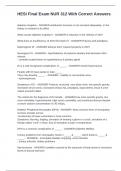
diabetes insipidus - ANSWER-antidiuretic hormone is not secreted adequately, or the kidney is resistant to its effect What causes diabetes insipidus? - ANSWER-A reduction in the release of ADH What does an insufficiency of ADH (DI) lead to? - ANSWER-Polyuria and polydipsia Nephrogenic DI - ANSWER-kidneys don't respond properly to ADH Neurogenic DI - ANSWER-- hypothalamus of posterior pituitary that decrease ADH release - centrally located lesion in hypothalamus & pituitary gland DI is a well-recognized complication of _____. - ANSWER-closed head trauma People with DI have partial or total _____. They may develop _____. - ANSWER-- inability to concentrate urine. - hydronephrosis. Symptoms of DI: - ANSWER-Polyuria, nocturnal, very dilute urine, low specific gravity, increased serum osmo, increased serious Na, polydipsia, hypovolemic shock if urine output exceeds intake The criteria for the diagnosis of DI include: - ANSWER-low urine specific gravity, low urine osmolality, hypernatremia, high serum osmolality, and continued diuresis despite a serum sodium concentration of 145 mEq/L. Diabetic Peripheral Neuropathy (DPN) - ANSWER--Most common form of neuropathy, involves somatic nerves. -Involvement of lower extremities is most common. Symptoms: Burning, tingling, sensation of wearing a glove or a sock, sensation of a foreign object "rock" in shoe, loss of sensation to pain or temperature DPN is a common complication of _____. - ANSWER-Diabetes Mellitus Urinary problems from neuropathy result in _____ & _____, which leads to _____ & _____. - ANSWER-- incomplete bladder emptying, urine retention - urinary infection, kidney problems thyrotoxicosis - ANSWER-condition caused by the exposure of body tissue to excessive levels of thyroid hormone
Document information
- Uploaded on
- June 12, 2024
- Number of pages
- 21
- Written in
- 2023/2024
- Type
- Exam (elaborations)
- Contains
- Questions & answers


