SCI 228 Week 2 Lab Assignment: Stevia
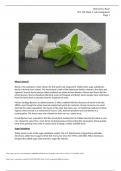
SCI 228 Week 2 Lab Assignment: Stevia (2 Versions) What is Stevia? Stevia is the sweetener I have chosen for this week’s lab assignment. Unlike other sugar substitutes, stevia is derive d from a plant. The stevia plant is part of the Asteraceae family, related to the daisy and ragweed. Several stevia species called candyleaf are native to New Mexico, Arizona and Texas. But the prized species, Stevia rebaudiana (Bertoni), grows in Paraguay and Brazil, where people have used leaves from the stevia bush to sweeten food for hundreds of years. Moises Santiago Bertoni, an Italian botanist, is often credited with the discovery of stevia in the late 1800’s, even though the native Guarani people had used it for centuries. Known as kaa-he (or sweet herb) by the native population, the leaves of the plant had many uses. In traditional medicine in these regions, stevia served as a treatment for burns, colic, stomach problems and sometimes as a contraceptive. The leaves were also chewed on their own as a sweet treat. It took Bertoni over a decade to find the actual plant, leading him to initially describe the plant as very rare. About the same time, more farms started growing and harvesting the stevia plant. Stevia quickly went from growing in the wild in certain areas to being a widely available herb. Sugar Substitute Today, stevia is part of the sugar substitute market. The U.S. Department of Agriculture estimates Americans added more sugar to their diet every year since the 1970’s until 2000. When Americans dropped the added sugar, they turned to sugar like extracts. Does Stevia Work? Stevia has no calories, and it is 200 times sweeter than sugar in the same concentration. Other studies suggest stevia might have extra health benefits. According to a 2017 article in the Journal of Medicinal Food, stevia has potential for treating endocrine diseases, such as obesity, diabetes and hypertension, but that more research is needed. A no-calorie source of sweetness is an obvious diet solution in theory. But a few studies show that replacing sugar with artificial or low-calorie sweeteners may not ultimately lead to weight loss in real life. A 2004 study in rats found low-calorie sweeteners led the animals to overeat, possibly because of a mismatch between the perceived sweetness and the expected calories from sugar, according to the paper in the International Journal of Obesity and Related Metabolic Disorders. The author of that study later argued that people who use artificial sweeteners may suffer health problems associated with excess sugar, including metabolic syndrome, which can be a precursor to diabetes. There is also evidence that stevia does nothing to change eating habits or hurt metabolism in the short term. A 2010 study in the journal Appetite tested several artificial sweeteners against sugar and each other in 19 lean people and 12 obese people. The study found people did not overeat after consuming a meal made with stevia instead of sugar. Their blood sugar was lower after a meal made with stevia than after eating a meal with sugar, and eating food with stevia resulted in lower insulin levels than eating either sucrose and aspartame. Is Stevia Safe? The question of whether stevia is safe to consume largely depends on what someone means by "stevia." The U.S. Food and Drug Administration has not approved stevia leaves or "crude stevia extracts" for use as food additives. Studies on stevia in those forms raise concerns about the control of blood sugar and effects on the reproductive, cardiovascular, and renal systems, the FDA warns. There are some health concerns surrounding the stevia plant. Stevia may cause low blood pressure, which would be of concern to some taking blood pressure medications. There is also continuing research going into certain chemicals naturally occurring in stevia that may cause genetic mutations and cancer. Stevia may also interact with anti-fungals, anti-inflammatories, anti-microbials, anti-cancer drugs, anti- virals, appetite suppressants, calcium channel blockers, cholesterol-lowering drugs, drugs that increase urination, fertility agents and other medications. People should talk with their doctor before deciding to take stevia in large amounts
Document information
- Uploaded on
- March 13, 2024
- Number of pages
- 2
- Written in
- 2023/2024
- Type
- Other
- Person
- Unknown