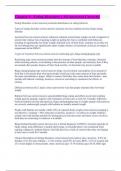
Chapter 9 - Eating Disorders || All Answered Correctly
Eating Disorders correct answers persistent disturbances in eating behavior Types of eating disorders correct answers anorexia nervosa, bulimia nervosa, binge-eating disorder Anorexia Nervosa correct answers refusal to maintain normal body weight, no lack of appetite or anxiety link. intense fear of gaining weight or getting fat: fear is combined with behaviors resulting in significantly low body weight. distorted view of their body: continue to see they are fat even though they are significantly under weight. absence of menstrual cycles are no longer a requirement in the DSM-5 2 types of Anorexia Nervosa correct answers restricting type, binge-eating/purging type Restricting type correct answers people limit the amount of food that they consume: obsessed with restricting calories, avoid dating in the presence of other people, eat extremely slow if they are around other people, dispose of their food secretly, cut food into tiny pieces in public Binge-eating/purging type correct answers binge: out-of-control consumption of an amount of food that is far greater than what most people would eat in the same amount of time and under the same circumstances. purge: efforts to remove food they have eaten from their bodies - may include self induced vomiting, laxatives, excessive exercising to counteract the effects, or enemas Difference between the 2 types correct answers the way that people maintain their low body weight Bulimia Nervosa correct answers uncontrollable binge eating and efforts to prevent resulting weight gain by purging. negative self-evaluation, at least once a week for 3 months. difference between bulimia nervosa and anorexia, binge eating/purging type is weight: people with anorexia are severely underweight, people with bulimia are usually normal weight People with bulimia are usually within 10% of expected body weight correct answers purging is not effective: vomiting = 50% reduction of calories, laxatives = no effect on weight. bulimics usually start with dieting and then the dieting process becomes more and more severe: involves food they are restricting or whatever is available Binge-Eating Disorder correct answers now a formal diagnosis in DSM-5, recurrent episodes of binge eating, main difference is people don't purge, overweight/obese: not considered when making a diagnosis. marked distress: feel like they have a lack of control when they are binging at least once a week for 3 months Clinical Description of Eating Disorders correct answers prevalence rates: anorexia - 0.9% for females, 0.3% for men, bulimia - 1.5 for women, and 0.5% for men, BED - 3.5% of women and 2% of men higher in obese people. onset: anorexia ages 15-19, bulimia ages 20-24, BED ages
Written for
- Institution
- Chapter 9 - Eating Disorders
- Module
- Chapter 9 - Eating Disorders
Document information
- Uploaded on
- February 25, 2024
- Number of pages
- 4
- Written in
- 2023/2024
- Type
- Exam (elaborations)
- Contains
- Questions & answers
Subjects

Also available in package deal