AC 516B Additional review questions 2023
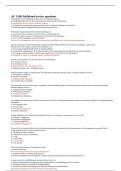
The purposes of the Standards include all of the following except A. Establishing the basis for the measurement of internal audit performance. B. Guiding the ethical conduct of internal auditors. C. Stating basic principles that represent the practice of internal auditing as it should be. D. Fostering improved organizational processes and operations. The proper organizational role of internal auditing is to A. Assist the external auditor in order to reduce external audit fees. B. Perform studies to assist in the attainment of more efficient operations. C. Serve as the investigative arm of the board. D. Serve as an independent, objective assurance and consulting activity that adds value to operations One of the purposes of the International Standards for the Professional Practice of Internal Auditing as stated in the Introduction to the current version of the Standards is to A. Encourage the professionalization of internal auditing. B. Establish the independence of the internal audit activity and emphasize the objectivity of internal auditing. C. Encourage external auditors to make more extensive use of the work of internal auditors. D. Establish the basis for evaluating internal auditing performance. Internal audit activities may involve which of the following? A. Assurance services. B. Consulting services. C. Both assurance and consulting services. D. Neither assurance nor consulting services. Which Standards apply to organizations and individuals performing specific types of internal auditing services? A. Performance Standards. B. Attribute Standards. C. Implementation Standards. D. All of the above Standards. The Standards consist of three types of standards. Which standards apply to the characteristics of organizations and parties providing internal auditing services? A. Implementation Standards. B. Performance Standards. C. Attribute Standards. D. Independence Standards. According to the Professional Practices Framework of The IIA, which pronouncements represent mandatory guidance for implementing the Standards? A. Development Aids. B. Practice Aids. C. Performance Standards. D. Practice Advisories. Internal auditing is an assurance and consulting activity. An example of an assurance service is a(n) A. Advisory engagement. B. Facilitation engagement. C. Training engagement. D. Compliance engagement The work of the internal audit activity includes evaluating and contributing to the improvement of risk management systems. Risk is I. The negative effect of events certain to occur II. Measured in terms of impact III. Measured in terms of likelihood A. I only. B. I and II only. C. II and III only. D. I, II, and III. The chief audit executive is best defined as the A. Inspector general. B. Person responsible for the internal audit function. C. Outside provider of internal audit services. D. Person responsible for overseeing the contract with the outside provider of internal audit services A major reason for establishing an internal audit activity is to A. Relieve overburdened management of the responsibility for establishing effective controls. B. Safeguard resources entrusted to the organization. C. Ensure the reliability and integrity of financial and operational information. D. Evaluate and improve the effectiveness of control processes The most accurate term for the procedures used by the representatives of the organization’s stakeholders to provide oversight of processes administered by management is A. Governance. C. Risk management B. Control. D. Monitoring . Which of the following is the most accurate term for the attitudes and actions of the board and management regarding the significance of control within the organization? A. Control processes. B. Control environment. C. Governance process. D. Management’s philosophy and operating style. Engagement objectives are stated in I. The engagement program II. Engagement communications III. The engagement purpose A. I and III only. B. I and II only. C. II and III only. D. I, II, and III. The actions taken to manage risk and increase the likelihood that established objectives and goals will be achieved are best described as A. Supervision. B. Quality assurance. C. Control. D. Compliance Use of outside service providers with expertise in health care benefits is appropriate when the internal audit activity is A. Evaluating the organization’s estimate of its liability for postretirement benefits, which include health care benefits. B. Comparing the cost of the organization’s health care program with other programs offered in the industry. C. Training its staff to conduct an audit of health care costs in a major division of the organization. D. All of the answers are correct. A chief audit executive has reviewed credentials, checked references, and interviewed a candidate for a staff position. The CAE concludes that the candidate has a thorough understanding of internal auditing techniques, accounting, and finance. However, the candidate has limited knowledge of economics and information technology. Which action is most appropriate? A. Reject the candidate because of the lack of knowledge required by the Standards. B. Offer the candidate a position despite lack of knowledge in certain essential areas. C. Encourage the candidate to obtain additional training in economics and information technology and then reapply. D. Offer the candidate a position if other staff members possess sufficient knowledge in economics and information technology. A chief audit executive for a large manufacturer is considering revising the internal audit activity’s charter with respect to the minimum educational and experience qualifications required. The CAE wants to require all staff auditors to possess specialized training in accounting and a professional auditing certification such as the Certified Internal Auditor or the Chartered Accountant (CA). One of the disadvantages of imposing this requirement would be A. The policy might negatively affect the internal audit activity’s ability to perform quality engagements relating to the organization’s financial and accounting systems. B. The policy would not promote the professionalism of the internal audit activity. C. The policy would prevent the internal audit activity from using outside service providers when it did not have the knowledge, skills, and other competencies required in certain engagements. D. The policy could limit the range of services that could be performed due to the internal audit activity’s narrow expertise and backgrounds An internal audit activity has scheduled an engagement relating to a construction contract. One portion of this engagement will include comparing materials purchased with those specified in the engineering drawings. The IAA does not have anyone on staff with sufficient expertise to complete this procedure. The chief audit executive should A. Delete the engagement from the schedule. B. Perform the entire engagement using current staff. C. Engage an engineering consultant to perform the comparison. D. Accept the contractor’s written representations If the internal audit activity of a non-public company does not have the skills to perform a particular task, an outside service provider could be brought in from I. The organization’s external audit firm II. An outside consulting firm III. The engagement client IV. A college or university A. I, II. C. I, II, IV B. II, IV. D. I, II, III A professional engineer applied for a position in the internal audit activity of a high technology firm. The engineer became interested in the position after observing several internal auditors while they were performing an engagement in the engineering department. The chief audit executive A. Should not hire the engineer because of the lack of knowledge of internal auditing standards. B. May hire the engineer despite the lack of knowledge of internal auditing standards. C. Should not hire the engineer because of the lack of knowledge of accounting and taxes. D. May hire the engineer because of the knowledge of internal auditing gained in the previous position Your organization has selected you to develop an internal audit activity (IAA). Your approach will most likely be to hire A. Internal auditors each of whom possesses all the skills required to handle all engagements. B. Inexperienced personnel and train them the way the organization wants them trained
Document information
- Uploaded on
- June 28, 2023
- Number of pages
- 15
- Written in
- 2022/2023
- Type
- Exam (elaborations)
- Contains
- Questions & answers