WGU C214 Financial Mgmt Pass the OA (2023)
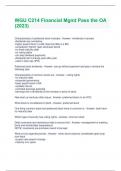
Characteristics of preferred stock includes - Answer- -dividends in arrears -dividends are cumulative -higher payoff claim in a BK (has first dibs in a BK) -considered "hybrid" (part stock/part bond) -no fixed maturity date -no voting rights -can skip dividend payments -dividends don't change year-after-year -used in start ups (IPO) Preferred stock dividends - Answer- can go without payment and pay in arrears the following year Characteristics of common stock are - Answer- -voting rights -no maturity date -corporate governance -lower payoff claim in BK -variable returns -unlimited earnings potential -earnings are in dividends & the increase in price of stock New start up ventures often issue - Answer- preferred stock (in an IPO) What stock is considered a hybrid - Answer- preferred stock One thing common stock and preferred stock have in common is - Answer- both have no maturity date Which type of security has voting rights - Answer- common stock Debt covenants and restrictions help to ensure that - Answer- management is meeting bond and shareholder expectations NOTE: covenants are promises meant to be kept What is true regarding bonds - Answer- -when bond matures, bondholder gets lump sum back -coupon rate doesn't change -maturity is in years-PAR value is typically $1000 -Future value (same as PAR) is typically $1000 Bond sells at face value when - Answer- required rate of return is equal to the coupon rate Why are bonds the primary method for raising capital - Answer- because bonds remove the intermediary costs NOTE: IPO's require an intermediary known as a syndicate - a group of banks underwriting the security issue What type of bond can be traded for stock - Answer- convertible bonds What is the interest rate for annual payments of a bond known as - Answer- the coupon rate NOTE: coupon rate is the established interest rate for the life of the bond and will remain unchanged Coupon rate is the established rate of the bond and should - Answer- never change Debentures are - Answer- secured bonds NOTE: debentures are a debt instrument (bond) issued to raise cash, secured against a company's assets and backed by credit, transferable by the holder, and may also be unsecured Secured loan - Answer- has collateral like a mortgag
Document information
- Uploaded on
- June 18, 2023
- Number of pages
- 13
- Written in
- 2022/2023
- Type
- Exam (elaborations)
- Contains
- Questions & answers