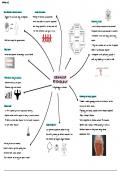
APPROACHES
Rene Descartes + Cartesian Dualism Wundt+ structuralism
mind and
Suggest the
body separate. isolating the structure
ofconsciousness.
·
are
·
·stimulit hatwunde this coworkers experienced Evaluating Wundt
and controlled.
were
always presented in the same order I workis scientific t methods are well
the same instructions all. well controlled no
were
given to
introspection tasks are variables.
-
-Introspection is used
today used early
still in
-mind can be studied as
separate entities. 2008s.
-
They were unreliable as it
wa s that it's approach
John Locke relied on 'non-observable responses'
inherited
We learn from experience and
knowledge Introspection is not
particularly accurate it
·
was not
-
would person's mood.
vary depending on a
Charles
Darwin-theory ofevolution ORIGINS OF
·
evolution survival of
+
the
fittest PSYCHOLOGY
Behaviours
Psychology
evolved. ↳ science.
mighthave as a
·
Evaluating the scientific approach
Research
I
in modern claim to be scientific. Has the
psychology can
Wilheim Wundt same aims as natural sciences.
therefore established
Psychology
A
·In 1879 he opened up
the first
experimental laboratory uses scientific methods to do this I
Empirical methods could be
applied to
study mental
of processes. itself as a scientific discipline.
·
He said ifwe break down behaviour into the simplest
components
-
Notall approaches use objective methods. The humanistic
could predictbehaviour. Wundt+introspection approach rejects scientific methods,
preferring
we to focus on
individuals because
study demand
·firstsystematic experimental attemptto study we human
beings
+
the mind into characteristics occur.
by breaking up conscious awareness
basic structures of
thoughts, images sensations.
-
critics his unscientific
say workwas
because he relied on
ppts selfreporting data
and results about
mental processes.
·
This is subjective and will from person to
person.
vary
, APPROACHES
Albert Bandura
mediating factors
Introduced motor
the
approach Attention: person notices reproduction: person replicates concerned,
doing something
someone behaviour
You do not need
something
to learn, not.
experience to
you only noteworthy. or
need to observe the behaviour and it's consequences.
How is it
different to skinner's approach? ·
Retention: The person recalls what
they
observe. Motivation:
person seeks to replicate or avoid the behaviour
The observed.
social
learning theory acknowledges that we have
thought that
they have
meditational motivated reward.
processes known as process. by
Think about whether we choose to imitate a behaviour or not
Bandura's SLT experiment (1963)
SOCIAL Evaluation
3 LEARNING
groups of children watch a
film of an adult
being aggressive
T HE ORY +
towards a model 6000.
Recognises importance of cognitive factors in
learning.
Neither classicaloperant account
conditioning gives an
for learning on
your own
+ The SCT has been
applied to real life behaviours.
So
children
cognitive mediating factors Increases value of approach e.g .
learning from media.
tuses
errorists
·Factors about both
FaridE E E E E E oGaGE .dErdo
a
person thinks before
they experimental non-experimental
choose to imitate.
techniques.
e.g a
teenage boy might be expected to avoid crime
imprisoned. Too little reference
-
his elder brother
after
seeing
to influence of biological factors
on social
learning. Recent research
suggests observational
vicarious reinforcements reinforcement that is not
directly learning is result of mirror neurons in brains
experienced but occurs
through observing someone else
being -Lab experiments are criticised for contrived nature
placed and their reinforced. Demand characteristics in Bandura's
children were in a room with a 6000 doll
study.
behaviour is monitored Too deterministic children the
saying
as are same t
-
relies their environment.
showing imitation. on
Rene Descartes + Cartesian Dualism Wundt+ structuralism
mind and
Suggest the
body separate. isolating the structure
ofconsciousness.
·
are
·
·stimulit hatwunde this coworkers experienced Evaluating Wundt
and controlled.
were
always presented in the same order I workis scientific t methods are well
the same instructions all. well controlled no
were
given to
introspection tasks are variables.
-
-Introspection is used
today used early
still in
-mind can be studied as
separate entities. 2008s.
-
They were unreliable as it
wa s that it's approach
John Locke relied on 'non-observable responses'
inherited
We learn from experience and
knowledge Introspection is not
particularly accurate it
·
was not
-
would person's mood.
vary depending on a
Charles
Darwin-theory ofevolution ORIGINS OF
·
evolution survival of
+
the
fittest PSYCHOLOGY
Behaviours
Psychology
evolved. ↳ science.
mighthave as a
·
Evaluating the scientific approach
Research
I
in modern claim to be scientific. Has the
psychology can
Wilheim Wundt same aims as natural sciences.
therefore established
Psychology
A
·In 1879 he opened up
the first
experimental laboratory uses scientific methods to do this I
Empirical methods could be
applied to
study mental
of processes. itself as a scientific discipline.
·
He said ifwe break down behaviour into the simplest
components
-
Notall approaches use objective methods. The humanistic
could predictbehaviour. Wundt+introspection approach rejects scientific methods,
preferring
we to focus on
individuals because
study demand
·firstsystematic experimental attemptto study we human
beings
+
the mind into characteristics occur.
by breaking up conscious awareness
basic structures of
thoughts, images sensations.
-
critics his unscientific
say workwas
because he relied on
ppts selfreporting data
and results about
mental processes.
·
This is subjective and will from person to
person.
vary
, APPROACHES
Albert Bandura
mediating factors
Introduced motor
the
approach Attention: person notices reproduction: person replicates concerned,
doing something
someone behaviour
You do not need
something
to learn, not.
experience to
you only noteworthy. or
need to observe the behaviour and it's consequences.
How is it
different to skinner's approach? ·
Retention: The person recalls what
they
observe. Motivation:
person seeks to replicate or avoid the behaviour
The observed.
social
learning theory acknowledges that we have
thought that
they have
meditational motivated reward.
processes known as process. by
Think about whether we choose to imitate a behaviour or not
Bandura's SLT experiment (1963)
SOCIAL Evaluation
3 LEARNING
groups of children watch a
film of an adult
being aggressive
T HE ORY +
towards a model 6000.
Recognises importance of cognitive factors in
learning.
Neither classicaloperant account
conditioning gives an
for learning on
your own
+ The SCT has been
applied to real life behaviours.
So
children
cognitive mediating factors Increases value of approach e.g .
learning from media.
tuses
errorists
·Factors about both
FaridE E E E E E oGaGE .dErdo
a
person thinks before
they experimental non-experimental
choose to imitate.
techniques.
e.g a
teenage boy might be expected to avoid crime
imprisoned. Too little reference
-
his elder brother
after
seeing
to influence of biological factors
on social
learning. Recent research
suggests observational
vicarious reinforcements reinforcement that is not
directly learning is result of mirror neurons in brains
experienced but occurs
through observing someone else
being -Lab experiments are criticised for contrived nature
placed and their reinforced. Demand characteristics in Bandura's
children were in a room with a 6000 doll
study.
behaviour is monitored Too deterministic children the
saying
as are same t
-
relies their environment.
showing imitation. on