
C. elegans preference choice for
bacterial food sources
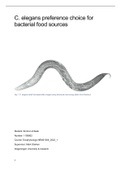
Fig. 1 C. elegans adult hermaphrodite imaged using Nomarski microscopy [Abbi Cox-Paulson].
Student: Emma Limbeek
Number: 1195662
Course: Ecophysiology NEM21306_2022_1
Supervisor: Mark Sterken
Wageningen University & research
1
, Introduction
C. elegans is a 1mm-long soil living roundworm that has been used for biological research
for over half a decade. C. elegans has a short life cycle of 3 days and has a life span of
approximately 3 weeks. It’s body is transparent and well defined and there are many
resources available for C. elegens [Girard et al. 2007; Frézal and Félix 2015]. This is why this
organism lends itself for many different research topics such as adaptation to changes in
abiotic and biotic environments. Some factors that could possibly play a role in these
changes are temperature, feeding conditions & symbiosis and parasitism. This report will
cover the topic of feeding conditions.
C. elegans nematodes are known to occur on decomposing materials such as leaves, fruits
and stems. Organisms known to be associated with C. elegans are pathogens such as
bacteria. Decomposing materials will contain many species of bacteria. While some of the
bacteria may be pathogenic, others could be a source of nutrition. Those different species of
bacteria provide different nutrients for C. elegans nematodes. In the wild C. elegans has to
make a decision on what to eat. But when given a choice, it has been reported that animals
select their food according to their environment and dietary requirements [Abada et al.,
2009]. In an experiment we can assess this food choice preference by providing wild C.
elegans isolates from around Wageningen a small collection of C. elegans-associated
bacteria [Volkers et al., 2013].
For this experiment we will provide the C. elegans nematodes with two different natural soil
bacteria: JUb19 & Myb71 and a strain of laboratory E.coli bacteria: OP50.
Jub19 is a natural isolate from C. elegans natural habitat. It was found on a rotten pear in Le
Blanc, France. It belongs to a species called Stenotrophomonas maltophilia. They are
aerobic gram-negative bacteria [Cambiaso-Daniel et al., 2018].
Myb71 is a slow growing natural isolate from Kiel, Schleswig-Holstein, Germany. It belong to
a species called Ochrobactrum pecoris. They are gram-negative and non-fermenting
bacteria. Ochrobactrum species are found in environments such as water, soil, plants and
animals [Ryan, M. P., & Pembroke, J. T. (2020)].
OP50 is an Escherichia coli strain that is conventionally used as a bacterial food in the
laboratory maintenance of Caenorhabditis elegans on agar plates [Arata et al., 2020].
When different strains of C. elegans have a preference for one or more of these bacteria, we
will be able to see and count the nematodes on each of these food sources. The research
question that has led to this experiment is the following:
“Do population differences drive food choice?”
2
bacterial food sources
Fig. 1 C. elegans adult hermaphrodite imaged using Nomarski microscopy [Abbi Cox-Paulson].
Student: Emma Limbeek
Number: 1195662
Course: Ecophysiology NEM21306_2022_1
Supervisor: Mark Sterken
Wageningen University & research
1
, Introduction
C. elegans is a 1mm-long soil living roundworm that has been used for biological research
for over half a decade. C. elegans has a short life cycle of 3 days and has a life span of
approximately 3 weeks. It’s body is transparent and well defined and there are many
resources available for C. elegens [Girard et al. 2007; Frézal and Félix 2015]. This is why this
organism lends itself for many different research topics such as adaptation to changes in
abiotic and biotic environments. Some factors that could possibly play a role in these
changes are temperature, feeding conditions & symbiosis and parasitism. This report will
cover the topic of feeding conditions.
C. elegans nematodes are known to occur on decomposing materials such as leaves, fruits
and stems. Organisms known to be associated with C. elegans are pathogens such as
bacteria. Decomposing materials will contain many species of bacteria. While some of the
bacteria may be pathogenic, others could be a source of nutrition. Those different species of
bacteria provide different nutrients for C. elegans nematodes. In the wild C. elegans has to
make a decision on what to eat. But when given a choice, it has been reported that animals
select their food according to their environment and dietary requirements [Abada et al.,
2009]. In an experiment we can assess this food choice preference by providing wild C.
elegans isolates from around Wageningen a small collection of C. elegans-associated
bacteria [Volkers et al., 2013].
For this experiment we will provide the C. elegans nematodes with two different natural soil
bacteria: JUb19 & Myb71 and a strain of laboratory E.coli bacteria: OP50.
Jub19 is a natural isolate from C. elegans natural habitat. It was found on a rotten pear in Le
Blanc, France. It belongs to a species called Stenotrophomonas maltophilia. They are
aerobic gram-negative bacteria [Cambiaso-Daniel et al., 2018].
Myb71 is a slow growing natural isolate from Kiel, Schleswig-Holstein, Germany. It belong to
a species called Ochrobactrum pecoris. They are gram-negative and non-fermenting
bacteria. Ochrobactrum species are found in environments such as water, soil, plants and
animals [Ryan, M. P., & Pembroke, J. T. (2020)].
OP50 is an Escherichia coli strain that is conventionally used as a bacterial food in the
laboratory maintenance of Caenorhabditis elegans on agar plates [Arata et al., 2020].
When different strains of C. elegans have a preference for one or more of these bacteria, we
will be able to see and count the nematodes on each of these food sources. The research
question that has led to this experiment is the following:
“Do population differences drive food choice?”
2


