

HSM 543 Week 2 Quiz (GRADED A) Questions and Answers | 100% guaranteed
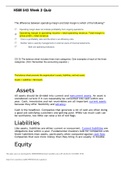
HSM 543 Week 2 Quiz The difference between operating margin and total margin is which of the following? Operating margin does not indicate profitability from ongoing operations. Operati ng margin is operating income ÷ total operating revenue. Total margin is gross profit ÷ total revenue. One is a profitability ratio and the other is an efficiency ratio. Neither ratio is used by management or external users of financial statements. Both are operating indicators. CO D) The balance sheet includes three main categories. Give examples of each of the three categories. (Hint: Remember the accounting equation.) The balance sheet presents the organization's assets, liabilities, and net assets. Assets = Liabilities + Net Assets Assets All assets should be divided into current and noncurrent assets. An asset is considered current if it can reasonably be converted into cash within one year. Cash, inventories and net receivables are all important current assets because they offer flexibility and solvency. Cash is the headliner. Companies that generate a lot of cash are often doing a good job satisfying customers and getting paid. While too much cash can be worrisome, too little can raise a lot of red flags. Liabilities Like assets, liabilities are either current or noncurrent. Current liabilities are obligations due within a year. Fundamental investors look for companies with fewer liabilities than assets, particularly when compared against cash flow. Companies that owe more money than they bring in are usually in trouble. Equity Equity is equal to assets minus liabilities, and it represents how much the company's shareholders actually have claim to; investors should pay particular attention to retained earnings and paid-in capital under the equity section. Paid-in capital represents the initial investment amount paid by shareholders for their ownership interest. Compare this to additional paid-in capital to show the equity premium investors paid above par value. Retained earnings show the amount of profit the firm reinvested or used to pay down debt, rather than distributed to shareholders as dividends. Read more: What items on the balance sheet are most important in fundamental analysis? | Investopedia
Documentinformatie
- Geüpload op
- 27 september 2022
- Aantal pagina's
- 7
- Geschreven in
- 2022/2023
- Type
- Tentamen (uitwerkingen)
- Bevat
- Vragen en antwoorden


