Microbiology - Portage Module 2 Metabolism Already Passed
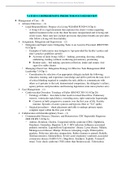
Microbiology - Portage Module 2 Metabolism Already Passed What is cellular metabolism? a controlled set of biochemical reactions that occur in living organisms in order to maintain life What is an enzyme? a protein, or group of proteins, that catalyze (speed up) chemical reactions What is unique about enzymes? the enzyme is not consumed during the reaction and can be used repeatedly by the cell What is a cofactor? a small chemical component, usually metal ions, that assist enzymes during the catalysis reactions Do cofactors serve as regulators of chemical reactions? Yes In the absence of the proper cofactor what happens? enzymes are inactive In the presence of the proper cofactor what happens? enzymes are active In order to produce sufficient levels of energy what must microorganisms do? microorganisms must break down complex nutrients into smaller, manageable (and useful) subunits What 3 things must enzymes break down into smaller subunits? Enzymes must break down proteins, lipids and polysaccharides into their smaller building-block molecules Fats or lipids get broken down into what? glycerol/fatty acids Most metabolic processes can be classified as either of what 2 things? catabolism or anabolism What is catabolism? the process of breaking down larger molecules into useful energy sources What is anabolism? the building up or biosynthesis of macromolecules from smaller molecular units into larger complexes The anabolic process is often used during what? growth and repair phases of the cell. What would happen to cells without enzymes? Without enzymes and their ability to increase the rate of a specific chemical reaction, these reactions would take too long and exhaust too much energy. If a cell runs out of energy before the necessary reactions conclude, it dies. What is the most widely used form of energy in the cells? adenosine triphosphate or ATP Compare ATP to ADP ATP has energy to donate while ADP can accept energy (phosphate group) to become ATP How does ATP work and help give the cell energy? By donating available phosphate groups, ATP transfers energy from catabolic (breaking down) reactions to be used for anabolism (building up). This process of donating and/or accepting energy is what fuels a cell to carry out the necessary biochemical reactions for survival. The way in which microbes produce ATP, specifically the starting source of electrons, tells us what? It can also be used as a means to further differentiate and characterize microorganisms How does a Phototroph acquire energy? It acquires energy from photons of light to generate ATP from ADP How does a chemotroph acquire energy? It acquires energy from preformed (already existing) chemicals found in the environment What are the two types of chemotrophs? organotrophs and lithotrophs What is an organotroph? It removes electrons from organic molecules such as glucose What is a lithotroph? It removes electrons from inorganic molecules such as elemental sulfur. In order to carry out metabolic processes must microbes also have a source of carbon? Yes What does the source of carbon tell us about the microbe? Where this source of carbon comes from may also be used to further classify microbes What is a heterotroph? A microorganism that derives its carbon from organic molecules such as sugars What is an autotroph? organisms that derive their carbon from inorganic molecules, most often from carbon dioxide (CO2) Define phosphorylation the addition of a phosphate group—that turns ADP into ATP. Name the three types of phosphorylation Photophosphorylation Substrate-level phosphorylation Oxidative phosphorylation What is Photophosphorylation? light energy is used to power the formation of ATP from ADP What is Substrate-level phosphorylation? the phosphoryl (PO3) group of a chemical compound is transferred and donated (added) directly to ADP. The chemical compound losing the phosphate group is referred to as the phosphorylated reactive intermediate What is Oxidative phosphorylation? used by chemotrophs, the energy released by the chemical oxidation of nutrients is used to reform ATP. This process occurs in the mitochondria of eukaryotic cells and is highly efficient. What is the chemical formula for glucose? C6H12O6 The complete catabolism of a single molecule of glucose yields how many ATP? up to 38 ATP The complete catabolism of a single molecule of glucose involves how many distinct transitions? 3 Name the 3 distinct transitions of the catabolism of glucose. glycolysis either fermentation or respiration electron transport chain How many ATP is produced from glycolysis? 2 ATP How many ATP is produced from either fermentation or respiration? 2 ATP How many ATP is produced from electron transport chain? 34 ATP
Written for
- Institution
- Microbiology - Portage
- Course
- Microbiology - Portage
Document information
- Uploaded on
- September 22, 2022
- Number of pages
- 12
- Written in
- 2022/2023
- Type
- Exam (elaborations)
- Contains
- Questions & answers
Subjects
- what is an enz
-
microbiology portage module 2 metabolism already passed
-
what is cellular metabolism a controlled set of biochemical reactions that occur in living organisms in order to maintain life

Also available in package deal