NR228 NUTRITION ROKS EXAM 1.
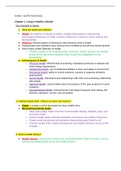
NR228 NUTRITION ROKS EXAM 1. 1. What are health and wellness? Health: the absence of disease or illness, merges and balances 6 physical and psychological dimension of health, physical, intellectual, emotional, social, spiritual and environmental. ● Wellness: lifestyle (pattern of behaviors) that enhances level of health. ● Pasteurization and sanitation have reduced risk of foodborne and environmental hazards. ● Rene Dubos (1968) Definition of Health ○ “Health is quality of life involving social, emotional, mental, spiritual, and biologic fitness on the part of the individual, which results from adaptations to the environment.” ● 6 Dimensions of Health ○ Physical Health: efficient body functioning, maintaining immunity to disease and meet energy requirements ○ Intellectual Health: use of intellectual abilities to learn and adapt to environment ○ Emotional Health: ability to control emotions, express or suppress emotions appropriately. ○ Social Health: interactions and relationships with other and sustaining relationship with people. ○ Spiritual Health: cultural beliefs about the purpose of life, give purpose to human existence. ○ Environmental Health: external factors that impact living and work setting, like ethnicity, education, income, and occupation. 2. Healthy People 2020: What is its vision and mission? ● Vision: a society in which all people live long, healthy lives. ● Mission/Overarching Goals : ○ Attain high quality, longer lives free of preventable disease, disability, injury, and premature death. ○ Achieve health equity, eliminate disparities and improve the health of all groups. ○ Create social and physical environments that promote good health for all. ○ Promote quality of life, healthy development and healthy behaviors across all life changes. 3. What is health literacy? ● Health Literacy: being able to receive and comprehend basic health concepts, such as nutrition and applying them to our own health decision. ● Health literacy develops through education on topics related to health promotion and illness. ● Education Process of Health Literacy ○ Formal Education: purposely planned for implementation in a school setting. ○ Non-formal Education: organized teaching and learning events in hospitals, clinics, and community centers. ○ Informal Education: variety of educational experiences that occur through daily activities, like watching TV, reading newspapers and magazines, browsing the internet or conversing with other people. ● Health Context: takes into account the influence of culture, social, and individual factors with developing health literacy. ○ Cultural factors: ethnicity, religion, race ○ Social factors: setting that members receive support or lack of support for health promoting behaviors ○ Individual factors: choices we make on willingness to acquire then apply health knowledge. ● Health Literacy Actualization: being able to use acquired health knowledge and skills. 4. Name and define the multidimensional aspects of health. ● 6 Dimensions of Health ○ Physical Health: efficient body functioning, maintaining immunity to disease and meet energy requirements ○ Intellectual Health: use of intellectual abilities to learn and adapt to environment ○ Emotional Health: ability to control emotions, express or suppress emotions appropriately. ○ Social Health: interactions and relationships with other and sustaining relationship with people. ○ Spiritual Health: cultural beliefs about the purpose of life, give purpose to human existence. ○ Environmental Health: external factors that impact living and work setting, like ethnicity, education, income, and occupation. 5. What are the 6 nutrient categories? ● Nutrition: how essential nutrients are processed and used by the body. ● Carbohydrates ● Proteins ● Lipids (fats) ● Vitamins ● Minerals ● water 6. What are essential nutrients and what are their functions? ● Essential Nutrients: essential because we can make some of it, but not enough so we get the rest through food. ○ Carbohydrates: provide energy, help regulate body processes ■ Source: glucose ○ Proteins: provide energy, help regulate body processes, help aid growth and repair of body tissue. ■ Source: amino acids ○ Lipids (fats ): provide energy, help regulate body processes, help aid growth and repair of body tissue ■ Source: linoleic acid, linolenic acid ○ Vitamins: provides energy, but as indirect role as catalyst for body’s use of energy nutrients, help regulate body processes. ■ Source: Fat soluble vitamins (vitamin A, D, E, & K). Water soluble vitamins (vitamin all Bs & C) ○ Minerals: provides energy, but as indirect role as catalyst for body’s use of energy nutrients, help regulate body processes, help aid growth and repair of body tissue ○ Water: help regulate body processes, help aid growth and repair of body tissue. ● Non-essential nutrients: made natural in body but also be absorbed from certain foods. Nutrition Facts L (Links to an external site.)Links to an external site. Water a Vital N (Links to an external site.)Links to an external site. 7. Nurses promote and increase the level of health for individuals, families, groups, and communities through the use of knowledge, different techniques and through community support. How do they do this? ● Through health promotion. ● Health Promotion : what we do to increase the level of healthy individuals, families, groups and communities. ● As nurses we do this through the use of: ○ Knowledge ○ Different techniques ○ Enlisting support of community. 8. What are primary, secondary, and tertiary disease prevention behaviors and examples of each? ● Primary Prevention: initial treatment for prevention of a disease. Focus on promotion. ○ Ex: immunization, low fat diet, high fiber (plant based) eating style. ● Secondary Prevention: early detection to try and decrease or halt the progression of disease. So already has been diagnosed. ○ Ex. reducing sodium intake for a patient who has hypertension. ● Tertiary Prevention: already have disorder, but you want to minimize the effects of potential complications or assist with restoration of health. ○ Ex. receiving chemotherapy for cancer may have side effects of nausea and loss of appetite, so a diet plan should include a diet that should have the patient wellnourished as possible to aid the healing process. 9. What do the five health literacy factors refer to: Health literacy actualization, Individual factors, Social factors, Support factors, and Cultural considerations? ● Health Literacy Actualization: being able to use acquired health knowledge and skills. ● Cultural factors: ethnicity, religion, race ● Social factors: setting that members receive support or lack of support for health promoting behaviors ● Individual factors: choices we make on willingness to acquire then apply health knowledge. ● Support factors: health system, what help is out there? 10. What are the kilocalorie values of carbohydrates, proteins, lipids, and alcohol? If lipids burn more kilocalories, why aren’t they better for us to eat than proteins or carbs? NUTRIENT KCAL VALUE PER GRAM Carbohydrates 4 Protein 4 Lipids (fats) 9 Alcohol 7 ● Kilocalories (kcal): is the energy released from foods measured in kcal or calories. ● Alcohol provides energy but it’s not considered a nutrient because the body does not need it. When alcohol is consumed in excess the body treats it as a toxin. Moderate usage of alcohol can be beneficial for heart disease which is 2 servings or fewer per day for men and one serving for women. 1 serving of alcohol equals 12-ounce beer, 5-ounce wine, or 1.5 ounces of 80-proof spirits. ● Essential fatty acids are the fat-soluble vitamins A, D, E & K. 11. What are simple and complex carbs and what is the difference? ● Simple Carbs: sugars, found in fruits, milk and sweeteners ● Complex Carbs: starches and most fibers found in cereals, grains, fruits, and vegetables. ● Fiber does not break down to units of glucose but is important for digestion and absorption. ● Glucose: most efficient form of energy for body. 12. Name the most efficient form of energy for the brain. ● Glucose .
Document information
- Uploaded on
- May 18, 2022
- Number of pages
- 30
- Written in
- 2021/2022
- Type
- Exam (elaborations)
- Contains
- Questions & answers