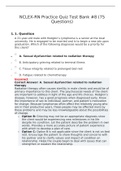
NCLEX-RN Practice Quiz Test Bank #8 (75 Questions) 2022 update | 100% CORRECT WITH RATIONALES
1. Question A 21-year-old male with Hodgkin’s lymphoma is a senior at the local university. He is engaged to be married and is to begin a new job upon graduation. Which of the following diagnoses would be a priority for this client? A. Sexual dysfunction related to radiation therapy B. Anticipatory grieving related to terminal illness C. Tissue integrity related to prolonged bed rest D. Fatigue related to chemotherapy Incorrect Correct Answer: A. Sexual dysfunction related to radiation therapy Radiation therapy often causes sterility in male clients and would be of primary importance to this client. The psychosocial needs of the client are important to address in light of the age and life choices. Hodgkin’s disease, however, has a good prognosis when diagnosed early. Know the importance of sex to individual, partner, and patient’s motivation for change. Because lymphomas often affect the relatively young who are in their productive years, these people may be affected more by these problems and may be less knowledgeable about the possibilities of change. Option B: Grieving may not be an appropriate diagnosis since the client would be experiencing new milestones in his life despite his condition. Let the patient describe the problem in own words. Provides a more accurate picture of patient experience with which to develop a plan of care. Option C: Option B is not applicable since the client is not on bed rest. Encourage the patient to share thoughts and concerns with his partner and to clarify values and impact of condition on relationship. Helps the couple begin to deal with issues that can strengthen or weaken the relationship. Option D: Fatigue may occur during chemotherapy, but it is not the priority diagnosis. Identify pre-existing and current stress factors that may be affecting the relationship. The patient may be concerned about other issues, such as job, financial, and illness-related problems. 2. Question A client has autoimmune thrombocytopenic purpura. To determine the client’s response to treatment, the nurse would monitor: A. Platelet count B. White blood cell count C. Potassium levels D. Partial prothrombin time (PTT) Incorrect Correct Answer: A. Platelet count Clients with autoimmune thrombocytopenic purpura (ATP) have low platelet counts, making answer A the correct answer. The laboratory tests will show low platelet count, usually <40×10^9/L for over three months. Blood film shows large platelets and tiny platelet fragments. Bone marrow examination shows an increased number of megakaryocytes. Option B: Often associated with the CBC is a differential, which refers to the relative amounts of white blood cell types (i.e., neutrophil, lymphocyte, eosinophil, etc.) as a percentage of the total number of WBCs. Of note, if a subtype of white blood cells seems to be elevated based on the differential, the actual value of the type of white blood cells should be calculated by multiplying the percentage listed on the differential by the total number of white blood cells. Option C: Potassium disorders are related to cardiac arrhythmias. Hypokalemia occurs when serum potassium levels under 3.6 mmol/L—weakness, fatigue, and muscle twitching present in hypokalemia. Hyperkalemia occurs when the serum potassium levels above 5.5 mmol/L, which can result in arrhythmias. Muscle cramps, muscle weakness, rhabdomyolysis, myoglobinuria are presenting signs and symptoms in hyperkalemia. Option D: Patients with a propensity for bleeding should undergo testing to determine the presence of a clotting disorder. For patients with deficiencies or defects of the intrinsic clotting cascade, the PTT will be elevated. Normal PTT values can vary between laboratories but 25 to 35 seconds is considered normal. 3. Question The home health nurse is visiting a client with autoimmune thrombocytopenic purpura (ATP). The client’s platelet count currently is 80, it will be most important to teach the client and family about: A. Bleeding precautions B. Prevention of falls C. Oxygen therapy D. Conservation of energy Incorrect Correct Answer: A. Bleeding precautions The normal platelet count is 120,000–400, Bleeding occurs in clients with low platelets. The priority is to prevent and minimize bleeding. Review laboratory results for coagulation status as appropriate: platelet count, prothrombin time/international normalized ratio (PT/INR), activated partial thromboplastin time (aPTT), fibrinogen, bleeding time, fibrin degradation products, vitamin K, activated coagulation time (ACT); and educate the at-risk patient and caregivers about precautionary measures to prevent tissue trauma or disruption of the normal clotting mechanisms. Option B: Thoroughly conform patient to surroundings; put call light within reach and teach how to call for assistance; respond to call light immediately; avoid use of restraints; obtain a physician’s order if restraints are needed; and eliminate or drop all possible hazards in the room such as razors, medications, and matches. Option C: Option C is important, but platelets do not carry oxygen. Wash hands and teach patient and SO to wash hands before contact with patients and between procedures with the patient; encourage fluid intake of 2,000 to 3,000 mL of water per day, unless contraindicated. Option D: Option D is of lesser priority and is incorrect in this instance. Recommend the use of soft-bristled toothbrushes and stool softeners to protect mucous membranes; and if infection occurs, teach the patient to take antibiotics as prescribed; instruct the patient to take the full course of antibiotics even if symptoms improve or disappear. 4. Question A client with a pituitary tumor has had transsphenoidal hypophysectomy. Which of the following interventions would be appropriate for this client? A. Place the client in Trendelenburg position for postural drainage B. Encourage coughing and deep breathing every 2 hours C. Elevate the head of the bed 30° D. Encourage the Valsalva maneuver for bowel movements Incorrect Correct Answer: C. Elevate the head of the bed 30° Elevating the head of the bed 30° avoids pressure on the sella turcica and alleviates headaches. A, B, and D are incorrect. In the immediate postoperative period, patients are monitored in an intensive care unit with monitoring for neurological deterioration, epistaxis, visual dysfunction, diabetes insipidus (DI), and hypotension secondary to acute hypocortisolism. Option A: Placing the patient in Trendelenburg will increase the intracranial pressure. The most common complications are CSF leak, sinusitis, and meningitis. CSF leaks, occurring in 6 in every 100 cases, is usually prevented by a multilayer closure at the end of surgery. In the occurrence of a leak in the postoperative period, the patient is advised bed rest, and a lumbar drain is placed. If the leak does not improve in 24 hours, exploration and closure of the defect are to be done. Option B: Coughing and deep breathing causes increase in intracranial pressure. Worsening of vision as a result of bleeding or manipulation and arterial hemorrhage are other immediate complications. A detailed study of preoperative imaging is essential to avoid catastrophes like optic nerve and carotid artery injury. Option D: Valsalva maneuver increases the intracranial pressure. The first follow up visit is 1 week after the procedure, where postoperative day 7 serum sodium levels are reviewed to rule out occult hyponatremia. Serial nasal endoscopies are done for debridement and to assess healing. The frequency of follow-up visits is determined by nasal crusting and maintenance of nasal hygiene with irrigation. Routine early postoperative imaging is not done in most patients. 5. Question The client with a history of diabetes insipidus is admitted with polyuria, polydipsia, and mental confusion. The priority intervention for this client is: A. Measure the urinary output B. Check the vital signs C. Encourage increased fluid intake D. Weigh the client Incorrect Correct Answer: B. Check the vital signs A large amount of fluid loss can cause fluid and electrolyte imbalance that should be corrected. The loss of electrolytes would be reflected in the vital signs. Monitor for signs of hypovolemic shock (e.g., tachycardia, tachypnea, hypotension). Frequent assessment can detect changes early for rapid intervention. Polyuria causes decreased circulatory blood volume. Option A: Measuring the urinary output is important, but the stem already says that the client has polyuria. Monitor intake and output. Report urine volume greater than 200 mL for each of 2 consecutive hours or 500 mL in a 2-hour period. With DI, the patient voids large urine volumes independent of the fluid intake. Urine output ranges from 2 to 3 L/day with renal DI to greater than 10 L/day with central DI. Option C: Encouraging fluid intake will not correct the problem. Allow the patient to drink water at will. Patients with intact thirst mechanisms may maintain fluid balance by drinking huge quantities of water to compensate for the amount they urinate. Patients prefer cold or ice water. Option D: Weighing the client is not necessary at this time. Monitor serum and urine osmolality. Urine osmolality will be decreased and serum osmolality will increase. Monitor urine-specific gravity. This may be 1.005 or less. 6. Question A client with hemophilia has a nosebleed. Which nursing action is most appropriate to control the bleeding? A. Place the client in a sitting position with the head hyperextended B. Pack the nares tightly with gauze to apply pressure to the source of bleeding C. Pinch the soft lower part of the nose for a minimum of 5 minutes D. Apply ice packs to the forehead and back of the neck Incorrect Correct Answer: C. Pinch the soft lower part of the nose for a minimum of 5 minutes The client should be positioned upright and leaning forward, to prevent aspiration of blood. Usual sites of external bleeding may include the bleeding in the mouth from a cut, bite, or from cutting or losing a tooth; nosebleeds for no obvious reasons; heavy bleeding from a minor cut, or bleeding from a cut that resumes after stopping for a short time. Hemophiliacs do not bleed faster or more frequently. Instead, they bleed longer due to a deficiency of clotting factor. Clients are often aware of bleeding before clinical manifestation. Bleeding can be life-threatening to these clients. Option A: Direct pressure to the nose stops the bleeding. Apply manual or mechanical pressure if active bleeding is noted. If spontaneous or traumatic bleeding is evident, monitor vital signs. Option B: If a pack is necessary, the nares are loosely packed. Controlling bleeding is a nursing priority. Nasal packing should be avoided, because the subsequent removal of the packing may precipitate further bleeding. Option D: Ice packs should be applied directly to the nose as well. Assess for any signs of bruising and bleeding (note the extent of bleeding). Assess for prolonged bleeding after minor injuries. 7. Question A client has had a unilateral adrenalectomy to remove a tumor. To prevent complications, the most important measurement in the immediate postoperative period for the nurse to take is: A. Blood pressure B. Temperature C. Output D. Specific gravity Incorrect Correct Answer: A. Blood pressure Blood pressure is the best indicator of cardiovascular collapse in the client who has had an adrenal gland removed. The remaining gland might have been suppressed due to the tumor activity. Primary adrenal insufficiency occurs after bilateral adrenalectomy. Signs and symptoms are volume depletion, hypotension, hyponatremia, hyperkalemia, fever, abdominal pain. Patients are managed by replacement therapy based on glucocorticoids (hydrocortisone or cortisone), mineralocorticoids (fludrocortisone) in cases of confirmed corticoids or aldosterone deficiency, respectively. Option B: Temperature would be an indicator of infection. Patients in the adrenal crisis typically present with profoundly impaired well-being, hypotension, nausea and vomiting, and fever responding well to parenteral hydrocortisone administration. Infections are the major precipitating causes of adrenal crisis. Option C: Decreased output would be a clinical manifestation but would take longer to occur than blood pressure changes. The clinician must be able to work-up and manage patients with adrenal masses, both functional and non-functional, to treat these patients with minimal morbidity. When planning for adrenalectomy, considerations of hormonal changes and preoperative preparation for these changes is as important and demands as much of the surgeon’s attention as the technical aspects of the case. Option D: Specific gravity changes occur with other disorders. Adrenalectomy has been shown to have a relatively low risk of postoperative complications, with an overall rate of 3.6%. Improved patient outcomes and decreased hospital costs have been demonstrated when adrenalectomy is performed by a high-volume adrenal surgeon (>/=6 adrenalectomies/year). 8. Question A client with Addison’s disease has been admitted with a history of nausea and vomiting for the past 3 days. The client is receiving IV glucocorticoids (Solu-Medrol). Which of the following interventions would the nurse implement? A. Daily weights B. Intake/output measurements C. Sodium and potassium levels monitored D. Glucometer readings as ordered Incorrect Correct Answer: D. Glucometer readings as ordered IV glucocorticoids raise the glucose levels and often require coverage with insulin. Cortisone and prednisone replace cortisol deficits, which will promote sodium reabsorption. Fludrocortisone is a mineralocorticoid for patients who require aldosterone replacement to promote sodium and water replacement. Acute adrenal insufficiency is a medical emergency requiring immediate fluid and corticosteroid administration. If treated for adrenal crisis, the patient requires IV hydrocortisone initially; usually by the second day, administration can be converted to an oral form of replacement. Option A: Daily weights are unnecessary. Monitor trends in weight. This provides documentation of weight loss trends. Weight loss is a common manifestation of adrenal insufficiency. Option B: Intake/output measurements are not necessary at this time. Assess vital signs, especially noting BP and HR for orthostatic changes. A BP drop of more than 15 mm Hg when changing from supine to sitting position, with a concurrent elevation of 15 beats per min in HR, indicates reduced circulating fluids. Option C: Sodium and potassium levels would be monitored when the client is receiving mineralocorticoids. Abnormal laboratory findings include hyperkalemia (related to aldosterone deficiency and decreased renal perfusion), hyponatremia (related to decreased aldosterone and impaired free water clearance), and increase in blood urea nitrogen (related to decreased glomerular filtration from ). 9. Question A client had a total thyroidectomy yesterday. The client is complaining of tingling around the mouth and in the fingers and toes. What would the nurse’s next action be? A. Obtain a crash cart B. Check the calcium level C. Assess the dressing for drainage D. Assess the blood pressure for hypertension Incorrect Correct Answer: B. Check the calcium level The parathyroid glands are responsible for calcium production and can be damaged during a thyroidectomy. The tingling is due to low calcium levels. Evaluate reflexes periodically. Observe for neuromuscular irritability: twitching, numbness, paresthesias, positive Chvostek’s and Trousseau’s signs, seizure activity. Option A: The crash cart would be needed in respiratory distress but would not be the next action to take. Hypocalcemia with tetany (usually transient) may occur 1–7 days postoperatively and indicates hypoparathyroidism, which can occur as a result of inadvertent trauma to or partial-to-total removal of the parathyroid gland(s) during surgery. Option C: The drainage would occur in hemorrhage. Check dressing frequently, especially the posterior portion. If bleeding occurs, the anterior dressing may appear dry because blood pools dependently. Option D: Hypertension occurs in a thyroid storm. Monitor vital signs noting elevated temperature, tachycardia, arrhythmias, respiratory distress, cyanosis. Manipulation of the gland during subtotal thyroidectomy may result in increased hormone release, causing thyroid storm. 10. Question A 32-year-old mother of three is brought to the clinic. Her pulse is 52, there is a weight gain of 30 pounds in 4 months, and the client is wearing two sweaters. The client is diagnosed with hypothyroidism. Which of the following nursing diagnoses is of highest priority? A. Impaired physical mobility related to decreased endurance B. Hypothermia r/t decreased metabolic rate C. Disturbed thought processes r/t interstitial edema D. Decreased cardiac output r/t bradycardia Incorrect Correct Answer: D. Decreased cardiac output r/t bradycardia The decrease in pulse can affect the cardiac output and lead to shock, which would take precedence over the other choices. Protect against coldness. Provide extra layers of clothing or extra blankets. Discourage and avoid the use of external heat sources. Monitor patient’s body temperature. Option A: Impaired physical mobility is not applicable to a client with hypothyroidism. Promote rest. Space activities to promote rest and exercise as tolerated. Assess the client’s ability to perform activities of daily living (ADLs). The client may experience fatigue with minimal exertion due to a slow metabolic rate. This symptom hinder the client’s ability to perform daily activities (e.g., self-care, eating) Option B: Hypothermia is correct but not a priority. Teach the expected benefits and possible side effects. The client should report symptoms such as chest pain/palpitations; these happen due to the increased metabolic and oxygen consumption. Option C: Disturbed thought processes is not a related diagnosis. Assess the client’s appetite. Clients with hypothyroidism have decreased appetite. This opposite relationship between weight gain and decreased appetite is a manifestation found in hypothyroidism. 11. Question The client is having an arteriogram. During the procedure, the client tells the nurse, “I’m feeling really hot.” Which response would be best? A. "You are having an allergic reaction. I will get an order for Benadryl." B. "That feeling of warmth is normal when the dye is injected." C. "That feeling of warmth indicates that the clots in the coronary vessels are dissolving." D. "I will tell your doctor and let him explain to you the reason for the hot feeling that you are experiencing." Incorrect Correct Answer: Answer: B. “That feeling of warmth is normal when the dye is injected.” It is normal for the client to have a warm sensation when dye is injected. The client may have some discomfort from a needle stick. He/she may feel symptoms such as flushing in the face or other parts of the body when the dye is injected. The exact symptoms will depend on the part of the body being examined. Option A: An area of the groin or the artery in the wrist or hand will be cleaned for the procedure. The client will be given a mild sedative and pain medication to keep them comfortable throughout the procedure. The Radiologist will numb the insertion site and a very small tube called a catheter will be inserted into the vessel. A rapid sequence of X-rays is taken when the dye is injected into the vessel. Each time the contrast is injected, the client may experience a sensation of warmth. Option C: Warmth does not indicate that clots are dissolving. If the angiogram reveals a narrowed vessel, a balloon angioplasty or stent placement may be performed at the same time. When the procedure is completed, the catheter will be removed, and pressure will be held on the entry site for 10-20 minutes to stop any bleeding. The client may have a compression device applied to stop the bleeding from the angiogram site. This device may stay in place for 1-1 ½ hours. Option D: This statement indicates that the nurse believes that the hot feeling is abnormal, so it is incorrect. Once the angiogram is completed the client may be on bedrest for 4-6 hours or until he has recovered from sedation. The client will be allowed to eat and will be encouraged to drink fluids to flush the contrast dye from the system. During this time, the catheter insertion site will be watched closely, and blood pressure and pulse will be monitored. 12. Question The nurse is observing several healthcare workers providing care. Which action by the healthcare worker indicates a need for further teaching? A. The nursing assistant wears gloves while giving the client a bath. B. The nurse wears goggles while drawing blood from the client. C. The doctor washes his hands before examining the client. D. The nurse wears gloves to take the client’s vital signs. Incorrect Correct Answer: D. The nurse wears gloves to take the client’s vital signs. It is not necessary to wear gloves to take the vital signs of the client. If the client has an active infection with methicillin-resistant Staphylococcus aureus, gloves should be worn. Wash hands or perform hand hygiene before having contact with the patient. Also impart these duties to the patient and their significant others. Know the instances when to perform hand hygiene or “5 moments for hand hygiene”. Option A: Wear personal protective equipment (PPE) properly. Wear gloves when providing direct care; perform hand hygiene after properly disposing of gloves. Initiate specific precautions for suspected agents as determined by CDC protocol. Option B: Use masks, goggles, face shields to protect the mucous membranes of your eyes, mouth, and nose during procedures and in direct-care activities (e.g., suctioning secretions) that may generate splashes or sprays of blood, body fluids, secretions, and excretions. Option C: The health care workers indicate knowledge of infection control by their actions. Friction and running water effectively remove microorganisms from hands. Washing between procedures reduces the risk of transmitting pathogens from one area of the body to another. Wash hands with antiseptic soap and water for at least 15 seconds followed by an alcohol-based hand rub. If hands were not in contact with anyone or anything in the room, use an alcohol-based hand rub and rub until dry. Plain soap is good at reducing bacterial counts but antimicrobial soap is better, and alcohol-based hand rubs are the best. 13. Question The client is having electroconvulsive therapy for treatment of severe depression. Which of the following indicates that the client’s ECT has been effective? A. The client loses consciousness. B. The client vomits. C. The client’s ECG indicates tachycardia. D. The client has a grand mal seizure. Incorrect Correct Answer: D. The client has a grand mal seizure. During ECT, the client will have a grand mal seizure. This indicates completion of electroconvulsive therapy. Seizure threshold is established via trial and error via incrementally higher doses of current during the primary treatment session. Following initial dose calculation, the dose at subsequent ECT sessions for bilateral ECT is 1.5 to 2 times seizure threshold, and for right unilateral is six times the seizure threshold. During the course of ECT treatment, the seizure threshold commonly increases as the patient develops tolerance. Option A: Once the patient is rendered unconscious, administration of a muscle relaxant follows, along with bag valve mask ventilation with 100 percent oxygen. A nerve stimulator is utilized to determine the adequacy of muscle relaxation along with the clinical assessment of plantar reflexes and fasciculations in the calves and left foot. Option B: Physiologically, during the tonic phase of the seizure, a 15- to 20-second parasympathetic discharge occurs, which can lead to bradyarrhythmias including premature atrial and ventricular contractions, atrioventricular block, and asystole. Patients with sub convulsive seizures are at higher risk for asystole. Option C: Paradoxically, patients with heart block or underlying arrhythmias are less likely to develop asystole. The clonic phase of the seizure correlates with a catecholamine surge that causes tachycardia and hypertension, which lasts temporally with seizure duration. Hypertension and tachycardia resolve within 10 to 20 minutes of the seizure, although some patients exhibit persistent hypertension that requires medical intervention. 14. Question The 5-year-old is being tested for enterobiasis (pinworms). To collect a specimen for assessment of pinworms, the nurse should teach the mother to: A. Examine the perianal area with a flashlight 2 or 3 hours after the child is asleep B. Scrape the skin with a piece of cardboard and bring it to the clinic C. Obtain a stool specimen in the afternoon D. Bring a hair sample to the clinic for evaluation Incorrect Correct Answer: A. Examine the perianal area with a flashlight 2 or 3 hours after the child is asleep Infection with pinworms begins when the eggs are ingested or inhaled. The eggs hatch in the upper intestine and mature in 2–8 weeks. The females then mate and migrate out the anus, where they lay up to 17,000 eggs. This causes intense itching. The mother should be told to use a flashlight to examine the rectal area about 2–3 hours after the child is asleep. Placing clear tape on a tongue blade will allow the eggs to adhere to the tape. The specimen should then be brought in to be evaluated. Option B: Pinworms do not burrow under the skin, therefore scraping the skin for examination would not reveal pinworms. Enterobius can be diagnosed through a cellophane tape test or pinworm paddle test where an adhesive tape-like material is applied to the perianal area and then examined under a microscope. Option C: Pinworms are not usually detected in stools. Stool examination is not helpful in the diagnosis of E. vermicularis as they are only occasionally excreted in the stool usually. Sometimes analysis of the stool specimen is recommended to rule out other causes. Option D: Taking a hair sample is inappropriate because pinworms do not live in hair. The examination might reveal characteristic ova which are 50 by 30 microns in size and have a flattened surface on one side or may reveal the worms. Female worms are around 8 to 13 mm long while male worms are 2 to 5 mm long. The examination is usually done in the early morning for higher diagnostic yield. 15. Question The nurse is teaching the mother regarding treatment for enterobiasis. Which instruction should be given regarding the medication? A. Treatment is not recommended for children less than 10 years of age. B. The entire family should be treated. C. Medication therapy will continue for 1 year. D. Intravenous antibiotic therapy will be ordered. Incorrect Correct Answer: B. The entire family should be treated. Enterobiasis, or pinworms, is treated with Vermox (mebendazole) or Antiminth (pyrantel pamoate). The entire family should be treated to ensure that no eggs remain. Because a single treatment is usually sufficient, there is usually good compliance. The family should then be tested again in 2 weeks to ensure that no eggs remain. Enterobiasis can cause recurrent reinfection, so treating the entire household, whether symptomatic or not is recommended to prevent a recurrence. Option A: Enterobiasis usually occurs in children under 10 years of age. The male-to-female infection frequency is 2 to 1. However, a female predominance of infection is seen in those between the ages of 5 and 14 years. It most commonly affects children younger than 18 years of age. It is also commonly seen in adults who take care of children and institutionalized children. Option C: The medications used for the treatment of pinworm are either mebendazole, pyrantel pamoate, or albendazole. Any of these drugs are given in one dose initially, and then another single dose of the same drug two weeks later. Option D: Oral antibiotics are the most recommended form of treatment for enterobiasis. Young pinworms tend to be resistant to treatment and hence two doses of medication, two weeks apart are recommended. At the same time, all members of the infected child must be treated. If a large number of children are infected in a class, everyone should be treated twice at 2-week intervals. Follow-up is vital to ensure that a cure has been obtained. 16. Question The registered nurse is making assignments for the day. Which client should be assigned to the pregnant nurse? A. The client receiving linear accelerator radiation therapy for lung cancer B. The client with a radium implant for cervical cancer C. The client who has just been administered soluble brachytherapy for thyroid cancer D. The client who returned from placement of iridium seeds for prostate cancer Incorrect Correct Answer: A. The client receiving linear accelerator radiation therapy for lung cancer The pregnant nurse should not be assigned to any client with radioactivity present. The client receiving linear accelerator therapy travels to the radium department for therapy. The radiation stays in the department, so the client is not radioactive. These clients are radioactive in very small doses, especially upon returning from the procedures. For approximately 72 hours, the clients should dispose of urine and feces in special containers and use plastic spoons and forks. Option B: When brachytherapy is used to treat cervical cancer, the radioactive substance is usually put inside a special hollow applicator. This applicator is called an intracavitary implant because it is placed inside the vagina, or through the vagina and cervix into the uterus, or both. Option C: Brachytherapy is a type of internal radiation. It uses a radioactive material called a radioactive isotope. The material is placed right into the tumor or very close to it or in the area where the tumor was removed. Option D: Radioactive seed implants are a form of radiation therapy for prostate cancer. Permanent radioactive seed implants are a form of radiation therapy for prostate cancer. The terms “brachytherapy” or “internal radiation therapy” might also be used to describe this procedure. During the procedure, radioactive (iodine-125 or I-125) seeds are implanted into the prostate gland using ultrasound guidance. 17. Question The nurse is planning room assignments for the day. Which client should be assigned to a private room if only one is available? A. The client with Cushing’s disease B. The client with diabetes C. The client with acromegaly D. The client with myxedema Incorrect Correct Answer: A. The client with Cushing’s disease The client with Cushing’s disease has adrenocortical hypersecretion. This increase in the level of cortisone causes the client to be immunosuppressed. High cortisol levels also cause immune disruptions; this hormone leads to a decrease in lymphocyte levels and increases the neutrophils. It causes detachment of the marginating pool of neutrophils in the bloodstream and increases the circulating neutrophil levels although there is no increased production of the neutrophils. Option B: The client with diabetes poses no risk to other clients. Hyperglycemia alone can impair pancreatic beta-cell function and contributes to impaired insulin secretion. Consequently, there is a vicious cycle of hyperglycemia leading to the impaired metabolic state. Blood glucose levels above 180 mg/dL are often considered hyperglycemic in this context, though because of the variety of mechanisms, there is no clear cutoff point. Option C: The client has an increase in growth hormone and poses no risk to himself or others. The common effect of the abnormal rise in growth hormone is the production of IGF-1 from the liver. The effect of IGF-1 on body tissues results in the multisystemic manifestation of acromegaly. IGF-1 also known as somatomedin C, is encoded by the IGF-1 gene on chromosome 12q23.2. Option D: The client has hypothyroidism or myxedema and poses no risk to others or himself. Thyroid hormone influences virtually all cells in the body by activating or repressing a variety of genes after binding to thyroid hormone receptors. Ninety percent of the intracellular thyroid hormone that binds to and influences cellular function is T3, which has been converted from T4 by the removal of an iodide ion. 18. Question The nurse caring for a client in the neonatal intensive care unit administers adult-strength Digitalis to the 3-pound infant. As a result of her actions, the baby suffers permanent heart and brain damage. The nurse can be charged with: A. Negligence B. Tort C. Assault D. Malpractice Incorrect Correct Answer: D. Malpractice The nurse could be charged with malpractice, which is failing to perform, or performing an act that causes harm to the client. Giving the infant an overdose falls into this category. In the United States, a patient may allege medical malpractice against a clinician, which is typically defined by the failure the provide the degree of care another clinician in the same position with the same credentials would have performed that resulted in injury to the patient. Option A: Negligence is failing to perform care for the client. a tort is a wrongful act committed. Negligence, in law, the failure to meet a standard of behaviour established to protect society against unreasonable risk. Negligence is the cornerstone of tort liability and a key factor in most personal injury and property-damage trials. Option B: A tort is a wrongful act committed on the client or their belongings. A tort is a civil wrong that causes harm to another person by violating a protected right. A civil wrong is an act or omission that is intentional, accidental, or negligent, other than a breach of contract. The specific rights protected give rise to the unique “elements” of each tort. Tort requires the presence of four elements that are the essential facts required to prove a civil wrong. Option C: Assault is a violent physical or verbal attack. Assault is the intentional act of making someone fear that you will cause them harm. You do not have to actually harm them to commit assault. Threatening them verbally or pretending to hit them are both examples of assault that can occur in a nursing home. 19. Question Which assignment should not be performed by the licensed practical nurse? A. Inserting a Foley catheter B. Discontinuing a nasogastric tube C. Obtaining a sputum specimen D. Starting a blood transfusion Incorrect Correct Answer: D. Starting a blood transfusion The licensed practical nurse should not be assigned to begin a blood transfusion. An LPN works under the supervision of doctors and RNs, performing duties such as taking vital signs, collecting samples, administering medication, ensuring patient comfort, and reporting the status of their patients to the nurses. Option A: Most LPNs work in healthcare facilities, including hospitals, doctors’ offices, and nursing homes. Their duties generally include providing routine care, observing patients’ health, assisting doctors and registered nurses, and communicating with patients and their families. Option B: An LPN can insert NG tube for Levin suction or gavage feedings; give meds through NG and PEG tubes, and discontinue NG tubes. In general, LPN’s provide patient care in a variety of settings within a variety of clinical specializations. Insert and care for patients that need nasogastric tubes. Give feedings through a nasogastric or gastrostomy tube. Option C: The licensed practical nurse can collect sputum specimens. Obtaining a specimen involves collecting tissue or fluids for laboratory analysis or near-patient testing, and may be a first step in determining a diagnosis and treatment (Dougherty and Lister, 2015). Specimens must be collected at the right time, using the correct technique and equipment, and be delivered to the laboratory in a timely manner (Dougherty and Lister, 2015). 20. Question The client returns to the unit from surgery with a blood pressure of 90/50, pulse 132, and respirations 30. Which action by the nurse should receive priority? A. Continuing to monitor the vital signs B. Contacting the physician C. Asking the client how he feels D. Asking the LPN to continue the post-op care Incorrect Correct Answer: B. Contacting the physician The vital signs are abnormal and should be reported immediately. The early detection of changes in vital signs typically correlates with faster detection of changes in the cardiopulmonary status of the patient as well as up-gradation of the level of service if needed. Patient safety is a fundamental concern in any healthcare organization, and early detection of any clinical deterioration is of paramount importance whether the patient is in the emergency department or on the hospital floor. Option A: Continuing to monitor the vital signs can result in deterioration of the client’s condition. The degree of vital sign abnormalities may also predict the long-term patient health outcomes, return emergency room visits, and frequency of readmission to hospitals, and utilization of healthcare resources. Option C: Asking the client how he feels will only provide subjective data. Selected parameters are more important during various stages of the recovery period. Initially, respiratory rate and blood pressure are of greater significance during recovery from anesthesia, as it reflects hemodynamic stability and level of anesthetic reversal. Later, after adequate analgesia and pulmonary function has been obtained, pulse rate correlates better with intravascular volume status. Option D: Assigning an unstable client to an LPN is inappropriate. Much information can be obtained by close monitoring of the vital signs, including blood pressure, pulse, and respiratory rate. More importantly, the trend and changes of these measurements more accurately reflect the patient’s ongoing condition. In the immediate postoperative period, frequent measurements are usually obtained by the recovery room staff. 21. Question Which nurse should be assigned to care for the postpartum client with preeclampsia? A. The RN with 2 weeks of experience in postpartum B. The RN with 3 years of experience in labor and delivery C. The RN with 10 years of experience in surgery D. The RN with 1 year of experience in the neonatal intensive care unit Incorrect Correct Answer: B. The RN with 3 years of experience in labor and delivery The nurse with 3 years of experience in labor and delivery knows the most about possible complications involving preeclampsia. Registered nurses need to know their rights and responsibilities when considering a patient assignment. The nurse-patient assignment process is also often a manual process in which the charge nurse must sort through multiple decision criteria in a limited amount of time. Option A: The nurse is a new staff to the unit hence lacking the experience needed. Most nurse-patient assignment models have focused on balancing patient acuity measures. This focus on patient acuity concentrates workload measures on direct patient care activities. While this is very important for the care of the patient, it does not necessarily take into account all of the activities comprising a nurse’s workload. Option C: The nurse with experience in surgery does not have the same experience in labor and delivery. Balancing workload among nurses on a hospital unit is important for the satisfaction and safety of nurses and patients. To balance nurse workloads, direct patient care activities, indirect patient care activities, and non-patient care activities that occur throughout a shift must be considered. Option D: This nurse lacks sufficient experience with a postpartum client. Limitations in experience and knowledge may not require refusal of the assignment, but rather an agreement regarding supervision or a modification of the assignment to ensure patient safety. If no accommodation for limitations is considered, the nurse has an obligation to refuse an assignment for which she or he lacks education or experience. 22. Question Which information should be reported to the state Board of Nursing? A. The facility fails to provide literature in both Spanish and English. B. The narcotic count has been incorrect on the unit for the past 3 days. C. The client fails to receive an itemized account of his bills and services received during his hospital stay. D. The nursing assistant assigned to the client with hepatitis fails to feed the client and give the bath. Incorrect Correct Answer: B. The narcotic count has been incorrect on the unit for the past 3 days. General advice from the Department of Health is that stocks of controlled drugs should be kept to the minimum required to meet the clinical needs of patients. They should be stored securely in a locked cabinet or safe to prevent unauthorised access, with the keys held in a safe place. Option A: The Joint Commission conducts inspections with two main objectives: To evaluate the healthcare organization using TJC performance measures and standards. To educate and guide the organization’s staff in “good practices” to help improve the organization’s performance. Option C: The Joint Commission on Accreditation of Hospitals will probably be interested in the problem in answer A. The Joint Commission offers many benefits to their members. They help members organize and strengthen their patient improvement programs and safety efforts. They raise health care consumer and community confidence in the quality of the organization’s care, services and treatment. This provides a competitive edge in the healthcare industry and a proven framework for organizational management. The Joint Commission helps to reduce risk management, liability insurance, and employee turnover costs. Option D: The failure of the nursing assistant to care for the client with hepatitis might result in termination but is not of interest to the Joint Commission. The Joint Commission monitors and advocates for legislation that promotes better patient safety. When it comes to state legislation, The Joint Commission collaborates with patient safety authorities and state regulatory bodies to minimize unrealistic expectations and reform outdated rules. They push state regulatory bodies to rely more on private accreditation instead of mandatory state licensure inspections. 23. Question The nurse is suspected of charting medication administration that he did not give. After talking to the nurse, the charge nurse should: A. Call the Board of Nursing B. File a formal reprimand C. Terminate the nurse D. Charge the nurse with a tort Incorrect Correct Answer: B. File a formal reprimand The next action after discussing the problem with the nurse is to document the incident by filing a formal reprimand. As a rule of thumb, nurses should avoid making assumptions when they notice gaps or missing information in a patient’s treatment documentation. Healthcare professionals have exceedingly demanding schedules, but it’s always better to take the time and double-check the details than to make assumptions and be wrong. Option A: If the behavior continues, the nurse should be reported to the Board of Nursing. Understanding these realities can add hours to the day, so the practical approach is to be strategic with efforts. Look for efficiency, work with colleagues, and use best judgment and ingenuity to find ways to get everything done while still doing it right. It’s not easy, but it’s also not impossible. Option C: If the behavior continues or if harm has resulted to the client, the nurse may be terminated, but these are not the first actions requested in the stem. Details save lives, and consistently getting them right is what makes people feel safe when they go to the doctor. Moreover, it’s also what keeps nurses from having to defend their actions in a courtroom someday. Option D: A tort is a wrongful act to the client or his belongings and is not indicated in this instance. A tort is a civil wrong that causes harm to another person by violating a protected right. A civil wrong is an act or omission that is intentional, accidental, or negligent, other than a breach of contract. The specific rights protected give rise to the unique “elements” of each tort. Tort requires the presence of four elements that are the essential facts required to prove a civil wrong. 24. Question The home health nurse is planning for the day’s visits. Which client should be seen first? A. The 78-year-old who had a gastrectomy 3 weeks ago and has a PEG tube B. The 5-month-old discharged 1 week ago with pneumonia who is being treated with amoxicillin liquid suspension C. The 50-year-old with MRSA being treated with Vancomycin via a PICC line D. The 30-year-old with an exacerbation of multiple sclerosis being treated with cortisone via a centrally placed venous catheter Incorrect Correct Answer: Answer: D. The 30-year-old with an exacerbation of multiple sclerosis being treated with cortisone via a centrally placed venous catheter The client at highest risk for complications is the client with multiple sclerosis who is being treated with cortisone via the central line. Multiple sclerosis is a complex disease process. In addition to sensory and visual changes, weakness, coordination problems, or spasticity can present. Other complaints relating to overall health include bladder and bowel dysfunction, depression, cognitive impairment, fatigue, sexual dysfunction, sleep disturbances, and vertigo. The others are more stable. Option A: This client is more stable and can be seen later. Although PEG is a relatively safe procedure, acute and chronic complications have been reported, including early mortality. Pih et al conducted a single-center study aimed at determining risk factors associated with complications and 30-day mortality after pull-type (n = 139) and introducer-type (n = 262) PEG. Option B: The client is already discharged and has discharge medications given. Prognosis of pneumonia depends on many factors including age, comorbidities, and hospital setting (inpatient or outpatient). Generally, the prognosis is promising in otherwise healthy patients. Patients older than 60 years or younger than 4 years of age have relatively poorer prognosis than young adults. Option C: MRSA is Methicillin-Resistant Staphylococcus Aureus. Vancomycin is the drug of choice and is given at scheduled times to maintain blood levels of the drug. Intravenous vancomycin is the drug of choice for most MRSA infections seen in hospitalized patients. It can be used both as empiric and definitive therapy as most MRSA infections are susceptible to vancomycin. There are sporadic cases of vancomycin-resistant MRSA. The dosage depends upon the type and severity of the infection. 25. Question The emergency room is flooded with clients injured in a tornado. Which clients can be assigned to share a room in the emergency department during the disaster? A. A schizophrenic client having visual and auditory hallucinations and the client with ulcerative colitis B. The client who is 6 months pregnant with abdominal pain and the client with facial lacerations and a broken arm C. A child whose pupils are fixed and dilated and his parents, and a client with a frontal head injury D. The client who arrives with a large puncture wound to the abdomen and the client with chest pain Incorrect Correct Answer: B. The client who is 6 months pregnant with abdominal pain and the client with facial lacerations and a broken arm The pregnant client and the client with a broken arm and facial lacerations are the best choices for placing in the same room. Cohorting of patients according to the presence or absence of specific pathogens coupled with conventional hygienic precautions can lead to a decrease in incidence and prevalence of chronic infections with these two species, wherefore patient cohorting is now an integral component of infection control in patients. Option A: Schizophrenia is a brain disorder that probably comprises multiple etiologies. The hallmark symptom of schizophrenia is psychosis, such as experiencing auditory hallucinations (voices) and delusions (fixed false beliefs). Impaired cognition or a disturbance in information processing is an underappreciated symptom that interferes with day-to-day life. Hospitalizations are usually brief and are typically oriented towards crisis management or symptom stabilization. Option C: The goals of care are for the child and their loved ones are to be free of complicated grieving and to have access to adequate resources to allow for the natural grieving process. It is important for them to verbalize and express their true feelings and seek the help and support of others. Having privacy from other patients would be most appropriate. Option D: This group of clients needs to be placed in separate rooms due to the serious nature of their injuries. The client with chest pain should be placed in a private room to allow him to rest. Promote expression of feelings and fears. Let the patient/SO know these are normal reactions. Verbalization of concerns reduces tension, verifies the level of coping, and facilitates dealing with feelings. The presence of negative self-talk can increase the level of anxiety and may contribute to the exacerbation of angina attacks. 26. Question The nurse is caring for a 6-year-old client admitted with a diagnosis of conjunctivitis. Before administering eye drops, the nurse should recognize that it is essential to consider which of the following? A. The eye should be cleansed with warm water, removing any exudate, before instilling the eyedrops. B. The child should be allowed to instill his own eye drops. C. The mother should be allowed to instill the eyedrops. D. If the eye is clear from any redness or edema, the eye drops should be held. Incorrect Correct Answer: A. The eye should be cleansed with warm water, removing any exudate, before instilling the eyedrops. Before instilling eye drops, the nurse should cleanse the area with water. Cleanse the eyelids and lashes with cotton balls or gauze pledgets moistened with normal saline or water. This prevents debris to be carried into the eye when the conjunctival sac is exposed. Option B: A 6-year-old child is not developmentally ready to instill his own eye drops. An ophthalmic assistant, technician, nurse or physician instills eye drops during a routine eye examination or during treatment for ocular disease. Option C: Although the mother of the child can instill the eye drops, the area must be cleansed before administration. Use each cotton ball or pledget for only one stroke, moving from the inner to the outer canthus of the eye. Option D: Although the eye might appear to be clear, the nurse should instill the eyedrops, as ordered, so answer D is incorrect. Allow the prescribed number of drops to fall in the lower conjunctival sac but do not allow to fall onto the cornea. Release the lower lid after the drops are instilled. Instruct the patient to close eyes slowly, move the eye and not to squeeze or rub. 27. Question The nurse is discussing meal planning with the mother of a 2-year-old toddler. Which of the following statements, if made by the mother, would require a need for further instruction? A. "It is okay to give my child white grape juice for breakfast." B. "My child can have a grilled cheese sandwich for lunch." C. "We are going on a camping trip this weekend, and I have bought hot dogs to grill for his lunch." D. "For a snack, my child can have ice cream." Incorrect Correct Answer: C. “We are going on a camping trip this weekend, and I have bought hot dogs to grill for his lunch.” Remember the ABCs (airway, breathing, circulation) when answering this question. A hotdog is the size and shape of the child’s trachea and poses a risk of aspiration. It is important to avoid foods that may cause choking like slippery foods such as whole grapes; large pieces of meat, poultry, and hot dogs; candy, and cough drops. Option A: A white grape juice does not pose a risk for aspiration. The toddler years are full of exploring and discovery. The best thing you can do is offer your toddler a variety of foods from each food group with different tastes, textures, and colors. Option B: A grilled cheese sandwich would not aspirate a toddler. Always cut up foods into small pieces and watch your child while he or she is eating. Offer new foods one at a time, and remember that children may need to try a new food 10 or more times before they accept it. Option D: Ice cream does not pose a risk of aspiration for a child. Make food simple, plain, and recognizable. Some kids don’t like food that is mixed (like a casserole) or food that is touching. Plan regular meals and snacks and give kids enough time to eat. 28. Question A 2-year-old toddler is admitted to the hospital. Which of the following nursing interventions would you expect? A. Ask the parent/guardian to leave the room when assessments are being performed. B. Ask the parent/guardian to take the child’s favorite blanket home because anything from the outside should not be brought into the hospital. C. Ask the parent/guardian to room-in with the child. D. If the child is screaming, tell him this is inappropriate behavior. Incorrect Correct Answer: C. Ask the parent/guardian to room-in with the child. The nurse should encourage rooming-in to promote parent-child attachment. It is okay for the parents to be in the room for assessment of the child. Toddlers have a strong fear of strangers and they may feel like they are losing control and autonomy when at the hospital. Explain the procedures to them at the level of their understanding to further prevent anxiety. Option A: Toddlers are afraid of strangers, so asking the parents to leave the room would increase the anxiety. The initial assessment of the interplay of key variables such as anxiety, coping and play can inform healthcare professionals by serving as a guide in order to determine a child’s risk for negative psychological outcomes due to hospitalization, to plan appropriate interventions and to provide substantial assistance to hospitalized children in the future. Option B: Hospitalization for children means leaving their home and their caregivers and siblings and an interruption of their daily activities and routines. Moreover, hospital wards are often associated with staying in a “cold and medical” setting, facing fear of medical examinations, pain, uncertainty, and loss of control and safeness. Allowing the child to have items that are familiar to him is allowed and encouraged. Option D: Telling the child that screaming is inappropriate behavior is not part of the nurse’s responsibilities. Usually, children feel anxious before encountering medical professionals, as well as experiencing a hospitalization. Empirical studies suggest that children express anxiety through regression in behaviors, aggression, lack of cooperation, withdrawal, and difficulty recovering from procedures. 29. Question Which instruction should be given to the client who is fitted for a behind-the-ear hearing aid? A. Remove the mold and clean every week. B. Store the hearing aid in a warm place. C. Clean the lint from the hearing aid with a toothpick. D. Change the batteries weekly. Incorrect Correct Answer: B. Store the hearing aid in a warm place. The hearing aid should be stored in a warm, dry place. Proper maintenance and care will extend the life of your hearing aid. Make it a habit to keep hearing aids away from heat and moisture. Avoid using hairspray or other hair care products while wearing hearing aids. When it’s exposed to moisture it can cause serious damage. Although hearing aids are now being made to be water resistant it’s recommended that they are removed when showering or swimming. If they do come in contact with water, dry them immediately with a towel. Never attempt to dry them with a hair drier or other heated device, since the high heat can damage them. Option A: It should be cleaned daily but should not be moldy. Clean hearing aids as instructed. Earwax and ear drainage can damage a hearing aid. Turn off hearing aids when they are not in use. Always take the hearing aids out before having a shower, taking a bath or going swimming. It’s best to leave the hearing aids out of humid environments like the bathroom, as moisture can damage the electronic components in the hearing aid. Option C: A toothpick is inappropriate to use to clean the aid; the toothpick might break off in the hearing aid. A whistling sound can be caused by a hearing aid that does not fit or work well or is clogged by earwax or fluid. When cleaning your hearing aids, use a dry, soft cloth. Hearing aid care products are available through audiologists and audiometrists. They will also check for ear wax build up and the general working order of the hearing aid. Option D: Changing the batteries weekly is not necessary. Replace dead batteries immediately. Keep replacement batteries and small aids away from children and pets. Also when changing out batteries, remember to clean the battery contacts in the devices. This can be done by gently wiping them down with a dry cotton swab. If the battery contacts on the devices are dirty, it can create a poor connection and lower performance. 30. Question A priority nursing diagnosis for a child being admitted from surgery following a tonsillectomy is: A. Body image disturbance B. Impaired verbal communication C. Risk for aspiration D. Pain Incorrect Correct Answer: C. Risk for aspiration Always remember your ABCs (airway, breathing, circulation) when selecting an answer. Place the child prone or side-lying position. Promotes drainage of blood and unswallowed saliva from the mouth that can potentially be aspirated. Option A: Does not apply for a child who has undergone a tonsillectomy. Assess for signs and symptoms of inadequate oxygenation. Early signs of hypoxia include confusion, irritability, headaches, pallor, tachycardia, and tachypnea. Option B: Observe the child for nonverbal indications of pain such as crying, grimacing, irritability. Provides additional information about pain. The child may find discomfort in speaking. Option D: Although these nursing diagnoses might be appropriate for this child, risk for aspiration should have the highest priority. Apply an ice collar on the neck or encourage the child to eat popsicles. Cold promotes vasoconstriction and decreases swelling that contributes to pain. 31. Question A client with bacterial pneumonia is admitted to the pediatric unit. What would the nurse expect the admitting assessment to reveal? A. High fever B. Nonproductive cough C. Rhinitis D. Vomiting and diarrhea Incorrect Correct Answer: A. High fever If the child has bacterial pneumonia, a high fever is usually present. Increased temperature (usually more than 38 C or 100.4 F) or fever with tachycardia and/or chills and sweats is a major clinical finding. Physical findings also vary from patient to patient and mainly depend on the severity of lung consolidation, the type of organism, the extent of the infection, host factors, and existence or nonexistence of pleural effusion. Option B: Bacterial pneumonia usually presents with a productive cough, not a nonproductive cough. The presence of a productive cough is the most common and significant presenting symptom. The lower respiratory tract is not sterile, and it always is exposed to environmental pathogens. Invasion and propagation of the above-mentioned bacteria into lung parenchyma at alveolar level causes bacterial pneumonia, and the body’s inflammatory response against it causes the clinical syndrome of pneumonia. Option C: Rhinitis is often seen with viral pneumonia. Features in the history of bacterial pneumonia may vary from indolent to fulminant. Clinical manifestation includes both constitutional findings and findings due to damage to the lung and related tissue. Option D: Vomiting and diarrhea are usually not seen with pneumonia. Atypical pneumonia presents with pulmonary and extrapulmonary manifestations, such as Legionella pneumonia, often presents with altered mentation and gastrointestinal symptoms. 32. Question The nurse is caring for a client admitted with epiglottitis. Because of the possibility of complete obstruction of the airway, which of the following should the nurse have available? A. Intravenous access supplies B. A tracheostomy set C. Intravenous fluid administration pump D. Supplemental oxygen Incorrect Correct Answer: B. A tracheostomy set For a child with epiglottitis and the possibility of complete obstruction of the airway, emergency tracheostomy equipment should always be kept at the bedside. Prepare for intubation or tracheostomy; Anticipate the need of an artificial airway. An artificial airway is required to promote oxygenation and ventilation and prevent aspiration. Option A: Administer IV antibiotics as ordered. After obtaining blood and epiglottic cultures, second-or-third generation cephalosporins and beta-lactamase-resistant antibiotics should be started as soon as possible. Option C: Discourage examining throat with a tongue blade or taking throat culture unless immediate emergency equipment and personnel at hand. Position the child in a sitting up and leaning forward position with mouth open and tongue out (“tripod” position). Allows maximum entry of air into the lungs for improved oxygenation. Option D: Oxygen will not treat an obstruction. Endotracheal intubation must be readily available; assist with tracheostomy if needed or prepare for the procedure in surgery. Establishes airway if obstruction present and respiratory failure and asphyxia are imminent. 33. Question A 25-year-old client with Grave’s disease is admitted to the unit. What would the nurse expect the admitting assessment to reveal? A. Bradycardia B. Decreased appetite C. Exophthalmos D. Weight gain Incorrect Correct Answer: C. Exophthalmos Exophthalmos (protrusion of eyeballs) often occurs with hyperthyroidism. Graves’ orbitopathy (ophthalmopathy) is caused by inflammation, cellular proliferation and increased growth of extraocular muscles and retro-orbital connective and adipose tissues due to the actions of thyroid stimulating antibodies and cytokines released by cytotoxic T lymphocytes (killer cells). These cytokines and thyroid stimulating antibodies activate periorbital fibroblasts and preadipocytes, causing synthesis of excess hydrophilic glycosaminoglycans (GAG) and retro-orbital fat growth. Option A: Physical signs of hyperthyroidism include tachycardia, systolic hypertension with increased pulse pressure, signs of heart failure (like edema, rales, jugular venous distension, tachypnea), atrial fibrillation, fine tremors, hyperkinesia, hyperreflexia, warm and moist skin, palmar erythema and onycholysis, hair loss, diffuse palpable goiter with thyroid bruit and altered mental status. Option B: Hyperthyroidism usually increases the appetite. If the client is taking in a lot more calories, they can gain weight even if their body is burning more energy. Make sure to eat healthy foods, get regular exercise, and work with a doctor on a nutrition plan. These steps can all help combat weight gain from an increased appetite. Option D: In younger patients, common presentations include heat intolerance, sweating, fatigue, weight loss, palpitation, hyper defecation, and tremors. Other features include insomnia, anxiety, nervousness, hyperkinesia, dyspnea, muscle weakness, pruritus, polyuria, oligomenorrhea or amenorrhea in the female, loss of libido, and neck fullness. 34. Question The nurse is providing dietary instructions to the mother of an 8-year-old child diagnosed with celiac disease. Which of the following foods, if selected by the mother, would indicate her understanding of the dietary instructions? A. Ham sandwich on whole-wheat toast B. Spaghetti and meatballs C. Hamburger with ketchup D. Cheese omelet Incorrect Correct Answer: D. Cheese omelet The child with celiac disease should be on a gluten-free diet. When a child has celiac disease, gluten causes the immune system to damage or destroy villi. Villi are the tiny, fingerlike tubules that line the small intestine. The villi’s job is to get food nutrients to the blo
Written for
Document information
- Uploaded on
- December 19, 2021
- Number of pages
- 76
- Written in
- 2021/2022
- Type
- Exam (elaborations)
- Contains
- Questions & answers
Subjects
-
1 question a 21 year old male with hodgkin’s lymphoma is a senior at the local university he is engaged to be married and is to begin a new job upon graduation which of the following diagnoses woul

Also available in package deal