TOPIC 2:
ECOSYSTEMS AND
ECOLOGY
, ESS TOPIC 2: ECOSYSTEMS AND ECOLOGY
1. Species and populations
Species and ecosystems
KEY CONCEPTS → Species: a group of organisms that share common characteristics and can
interbreed to produce fertile offspring
Abiotic VS biotic components: abiotic components are non-living, while biotic components are living
components of an ecosystem
Niches and habitats
KEY CONCEPTS → Habitat: the environment in which a species normally lives
Niche: the set of biotic and abiotic conditions and resources that an organism or population responds
to.
- Fundamental niche: full range of conditions and resources an organism can survive and
reproduce in
- Realised niche: actual conditions a species exists in due to biotic interactions
Abiotic components of an ecosystem
Marine ecosystems (sea, salt marshes, mangroves, saline estuaries)
- Salinity - pH
- Temperature and dissolved oxygen - Wave action
Freshwater ecosystems (rivers and lakes
- Turbidity - Flow velocity
- pH - Temperature and dissolved oxygen
Terrestrial ecosystems (land-based)
- Temperature - Soil particle size
- Light intensity - Slope
- Soil moisture - Drainage (porosity)
- Wind speed
KEY CONCEPT → Population: a group of organisms of the same species that live in the same area at
the same time, and which are able to interbreed
Biotic components and their interactions in an ecosystem
Competition
- Demand by individuals for limited environmental resources
- Intraspecific (within a species) or interspecific (between different species)
, Predation
- When the predator kills the prey
- The effect of a change in the size of one population and its influence on another is shown by
the relationship between predator and prey populations
- If a prey population grows, predators will have more food available and their population will
also increase
- Increasing numbers of predators will eventually reduce the food supply until it can no longer
sustain the predator population
Herbivory
- An animal that feeds on a plant
Parasitism
- When one organism benefits at the expense of another. Type of symbiotic relationship
- Tapeworms are endoparasites which live inside the gut of their host. An animal with many
tapeworms is weakened, as it is deprived of nutrients it needs
Mutualism
- Relationship between two organisms that gives benefit to both
- E.g. lichens form due to a mutualistic union between fungus and alga
- E.g. egyptian plovers and Nile crocodiles both benefit when the birds feed on parasites and
food particles in the crocodile’s motu. The crocodile's teeth are kept clean and the birds
obtain the food they need
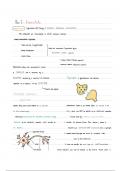
Case study → competition on a rocky shore
- If no Balanus are present, Chthamalus will survive well
- Balanus grow faster and are larger
- When both species are present, the realised niche of the Chthamalus os more restricted than
its potential
- Experiments show that, if one species is removed, the range of the other is increased
Limiting factors and carrying capacity
KEY CONCEPTS → Limiting factors: a resource is limited supply that can affect the growth of a
population
Carrying capacity: the number of individuals in a population that the resources in the environment
can support for an extended period. Once it is reached, the organisms will die
- E.g. frogs reduce their rate of growth and reach maturity at a smaller size than normal when
food resources become a limiting factor
- Shortage can also mean the that very few of a species survive
- Plant populations are most often limited by light, temperature and carbon dioxide, since
these are the basic requirements for photosynthesis
ECOSYSTEMS AND
ECOLOGY
, ESS TOPIC 2: ECOSYSTEMS AND ECOLOGY
1. Species and populations
Species and ecosystems
KEY CONCEPTS → Species: a group of organisms that share common characteristics and can
interbreed to produce fertile offspring
Abiotic VS biotic components: abiotic components are non-living, while biotic components are living
components of an ecosystem
Niches and habitats
KEY CONCEPTS → Habitat: the environment in which a species normally lives
Niche: the set of biotic and abiotic conditions and resources that an organism or population responds
to.
- Fundamental niche: full range of conditions and resources an organism can survive and
reproduce in
- Realised niche: actual conditions a species exists in due to biotic interactions
Abiotic components of an ecosystem
Marine ecosystems (sea, salt marshes, mangroves, saline estuaries)
- Salinity - pH
- Temperature and dissolved oxygen - Wave action
Freshwater ecosystems (rivers and lakes
- Turbidity - Flow velocity
- pH - Temperature and dissolved oxygen
Terrestrial ecosystems (land-based)
- Temperature - Soil particle size
- Light intensity - Slope
- Soil moisture - Drainage (porosity)
- Wind speed
KEY CONCEPT → Population: a group of organisms of the same species that live in the same area at
the same time, and which are able to interbreed
Biotic components and their interactions in an ecosystem
Competition
- Demand by individuals for limited environmental resources
- Intraspecific (within a species) or interspecific (between different species)
, Predation
- When the predator kills the prey
- The effect of a change in the size of one population and its influence on another is shown by
the relationship between predator and prey populations
- If a prey population grows, predators will have more food available and their population will
also increase
- Increasing numbers of predators will eventually reduce the food supply until it can no longer
sustain the predator population
Herbivory
- An animal that feeds on a plant
Parasitism
- When one organism benefits at the expense of another. Type of symbiotic relationship
- Tapeworms are endoparasites which live inside the gut of their host. An animal with many
tapeworms is weakened, as it is deprived of nutrients it needs
Mutualism
- Relationship between two organisms that gives benefit to both
- E.g. lichens form due to a mutualistic union between fungus and alga
- E.g. egyptian plovers and Nile crocodiles both benefit when the birds feed on parasites and
food particles in the crocodile’s motu. The crocodile's teeth are kept clean and the birds
obtain the food they need
Case study → competition on a rocky shore
- If no Balanus are present, Chthamalus will survive well
- Balanus grow faster and are larger
- When both species are present, the realised niche of the Chthamalus os more restricted than
its potential
- Experiments show that, if one species is removed, the range of the other is increased
Limiting factors and carrying capacity
KEY CONCEPTS → Limiting factors: a resource is limited supply that can affect the growth of a
population
Carrying capacity: the number of individuals in a population that the resources in the environment
can support for an extended period. Once it is reached, the organisms will die
- E.g. frogs reduce their rate of growth and reach maturity at a smaller size than normal when
food resources become a limiting factor
- Shortage can also mean the that very few of a species survive
- Plant populations are most often limited by light, temperature and carbon dioxide, since
these are the basic requirements for photosynthesis