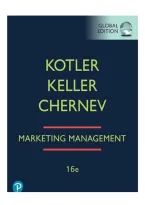
, MARKETING
MANAGEMENT
16th Edition • Chapter-by-Chapter Test Bank
Multiple-choice knowledge checks and applied marketing scenarios
With answers and rationales for every question
,How to Use This Test Bank
Suggested use: attempt each question before reading the answer; explain why the other
options are less suitable; and use the application scenarios to practice making and
defending marketing decisions.
Contents
Part I: Fundamentals of Marketing Management
1. Defining Marketing for the New Realities
2. Marketing Planning and Management
Part II: Understanding the Market
3. Analyzing Consumer Markets
4. Analyzing Business Markets
5. Conducting Marketing Research
Part III: Developing a Winning Marketing Strategy
6. Identifying Market Segments and Target Customers
7. Crafting a Customer Value Proposition and Positioning
Part IV: Designing Value
8. Designing and Managing Products
, 9. Designing and Managing Services
10. Building Strong Brands
11. Managing Pricing and Sales Promotions
Part V: Communicating Value
12. Managing Marketing Communications
13. Designing an Integrated Marketing Campaign in the Digital Age
14. Personal Selling and Direct Marketing
Part VI: Delivering Value
15. Designing and Managing Distribution Channels
16. Managing Retailing
Part VII: Managing Growth
17. Driving Growth in Competitive Markets
18. Developing New Market Offerings
19. Building Customer Loyalty
20. Tapping into Global Markets
21. Socially Responsible Marketing
,Part I: Fundamentals of Marketing Management
Chapter 1: Defining Marketing for the New Realities
Section A — Multiple Choice
1. Which option best describes customer value?
A. The benefits a customer perceives relative to the costs of obtaining an offering.
B. Value proposition: a clear statement of the value and benefits an offering promises
to a target customer.
C. Market orientation: an organization-wide focus on understanding and responding
to customer and market needs.
D. Customer value: the benefits a customer perceives relative to the costs of obtaining
an offering.
Answer: A. The benefits a customer perceives relative to the costs of obtaining an
offering.
Rationale: This concept is defined by the benefits a customer perceives relative to the
costs of obtaining an offering; recognizing it helps connect marketing decisions to
customer and organizational outcomes.
2. A software firm regularly combines customer interviews, sales feedback, and
competitor monitoring before changing its product. Which approach is illustrated?
A. Market orientation.
MANAGEMENT
16th Edition • Chapter-by-Chapter Test Bank
Multiple-choice knowledge checks and applied marketing scenarios
With answers and rationales for every question
,How to Use This Test Bank
Suggested use: attempt each question before reading the answer; explain why the other
options are less suitable; and use the application scenarios to practice making and
defending marketing decisions.
Contents
Part I: Fundamentals of Marketing Management
1. Defining Marketing for the New Realities
2. Marketing Planning and Management
Part II: Understanding the Market
3. Analyzing Consumer Markets
4. Analyzing Business Markets
5. Conducting Marketing Research
Part III: Developing a Winning Marketing Strategy
6. Identifying Market Segments and Target Customers
7. Crafting a Customer Value Proposition and Positioning
Part IV: Designing Value
8. Designing and Managing Products
, 9. Designing and Managing Services
10. Building Strong Brands
11. Managing Pricing and Sales Promotions
Part V: Communicating Value
12. Managing Marketing Communications
13. Designing an Integrated Marketing Campaign in the Digital Age
14. Personal Selling and Direct Marketing
Part VI: Delivering Value
15. Designing and Managing Distribution Channels
16. Managing Retailing
Part VII: Managing Growth
17. Driving Growth in Competitive Markets
18. Developing New Market Offerings
19. Building Customer Loyalty
20. Tapping into Global Markets
21. Socially Responsible Marketing
,Part I: Fundamentals of Marketing Management
Chapter 1: Defining Marketing for the New Realities
Section A — Multiple Choice
1. Which option best describes customer value?
A. The benefits a customer perceives relative to the costs of obtaining an offering.
B. Value proposition: a clear statement of the value and benefits an offering promises
to a target customer.
C. Market orientation: an organization-wide focus on understanding and responding
to customer and market needs.
D. Customer value: the benefits a customer perceives relative to the costs of obtaining
an offering.
Answer: A. The benefits a customer perceives relative to the costs of obtaining an
offering.
Rationale: This concept is defined by the benefits a customer perceives relative to the
costs of obtaining an offering; recognizing it helps connect marketing decisions to
customer and organizational outcomes.
2. A software firm regularly combines customer interviews, sales feedback, and
competitor monitoring before changing its product. Which approach is illustrated?
A. Market orientation.