
2026/2027
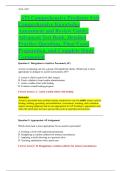
ATI Comprehensive Predictor Exit
Comprehensive Knowledge
Assessment and Review Guide:
Advanced Test Bank, Detailed
Practice Questions, Final Exam
Preparation, and Complete Study
Companion
Question 1: Delegation to Assistive Personnel (AP)
A nurse is planning care for a group of hospitalized clients. Which task is most
appropriate to delegate to assistive personnel (AP)?
A. Assess a client’s pain level after surgery
B. Teach a diabetic client insulin administration
C. Assist a stable client with feeding
D. Evaluate wound healing progress
Correct Answer: C. Assist a stable client with feeding
Rationale:
Assistive personnel may perform routine, noninvasive care for stable clients, such as
feeding, bathing, grooming, and ambulation. Assessment, teaching, and evaluation
require nursing judgment and are not appropriate for AP. Feeding is appropriate only
when the client does not have special risks such as aspiration precautions.
Question 2: Appropriate AP Assignment
Which client task is most appropriate for an assistive personnel?
A. Feeding a client with aspiration pneumonia
B. Reapplying a condom catheter for urinary incontinence
C. Applying a sterile dressing to a pressure ulcer
D. Teaching ambulation with a quad cane
Correct Answer: B. Reapplying a condom catheter for urinary incontinence
,2026/2027
Rationale:
AP can perform routine, noninvasive care for stable clients, including hygiene
measures and basic device care such as condom catheter application. Feeding a client
with aspiration pneumonia, sterile dressing changes, and teaching ambulation all
require nursing judgment or specialized skill.
Question 3: Delegation Safety Communication
Which information is most important for the nurse to include when delegating
ambulation to an AP?
A. Client’s allergy history
B. Client ambulation status and assistive device use
C. Full medical diagnosis list
D. Laboratory results
Correct Answer: B. Client ambulation status and assistive device use
Rationale:
When delegating, the nurse must give clear, task-specific instructions. The AP needs to
know the client’s mobility level, whether a walker or cane is required, and any safety
concerns. This information directly affects safe ambulation.
Question 4: LPN Assignment Questioning
Which task should an LPN question?
A. Incentive spirometer teaching reinforcement
B. Clean-catch urine specimen collection
C. Nasopharyngeal suctioning
D. PCA pump cartridge replacement
Correct Answer: D. PCA pump cartridge replacement
Rationale:
PCA pump management involves high-risk opioid medication administration and
requires advanced assessment and medication safety oversight, typically by an RN.
LPNs may perform many routine skills, but PCA pump cartridge replacement is too
high-risk to assign without proper RN oversight and facility policy support.
Question 5: Five Rights of Delegation
Which are part of the “Five Rights of Delegation”? (Select all that apply)
,2026/2027
A. Right client
B. Right supervision/evaluation
C. Right direction/communication
D. Right time
E. Right circumstances
Correct Answer: B, C, E
Rationale:
The Five Rights of Delegation are:
• Right task
• Right circumstance
• Right person
• Right direction/communication
• Right supervision/evaluation
“Right client” and “right time” are not formal parts of the five rights, even though they
are still important considerations.
Question 6: Staffing Assignment Priority
A client is returning from PACU after thoracic surgery. Who should receive this
assignment?
A. AP
B. LPN
C. RN
D. Unit clerk
Correct Answer: C. RN
Rationale:
A client returning from thoracic surgery is high acuity and requires assessment of
airway, breathing, circulation, pain, and complications such as bleeding or respiratory
compromise. This requires an RN’s critical thinking and assessment skills.
Question 7: Ethics Definition
What is the study of conduct and moral principles called?
, 2026/2027
A. Morals
B. Ethics
C. Autonomy
D. Justice
Correct Answer: B. Ethics
Rationale:
Ethics is the formal study of moral principles that guide behavior and decision-
making. Morals are personal beliefs about right and wrong. Autonomy and justice are
ethical principles, not the study itself.
Question 8: Autonomy Principle
A client refuses coronary bypass surgery despite severe disease. This reflects:
A. Justice
B. Beneficence
C. Autonomy
D. Fidelity
Correct Answer: C. Autonomy
Rationale:
Autonomy is the right of clients to make their own healthcare decisions, even if those
decisions involve risk. Respecting informed refusal is a key ethical obligation.
Question 9: Beneficence in Nursing
Which action reflects beneficence?
A. Respecting refusal of treatment
B. Offering pain medication before ambulation
C. Allocating equal resources to all clients
D. Reporting unsafe practice
Correct Answer: B. Offering pain medication before ambulation
Rationale:
Beneficence means doing good and promoting the client’s well-being. Giving pain
medication before movement helps reduce discomfort and supports recovery.
Question 10: Justice Principle
ATI Comprehensive Predictor Exit
Comprehensive Knowledge
Assessment and Review Guide:
Advanced Test Bank, Detailed
Practice Questions, Final Exam
Preparation, and Complete Study
Companion
Question 1: Delegation to Assistive Personnel (AP)
A nurse is planning care for a group of hospitalized clients. Which task is most
appropriate to delegate to assistive personnel (AP)?
A. Assess a client’s pain level after surgery
B. Teach a diabetic client insulin administration
C. Assist a stable client with feeding
D. Evaluate wound healing progress
Correct Answer: C. Assist a stable client with feeding
Rationale:
Assistive personnel may perform routine, noninvasive care for stable clients, such as
feeding, bathing, grooming, and ambulation. Assessment, teaching, and evaluation
require nursing judgment and are not appropriate for AP. Feeding is appropriate only
when the client does not have special risks such as aspiration precautions.
Question 2: Appropriate AP Assignment
Which client task is most appropriate for an assistive personnel?
A. Feeding a client with aspiration pneumonia
B. Reapplying a condom catheter for urinary incontinence
C. Applying a sterile dressing to a pressure ulcer
D. Teaching ambulation with a quad cane
Correct Answer: B. Reapplying a condom catheter for urinary incontinence
,2026/2027
Rationale:
AP can perform routine, noninvasive care for stable clients, including hygiene
measures and basic device care such as condom catheter application. Feeding a client
with aspiration pneumonia, sterile dressing changes, and teaching ambulation all
require nursing judgment or specialized skill.
Question 3: Delegation Safety Communication
Which information is most important for the nurse to include when delegating
ambulation to an AP?
A. Client’s allergy history
B. Client ambulation status and assistive device use
C. Full medical diagnosis list
D. Laboratory results
Correct Answer: B. Client ambulation status and assistive device use
Rationale:
When delegating, the nurse must give clear, task-specific instructions. The AP needs to
know the client’s mobility level, whether a walker or cane is required, and any safety
concerns. This information directly affects safe ambulation.
Question 4: LPN Assignment Questioning
Which task should an LPN question?
A. Incentive spirometer teaching reinforcement
B. Clean-catch urine specimen collection
C. Nasopharyngeal suctioning
D. PCA pump cartridge replacement
Correct Answer: D. PCA pump cartridge replacement
Rationale:
PCA pump management involves high-risk opioid medication administration and
requires advanced assessment and medication safety oversight, typically by an RN.
LPNs may perform many routine skills, but PCA pump cartridge replacement is too
high-risk to assign without proper RN oversight and facility policy support.
Question 5: Five Rights of Delegation
Which are part of the “Five Rights of Delegation”? (Select all that apply)
,2026/2027
A. Right client
B. Right supervision/evaluation
C. Right direction/communication
D. Right time
E. Right circumstances
Correct Answer: B, C, E
Rationale:
The Five Rights of Delegation are:
• Right task
• Right circumstance
• Right person
• Right direction/communication
• Right supervision/evaluation
“Right client” and “right time” are not formal parts of the five rights, even though they
are still important considerations.
Question 6: Staffing Assignment Priority
A client is returning from PACU after thoracic surgery. Who should receive this
assignment?
A. AP
B. LPN
C. RN
D. Unit clerk
Correct Answer: C. RN
Rationale:
A client returning from thoracic surgery is high acuity and requires assessment of
airway, breathing, circulation, pain, and complications such as bleeding or respiratory
compromise. This requires an RN’s critical thinking and assessment skills.
Question 7: Ethics Definition
What is the study of conduct and moral principles called?
, 2026/2027
A. Morals
B. Ethics
C. Autonomy
D. Justice
Correct Answer: B. Ethics
Rationale:
Ethics is the formal study of moral principles that guide behavior and decision-
making. Morals are personal beliefs about right and wrong. Autonomy and justice are
ethical principles, not the study itself.
Question 8: Autonomy Principle
A client refuses coronary bypass surgery despite severe disease. This reflects:
A. Justice
B. Beneficence
C. Autonomy
D. Fidelity
Correct Answer: C. Autonomy
Rationale:
Autonomy is the right of clients to make their own healthcare decisions, even if those
decisions involve risk. Respecting informed refusal is a key ethical obligation.
Question 9: Beneficence in Nursing
Which action reflects beneficence?
A. Respecting refusal of treatment
B. Offering pain medication before ambulation
C. Allocating equal resources to all clients
D. Reporting unsafe practice
Correct Answer: B. Offering pain medication before ambulation
Rationale:
Beneficence means doing good and promoting the client’s well-being. Giving pain
medication before movement helps reduce discomfort and supports recovery.
Question 10: Justice Principle


