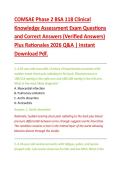
COMSAE Phase 2 BSA 118 Clinical
Knowledge Assessment Exam Questions
and Correct Answers (Verified Answers)
Plus Rationales 2026 Q&A | Instant
Download Pdf.
1. A 65-year-old man with a history of hypertension presents with
sudden-onset chest pain radiating to his back. Blood pressure is
190/110 mmHg in the right arm and 160/100 mmHg in the left arm.
What is the most likely diagnosis?
A. Myocardial infarction
B. Pulmonary embolism
C. Aortic dissection
D. Pericarditis
Answer: C. Aortic dissection
Rationale: Sudden tearing chest pain radiating to the back plus blood
pressure differential between arms strongly suggests aortic dissection.
The condition involves a tear in the intimal layer of the aorta allowing
blood to dissect through the media.
2. A 24-year-old woman presents with fatigue, pallor, and spoon-
shaped nails. Lab results show low ferritin and low MCV. What is the
,most likely cause?
A. Vitamin B12 deficiency
B. Iron deficiency anemia
C. Anemia of chronic disease
D. Thalassemia
Answer: B. Iron deficiency anemia
Rationale: Koilonychia (spoon nails), low MCV, and low ferritin indicate
iron deficiency anemia, commonly due to blood loss or poor dietary
intake.
3. A patient with COPD presents with increased dyspnea and
productive cough. Which organism is most commonly responsible for
acute exacerbations?
A. Streptococcus pneumoniae
B. Mycoplasma pneumoniae
C. Haemophilus influenzae
D. Legionella pneumophila
Answer: C. Haemophilus influenzae
Rationale: H. influenzae is one of the most common bacterial causes of
COPD exacerbations along with Streptococcus pneumoniae.
4. A 30-year-old man presents with tremor, weight loss, and heat
intolerance. Labs show low TSH and elevated T3/T4. What is the most
likely diagnosis?
A. Hashimoto thyroiditis
,B. Graves disease
C. Subacute thyroiditis
D. Thyroid cancer
Answer: B. Graves disease
Rationale: Suppressed TSH with elevated thyroid hormones and
hyperthyroid symptoms indicate Graves disease, an autoimmune
condition involving TSH receptor stimulation.
5. A newborn presents with cyanosis that improves when crying. A
continuous “machine-like” murmur is heard. What is the diagnosis?
A. Tetralogy of Fallot
B. Patent ductus arteriosus
C. Transposition of great vessels
D. Ventricular septal defect
Answer: B. Patent ductus arteriosus
Rationale: PDA causes continuous murmur and is associated with
increased pulmonary blood flow; cyanosis may vary depending on shunt
direction.
6. A patient presents with episodic palpitations, headache, and
diaphoresis. What tumor is most likely?
A. Thyroid adenoma
B. Pheochromocytoma
C. Pituitary adenoma
D. Adrenal insufficiency
, Answer: B. Pheochromocytoma
Rationale: The triad of episodic headache, sweating, and palpitations is
classic for catecholamine-secreting pheochromocytoma.
7. A patient with cirrhosis develops confusion, asterixis, and elevated
ammonia levels. What is the best initial treatment?
A. Lactulose
B. Furosemide
C. Spironolactone
D. Rifaximin alone
Answer: A. Lactulose
Rationale: Lactulose reduces ammonia absorption by converting it into
ammonium and promoting excretion, first-line for hepatic
encephalopathy.
8. A 55-year-old smoker has hematuria and a mass in the kidney. What
is the most likely diagnosis?
A. Wilms tumor
B. Renal cell carcinoma
C. Bladder cancer
D. Polycystic kidney disease
Answer: B. Renal cell carcinoma
Rationale: Classic triad of hematuria, flank mass, and smoking history
suggests renal cell carcinoma.
Knowledge Assessment Exam Questions
and Correct Answers (Verified Answers)
Plus Rationales 2026 Q&A | Instant
Download Pdf.
1. A 65-year-old man with a history of hypertension presents with
sudden-onset chest pain radiating to his back. Blood pressure is
190/110 mmHg in the right arm and 160/100 mmHg in the left arm.
What is the most likely diagnosis?
A. Myocardial infarction
B. Pulmonary embolism
C. Aortic dissection
D. Pericarditis
Answer: C. Aortic dissection
Rationale: Sudden tearing chest pain radiating to the back plus blood
pressure differential between arms strongly suggests aortic dissection.
The condition involves a tear in the intimal layer of the aorta allowing
blood to dissect through the media.
2. A 24-year-old woman presents with fatigue, pallor, and spoon-
shaped nails. Lab results show low ferritin and low MCV. What is the
,most likely cause?
A. Vitamin B12 deficiency
B. Iron deficiency anemia
C. Anemia of chronic disease
D. Thalassemia
Answer: B. Iron deficiency anemia
Rationale: Koilonychia (spoon nails), low MCV, and low ferritin indicate
iron deficiency anemia, commonly due to blood loss or poor dietary
intake.
3. A patient with COPD presents with increased dyspnea and
productive cough. Which organism is most commonly responsible for
acute exacerbations?
A. Streptococcus pneumoniae
B. Mycoplasma pneumoniae
C. Haemophilus influenzae
D. Legionella pneumophila
Answer: C. Haemophilus influenzae
Rationale: H. influenzae is one of the most common bacterial causes of
COPD exacerbations along with Streptococcus pneumoniae.
4. A 30-year-old man presents with tremor, weight loss, and heat
intolerance. Labs show low TSH and elevated T3/T4. What is the most
likely diagnosis?
A. Hashimoto thyroiditis
,B. Graves disease
C. Subacute thyroiditis
D. Thyroid cancer
Answer: B. Graves disease
Rationale: Suppressed TSH with elevated thyroid hormones and
hyperthyroid symptoms indicate Graves disease, an autoimmune
condition involving TSH receptor stimulation.
5. A newborn presents with cyanosis that improves when crying. A
continuous “machine-like” murmur is heard. What is the diagnosis?
A. Tetralogy of Fallot
B. Patent ductus arteriosus
C. Transposition of great vessels
D. Ventricular septal defect
Answer: B. Patent ductus arteriosus
Rationale: PDA causes continuous murmur and is associated with
increased pulmonary blood flow; cyanosis may vary depending on shunt
direction.
6. A patient presents with episodic palpitations, headache, and
diaphoresis. What tumor is most likely?
A. Thyroid adenoma
B. Pheochromocytoma
C. Pituitary adenoma
D. Adrenal insufficiency
, Answer: B. Pheochromocytoma
Rationale: The triad of episodic headache, sweating, and palpitations is
classic for catecholamine-secreting pheochromocytoma.
7. A patient with cirrhosis develops confusion, asterixis, and elevated
ammonia levels. What is the best initial treatment?
A. Lactulose
B. Furosemide
C. Spironolactone
D. Rifaximin alone
Answer: A. Lactulose
Rationale: Lactulose reduces ammonia absorption by converting it into
ammonium and promoting excretion, first-line for hepatic
encephalopathy.
8. A 55-year-old smoker has hematuria and a mass in the kidney. What
is the most likely diagnosis?
A. Wilms tumor
B. Renal cell carcinoma
C. Bladder cancer
D. Polycystic kidney disease
Answer: B. Renal cell carcinoma
Rationale: Classic triad of hematuria, flank mass, and smoking history
suggests renal cell carcinoma.