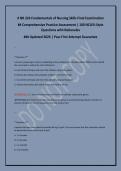
# NR 224 Fundamentals of Nursing Final Examination Success
Blueprint | 100 Comprehensive NCLEX-Style Questions with
Rationales | Updated 2026 Edition | Pass First Attempt
---
**Question 1**
A nurse is preparing to administer a medication that requires a deltoid intramuscular injection. Which
landmark should the nurse use to locate this site?
A. Two to three fingerbreadths below the acromion process
B. One to two fingerbreadths above the antecubital fossa
C. Midpoint between the patella and the tibial tuberosity
D. The center of the gluteal fold
💫RATIONALE✔️✔️: The deltoid site is located two to three fingerbreadths below the acromion process.
This site is commonly used for small-volume injections (up to 2 mL).
💫ANSWER✔️✔️: A. Two to three fingerbreadths below the acromion process
---
**Question 2**
The nurse is assessing a patient who reports lightheadedness upon standing. The patient's blood
pressure drops from 140/90 mmHg to 110/70 mmHg when standing. The nurse should document this
finding as:
A. Hypertension
B. Orthostatic hypotension
C. Syncope
D. Hypotension
,💫RATIONALE✔️✔️: Orthostatic hypotension is defined as a drop of ≥20 mmHg systolic or ≥10 mmHg
diastolic blood pressure upon standing. This finding is often associated with dehydration or medication
side effects.
💫ANSWER✔️✔️: B. Orthostatic hypotension
---
**Question 3**
A patient with a urinary tract infection is prescribed an antibiotic. Which nursing action is most
appropriate before administering the medication?
A. Obtain a clean-catch urine specimen
B. Administer the medication immediately
C. Ask the patient about medication allergies
D. Check the patient's temperature
💫RATIONALE✔️✔️: Assessing for medication allergies is essential before administering any new
medication to prevent anaphylactic reactions. This is a standard safety precaution.
💫ANSWER✔️✔️: C. Ask the patient about medication allergies
---
**Question 4**
A nurse is caring for a patient who has a nasogastric tube for decompression. The nurse notes that the
patient has absent bowel sounds. What action should the nurse take?
A. Continue with the current plan of care
B. Report the finding to the healthcare provider
C. Flush the tube with 50 mL of water
D. Advance the tube 2 inches further
💫RATIONALE✔️✔️: Absent bowel sounds may indicate an ileus or bowel obstruction. This finding should
be reported to the healthcare provider immediately for further evaluation.
,💫ANSWER✔️✔️: B. Report the finding to the healthcare provider
---
**Question 5**
A patient is prescribed 600 mg of a medication that is available as 300 mg per tablet. How many tablets
will the nurse administer?
A. 1 tablet
B. 1.5 tablets
C. 2 tablets
D. 2.5 tablets
💫RATIONALE✔️✔️: 600 mg ÷ 300 mg per tablet = 2 tablets. Accurate dosage calculation is critical for
patient safety.
💫ANSWER✔️✔️: C. 2 tablets
---
**Question 6**
A nurse is implementing fall prevention strategies for an elderly patient. Which intervention is the
priority?
A. Applying physical restraints
B. Maintaining bed in the lowest position
C. Keeping the room completely dark at night
D. Placing the call light out of the patient's reach
💫RATIONALE✔️✔️: Maintaining the bed in the lowest position reduces the risk of injury if the patient
attempts to get out of bed unassisted. This is a key fall prevention intervention.
💫ANSWER✔️✔️: B. Maintaining bed in the lowest position
, ---
**Question 7**
During a skin assessment, the nurse notes a wound that is red, warm, and tender with purulent
drainage. The nurse should document this finding as:
A. A stage 1 pressure injury
B. A wound infection
C. A healing wound
D. A stage 2 pressure injury
💫RATIONALE✔️✔️: Redness, warmth, tenderness, and purulent drainage are classic signs of wound
infection. The nurse should obtain a wound culture and notify the healthcare provider.
💫ANSWER✔️✔️: B. A wound infection
---
**Question 8**
The nurse is preparing to measure a patient's blood pressure. Which cuff size should the nurse select?
A. A cuff that is too small for the patient's arm
B. A cuff that covers 40% of the patient's arm circumference
C. A cuff that covers 80% of the patient's arm circumference
D. A cuff that completely covers the patient's forearm
💫RATIONALE✔️✔️: The correct blood pressure cuff should have a bladder width that covers 40% and
length that covers 80% of the arm circumference. Using an incorrectly sized cuff leads to inaccurate
readings.
💫ANSWER✔️✔️: C. A cuff that covers 80% of the patient's arm circumference
---
Blueprint | 100 Comprehensive NCLEX-Style Questions with
Rationales | Updated 2026 Edition | Pass First Attempt
---
**Question 1**
A nurse is preparing to administer a medication that requires a deltoid intramuscular injection. Which
landmark should the nurse use to locate this site?
A. Two to three fingerbreadths below the acromion process
B. One to two fingerbreadths above the antecubital fossa
C. Midpoint between the patella and the tibial tuberosity
D. The center of the gluteal fold
💫RATIONALE✔️✔️: The deltoid site is located two to three fingerbreadths below the acromion process.
This site is commonly used for small-volume injections (up to 2 mL).
💫ANSWER✔️✔️: A. Two to three fingerbreadths below the acromion process
---
**Question 2**
The nurse is assessing a patient who reports lightheadedness upon standing. The patient's blood
pressure drops from 140/90 mmHg to 110/70 mmHg when standing. The nurse should document this
finding as:
A. Hypertension
B. Orthostatic hypotension
C. Syncope
D. Hypotension
,💫RATIONALE✔️✔️: Orthostatic hypotension is defined as a drop of ≥20 mmHg systolic or ≥10 mmHg
diastolic blood pressure upon standing. This finding is often associated with dehydration or medication
side effects.
💫ANSWER✔️✔️: B. Orthostatic hypotension
---
**Question 3**
A patient with a urinary tract infection is prescribed an antibiotic. Which nursing action is most
appropriate before administering the medication?
A. Obtain a clean-catch urine specimen
B. Administer the medication immediately
C. Ask the patient about medication allergies
D. Check the patient's temperature
💫RATIONALE✔️✔️: Assessing for medication allergies is essential before administering any new
medication to prevent anaphylactic reactions. This is a standard safety precaution.
💫ANSWER✔️✔️: C. Ask the patient about medication allergies
---
**Question 4**
A nurse is caring for a patient who has a nasogastric tube for decompression. The nurse notes that the
patient has absent bowel sounds. What action should the nurse take?
A. Continue with the current plan of care
B. Report the finding to the healthcare provider
C. Flush the tube with 50 mL of water
D. Advance the tube 2 inches further
💫RATIONALE✔️✔️: Absent bowel sounds may indicate an ileus or bowel obstruction. This finding should
be reported to the healthcare provider immediately for further evaluation.
,💫ANSWER✔️✔️: B. Report the finding to the healthcare provider
---
**Question 5**
A patient is prescribed 600 mg of a medication that is available as 300 mg per tablet. How many tablets
will the nurse administer?
A. 1 tablet
B. 1.5 tablets
C. 2 tablets
D. 2.5 tablets
💫RATIONALE✔️✔️: 600 mg ÷ 300 mg per tablet = 2 tablets. Accurate dosage calculation is critical for
patient safety.
💫ANSWER✔️✔️: C. 2 tablets
---
**Question 6**
A nurse is implementing fall prevention strategies for an elderly patient. Which intervention is the
priority?
A. Applying physical restraints
B. Maintaining bed in the lowest position
C. Keeping the room completely dark at night
D. Placing the call light out of the patient's reach
💫RATIONALE✔️✔️: Maintaining the bed in the lowest position reduces the risk of injury if the patient
attempts to get out of bed unassisted. This is a key fall prevention intervention.
💫ANSWER✔️✔️: B. Maintaining bed in the lowest position
, ---
**Question 7**
During a skin assessment, the nurse notes a wound that is red, warm, and tender with purulent
drainage. The nurse should document this finding as:
A. A stage 1 pressure injury
B. A wound infection
C. A healing wound
D. A stage 2 pressure injury
💫RATIONALE✔️✔️: Redness, warmth, tenderness, and purulent drainage are classic signs of wound
infection. The nurse should obtain a wound culture and notify the healthcare provider.
💫ANSWER✔️✔️: B. A wound infection
---
**Question 8**
The nurse is preparing to measure a patient's blood pressure. Which cuff size should the nurse select?
A. A cuff that is too small for the patient's arm
B. A cuff that covers 40% of the patient's arm circumference
C. A cuff that covers 80% of the patient's arm circumference
D. A cuff that completely covers the patient's forearm
💫RATIONALE✔️✔️: The correct blood pressure cuff should have a bladder width that covers 40% and
length that covers 80% of the arm circumference. Using an incorrectly sized cuff leads to inaccurate
readings.
💫ANSWER✔️✔️: C. A cuff that covers 80% of the patient's arm circumference
---