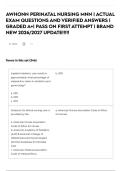
AWHONN PERINATAL NURSING MNN | ACTUAL
EXAM QUESTIONS AND VERIFIED ANSWERS |
GRADED A+| PASS ON FIRST ATTEMPT | BRAND
NEW 2026/2027 UPDATE!!!!!
Save
Terms in this set (346)
Inpatient obstetric care results in b. 50%
approximately what percentage of
malpractice claims in obstetrics and
gynecology?
a. 25%
b. 50%
c. 70%
Guidance for ethical nursing care is a. American Nurses Association Code of Ethics
provided by the: for Nurses
a. American Nurses Association
Code of Ethics for Nurses
b. American Academy of Pediatrics
(AAP) & American College of
Obstetricians and Gynecologists
(ACOG) Guidelines for Perinatal
Care
c. American Medical Association
Code of Medical Ethics
,Disruptive clinician behavior: a. is often directly linked to clinical practice issues
a. is often directly linked to clinical
practice issues
b. rarely involves clinical practice
issues
c. should be handled separately
from clinical practice issues
The best approach for addressing a. immediate intervention
disruptive clinician behavior is
a. immediate intervention
b. monitoring trends
c. peer review
Successful defense of malpractice b. national professional standards
claims is enhanced by following:
a. community standards
b. national professional standards
c. trends in practice
, When a sentinel event occurs, a. a root-cause analysis should be conducted
according to The joint Commission
(TJC),
a. a root-cause analysis should be
conducted
b. it must be reported to TJC within
60 days
c. those involved should be placed
on administrative leave pending an
investigation
Based on TJC criteria, which of the c. unanticipated death of a full turn infant
following clinical situations is a
sentinel event?
a. any unexplained adverse
occurrence
b. birth of a baby with previously
undiagnosed congenital
abnormalities
c. unanticipated death of a full turn
infant
The purpose of the root-cause c. review potentially contributing systems
analysis process is to
a. determine fault of the healthcare
provider or hospital
b. examine institutional liability
c. review potentially contributing
systems
EXAM QUESTIONS AND VERIFIED ANSWERS |
GRADED A+| PASS ON FIRST ATTEMPT | BRAND
NEW 2026/2027 UPDATE!!!!!
Save
Terms in this set (346)
Inpatient obstetric care results in b. 50%
approximately what percentage of
malpractice claims in obstetrics and
gynecology?
a. 25%
b. 50%
c. 70%
Guidance for ethical nursing care is a. American Nurses Association Code of Ethics
provided by the: for Nurses
a. American Nurses Association
Code of Ethics for Nurses
b. American Academy of Pediatrics
(AAP) & American College of
Obstetricians and Gynecologists
(ACOG) Guidelines for Perinatal
Care
c. American Medical Association
Code of Medical Ethics
,Disruptive clinician behavior: a. is often directly linked to clinical practice issues
a. is often directly linked to clinical
practice issues
b. rarely involves clinical practice
issues
c. should be handled separately
from clinical practice issues
The best approach for addressing a. immediate intervention
disruptive clinician behavior is
a. immediate intervention
b. monitoring trends
c. peer review
Successful defense of malpractice b. national professional standards
claims is enhanced by following:
a. community standards
b. national professional standards
c. trends in practice
, When a sentinel event occurs, a. a root-cause analysis should be conducted
according to The joint Commission
(TJC),
a. a root-cause analysis should be
conducted
b. it must be reported to TJC within
60 days
c. those involved should be placed
on administrative leave pending an
investigation
Based on TJC criteria, which of the c. unanticipated death of a full turn infant
following clinical situations is a
sentinel event?
a. any unexplained adverse
occurrence
b. birth of a baby with previously
undiagnosed congenital
abnormalities
c. unanticipated death of a full turn
infant
The purpose of the root-cause c. review potentially contributing systems
analysis process is to
a. determine fault of the healthcare
provider or hospital
b. examine institutional liability
c. review potentially contributing
systems