Student of James Madison University (PSYC Major)
Notes of classes that I have taken
- 3
- 0
- 0
Community
- Followers
- Following

3 items
Final Exam PSYC 101
Complete set of notes for the course PSYC 101
- Summary
- • 176 pages •
Complete set of notes for the course PSYC 101
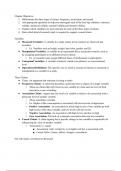
Claims and Validity in Research
This document from Chapter 3 outlines how to distinguish among the three main types of research claims—frequency, association, and causal—and emphasizes evaluating them using the four big validities: construct, statistical, external, and internal. It explains that while frequency and association claims rely mostly on measurement and correlations, causal claims require experimental design, including control of variables, temporal precedence, and ruling out confounds. The chapter encourages cr...
- Book
- Class notes
- • 6 pages •
This document from Chapter 3 outlines how to distinguish among the three main types of research claims—frequency, association, and causal—and emphasizes evaluating them using the four big validities: construct, statistical, external, and internal. It explains that while frequency and association claims rely mostly on measurement and correlations, causal claims require experimental design, including control of variables, temporal precedence, and ruling out confounds. The chapter encourages cr...
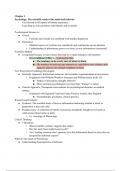
Theory-Data Cycle and Types of Research
This document summarizes Chapters 1 and 2, emphasizing the importance of empirical research and scientific reasoning over intuition, personal experience, or authority. It explains the theory-data cycle, types of research (basic, applied, and translational), scientific norms, and how to critically evaluate sources of information. The chapters also highlight common cognitive biases, such as confirmation bias and the availability heuristic, and provide strategies for accessing and understanding pee...
- Book
- Class notes
- • 11 pages •
This document summarizes Chapters 1 and 2, emphasizing the importance of empirical research and scientific reasoning over intuition, personal experience, or authority. It explains the theory-data cycle, types of research (basic, applied, and translational), scientific norms, and how to critically evaluate sources of information. The chapters also highlight common cognitive biases, such as confirmation bias and the availability heuristic, and provide strategies for accessing and understanding pee...