

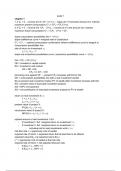
week 1
chapter 1
1: if C1 = 0 → borrow at t=0: CF1 / (1+rf) → repay at t=1 borrowed amount incl. interest
maximum present consumption C*0 = CF0 + CF1/(1+rf)
2: if C0 = 0 → lend at t=0: CF0 · (1+rf) → receive at t=1 lent amount incl. interest
maximum future consumption C*1 = CF0 · (1+rf) + CF1
slope consumption possibilities line = –(1+rf)
slope indifference curve = marginal rate of substitution
C*0 = C*1 → optimal consumption combination (where indifference curve is tangent to
consumption possibilities line
rate of return on investment: rA
rA = IA,1 / IA,0 – 1
slope real investment possibilities curve / production possibilities curve = –(1+ri)
OA = CF0 + CF1/(1+rf)
OE = invested in capital market
EA = invested in real market
OA = OE + EA
CF0 = 0, CF1 = OH
borrowing now against OF → present CF0 increases with EG to OG
GH = consumption possibilities line with a real investment market
EA as present real investment makes PV of wealth after investment increase with EG
EG = present value of executed investment projects
AG = NPV of investment
AG = net contribution of executed investment projects to PV of wealth
return on real investment X: rX
1 + rX = IX,1 / IX,0
IX,0 = IX,1 / (1 + rX)
present value of project X:
PV(X) = IX,1 / (1 + rf)
net present value of project X:
NPV(X) = –I0 + IX,1 / (1 + rf)
optimal amount of real investment = EA
- if investment < EA, marginal return on investment > rf
- if investment > EA, marginal return on investment < rf
- individual will do real investments until rx = rf
risk-free rate rf = opportunity cost of capital
required rate of return = expected return that at least has to be offered
expected value E(IX,1) & expected return E(rX)
rx* = opportunity cost of capital at that risk rate
required rate of return = risk-adjusted discount rate
- if E(rX) > rX , NPV > 0
- if E(rX) < rX , NPV < 0
chapter 1
1: if C1 = 0 → borrow at t=0: CF1 / (1+rf) → repay at t=1 borrowed amount incl. interest
maximum present consumption C*0 = CF0 + CF1/(1+rf)
2: if C0 = 0 → lend at t=0: CF0 · (1+rf) → receive at t=1 lent amount incl. interest
maximum future consumption C*1 = CF0 · (1+rf) + CF1
slope consumption possibilities line = –(1+rf)
slope indifference curve = marginal rate of substitution
C*0 = C*1 → optimal consumption combination (where indifference curve is tangent to
consumption possibilities line
rate of return on investment: rA
rA = IA,1 / IA,0 – 1
slope real investment possibilities curve / production possibilities curve = –(1+ri)
OA = CF0 + CF1/(1+rf)
OE = invested in capital market
EA = invested in real market
OA = OE + EA
CF0 = 0, CF1 = OH
borrowing now against OF → present CF0 increases with EG to OG
GH = consumption possibilities line with a real investment market
EA as present real investment makes PV of wealth after investment increase with EG
EG = present value of executed investment projects
AG = NPV of investment
AG = net contribution of executed investment projects to PV of wealth
return on real investment X: rX
1 + rX = IX,1 / IX,0
IX,0 = IX,1 / (1 + rX)
present value of project X:
PV(X) = IX,1 / (1 + rf)
net present value of project X:
NPV(X) = –I0 + IX,1 / (1 + rf)
optimal amount of real investment = EA
- if investment < EA, marginal return on investment > rf
- if investment > EA, marginal return on investment < rf
- individual will do real investments until rx = rf
risk-free rate rf = opportunity cost of capital
required rate of return = expected return that at least has to be offered
expected value E(IX,1) & expected return E(rX)
rx* = opportunity cost of capital at that risk rate
required rate of return = risk-adjusted discount rate
- if E(rX) > rX , NPV > 0
- if E(rX) < rX , NPV < 0



