
- Study guides, Class notes & Summaries
Looking for the best study guides, study notes and summaries about ? On this page you'll find 101 study documents about .
Package deal
All Nace Packaged Exams 2024/2025
All Nace Packaged Exams 2024/2025...
 luzlinkuz
Exam (elaborations)
Nace Cip 2 Exam With Questions And Answers
Nace Cip 2 Exam With Questions And Answers ...
luzlinkuz

Exam (elaborations)
NACE CIP 2 Final Exam Questions with Verified Answers Latest 2023 / 2024 (Graded A+)
NACE CIP 2 Final Exam Questions with Verified Answers Latest 2023 / 2024 (Graded A+) What is the cause of chalking in epoxy coating UV or radiation exposure What is polymerization cured coating? Two parts mixed together just prior to use Examples of non-convertible coatings 1. Chlorinated rubber 2. Vinyl 3. Acrylic 4. Bituminous Non-convertible curing def. No chemical change during cure cycle Convertible curing def. Some chemical change during cure cycle What info should be included...
 MedTestPro
Exam (elaborations)
NACE CIP 2 EXAM Questions With Questions and Verified Answers Latest Updated 2023/2024 Graded A+
NACE CIP 2 EXAM Questions With Questions and Verified Answers Latest Updated 2023/2024 Graded A+ Describe passivation Passivation is the formation of a protective oxide Film on the surface reducing its chemical activity and its ability to corrode Describe the following factors and how they affect corrosion Oxygen: oxygen increases the rate of corrosion temperature Temperature: corrosion usually accelerated with increasing temperature Chemical salts: increase the rate of corrosion by incr...
MedTestPro
Exam (elaborations)
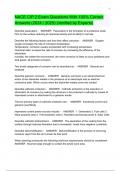
NACE CIP 2 Study Guides Questions With 100% Correct Answers (2024 / 2025) (Verified by Experts)
What is the cause of chalking in epoxy coating - ANSWER UV or radiation exposure What is polymerization cured coating? - ANSWER Two parts mixed together just prior to use Examples of non-convertible coatings - ANSWER 1. Chlorinated rubber 2. Vinyl 3. Acrylic 4. Bituminous Non-convertible curing def. - ANSWER No chemical change during cure cycle
 firstclassachieverstuvia
Exam (elaborations)
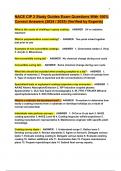
NACE CIP 2 Exam Questions With 100% Correct Answers (2024 / 2025) (Verified by Experts)
Describe passivation - ANSWER Passivation is the formation of a protective oxide Film on the surface reducing its chemical activity and its ability to corrode Describe the following factors and how they affect corrosion - ANSWER Oxygen: oxygen increases the rate of corrosion temperature Temperature: corrosion usually accelerated with increasing temperature Chemical salts: increase the rate of corrosion by increasing the efficiency of the electrolyte humidity: the wetter the environment, t...
firstclassachieverstuvia
Exam (elaborations)
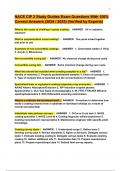
NACE CIP 2 Study Guides Exam Questions With 100% Correct Answers (2024 / 2025) (Verified by Experts)
What is the cause of chalking in epoxy coating - ANSWER UV or radiation exposure What is polymerization cured coating? - ANSWER Two parts mixed together just prior to use Examples of non-convertible coatings - ANSWER 1. Chlorinated rubber 2. Vinyl 3. Acrylic 4. Bituminous Non-convertible curing def. - ANSWER No chemical change during cure cycle Convertible curing def. - ANSWER Some chemical change during cure cycle
firstclassachieverstuvia
Exam (elaborations)
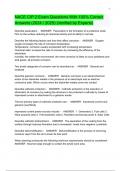
NACE CIP 2 Study Guides Exam Questions With 100% Correct Answers (2024 / 2025) (Verified by Experts)
What is the cause of chalking in epoxy coating - ANSWER UV or radiation exposure What is polymerization cured coating? - ANSWER Two parts mixed together just prior to use Examples of non-convertible coatings - ANSWER 1. Chlorinated rubber 2. Vinyl 3. Acrylic 4. Bituminous Non-convertible curing def. - ANSWER No chemical change during cure cycle
 easypasstuvia
Exam (elaborations)
NACE CIP 2 Exam Questions With 100% Correct Answers (2024 / 2025) (Verified by Experts)
Describe passivation - ANSWER Passivation is the formation of a protective oxide Film on the surface reducing its chemical activity and its ability to corrode Describe the following factors and how they affect corrosion - ANSWER Oxygen: oxygen increases the rate of corrosion temperature Temperature: corrosion usually accelerated with increasing temperature Chemical salts: increase the rate of corrosion by increasing the efficiency of the electrolyte humidity: the wetter the envi...
easypasstuvia
Exam (elaborations)
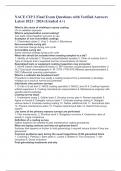
NACE CIP 2 Final Exam Questions with Verified Answers Latest 2023 / 2024 (Graded A+)
NACE CIP 2 Final Exam Questions with Verified Answers Latest 2023 / 2024 (Graded A+) What is the cause of chalking in epoxy coating UV or radiation exposure What is polymerization cured coating? Two parts mixed together just prior to use Examples of non-convertible coatings 1. Chlorinated rubber 2. Vinyl 3. Acrylic 4. Bituminous Non-convertible curing def. No chemical change during cure cycle Convertible curing def. Some chemical change during cure cycle What info should be included...
 TheInstructor
Exam (elaborations)
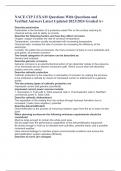
NACE CIP 2 EXAM Questions With Questions and Verified Answers Latest Updated 2023/2024 Graded A+
NACE CIP 2 EXAM Questions With Questions and Verified Answers Latest Updated 2023/2024 Graded A+ Describe passivation Passivation is the formation of a protective oxide Film on the surface reducing its chemical activity and its ability to corrode Describe the following factors and how they affect corrosion Oxygen: oxygen increases the rate of corrosion temperature Temperature: corrosion usually accelerated with increasing temperature Chemical salts: increase the rate of corrosion by incr...
TheInstructor
Exam (elaborations)
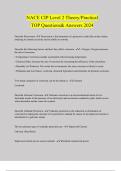
NACE CIP Level 2 Theory/Practical TOP Questions& Answers 2024
Describe Passivation - Passivation is the formation of a protective oxide film on the surface reducing its chemical activity and its ability to corrode. Describe the following factors and how they affect corrosion: - • Oxygen: Oxygen increases the rate of corrosion. • Temperature: Corrosion usually accelerated with increasing temperature • Chemical Salts: Increase the rate of corrosion by increasing the efficiency of the electrolyte. • Humidity (or Wetness): The wetter the enviro...
 STANFORDGRADESS
Exam (elaborations)
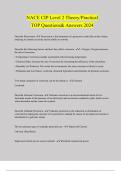
NACE CIP Level 2 Theory/Practical TOP Questions& Answers 2024
Describe Passivation - Passivation is the formation of a protective oxide film on the surface reducing its chemical activity and its ability to corrode. Describe the following factors and how they affect corrosion: - • Oxygen: Oxygen increases the rate of corrosion. • Temperature: Corrosion usually accelerated with increasing temperature • Chemical Salts: Increase the rate of corrosion by increasing the efficiency of the electrolyte. • Humidity (or Wetness): The wetter the enviro...
STANFORDGRADESS
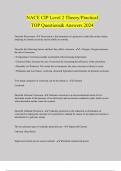
Exam (elaborations)
NACE CIP Level 2 Theory/Practical TOP Questions& Answers 2024
Describe Passivation - Passivation is the formation of a protective oxide film on the surface reducing its chemical activity and its ability to corrode. Describe the following factors and how they affect corrosion: - • Oxygen: Oxygen increases the rate of corrosion. • Temperature: Corrosion usually accelerated with increasing temperature • Chemical Salts: Increase the rate of corrosion by increasing the efficiency of the electrolyte. • Humidity (or Wetness): The wetter the enviro...
STANFORDGRADESS
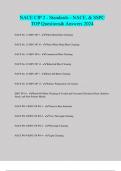
Exam (elaborations)
NACE CIP 2 - Standards - NACE, & SSPC TOP Questions& Answers 2024
NACE No. 1/ SSPC-SP 5 - White Metal Blast Cleaning NACE No. 2/ SSPC-SP 10 - Near White Metal Blast Cleaning NACE No. 3/ SSPC-SP 6 - Commercial Blast Cleaning NACE No. 8/ SSPC-SP 14 - Industrial Blast Cleaning NACE No. 4/ SSPC-SP 7 - Brush Off Blast Cleaning NACE No. 6/ SSPC-SP 13 - Surface Preparation of Concrete SSPC SP 16 - Brush-Off Blast Cleaning of Coated and Uncoated Galvanized Steel, Stainless Steels, and Non-Ferrous Metals
STANFORDGRADESS
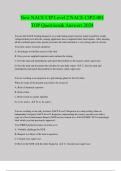
Exam (elaborations)
New NACE CIP Level 2 NACE-CIP2-001 TOP Questions& Answers 2024
You are the NACE Coating Inspector on a tank lining project and are asked to perform a high voltage holiday test after the coating applicators have completed their final repairs. After meeting all the confined space entry permit you enter the tank and notice a very strong odor of solvent. Your first course of action should to: A. Investigate to find the source of the odor B. Don your air supplied respirator and continue the testing C. Exit the tank and immediately and report the problem ...
STANFORDGRADESS
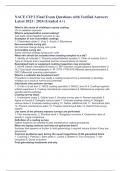
Exam (elaborations)
NACE CIP 2 Final Exam Questions with Verified Answers Latest 2023 / 2024 (Graded A+)
NACE CIP 2 Final Exam Questions with Verified Answers Latest 2023 / 2024 (Graded A+) What is the cause of chalking in epoxy coating UV or radiation exposure What is polymerization cured coating? Two parts mixed together just prior to use Examples of non-convertible coatings 1. Chlorinated rubber 2. Vinyl 3. Acrylic 4. Bituminous Non-convertible curing def. No chemical change during cure cycle Convertible curing def. Some chemical change during cure cycle What info should be included...
 Topscorer1
Exam (elaborations)
NACE CIP 2 EXAM Questions With Questions and Verified Answers Latest Updated 2023/2024 Graded A+
NACE CIP 2 EXAM Questions With Questions and Verified Answers Latest Updated 2023/2024 Graded A+ Describe passivation Passivation is the formation of a protective oxide Film on the surface reducing its chemical activity and its ability to corrode Describe the following factors and how they affect corrosion Oxygen: oxygen increases the rate of corrosion temperature Temperature: corrosion usually accelerated with increasing temperature Chemical salts: increase the rate of corrosion by incr...
Topscorer1
Package deal
NACE Bundled Exams with Complete Solution | Verified | Guaranteed Success
NACE Bundled Exams with Complete Solution | Verified | Guaranteed Success
 ClassHero

Exam (elaborations)
NACE CIP 2 Study Guide | 120 Questions with 100% Correct Answers | Verified | Latest Update 2024
What is the cause of chalking in epoxy coating - UV or radiation exposure What is polymerization cured coating? - Two parts mixed together just prior to use Examples of non-convertible coatings - 1. Chlorinated rubber 2. Vinyl 3. Acrylic 4. Bituminous Non-convertible curing def. - No chemical change during cure cycle Convertible curing def. - Some chemical change during cure cycle What info should be included when sending samples to a lab? - 1. Identity of materials 2. Properly packed/labe...
ClassHero