
PHIL 347 (PHIL347)
Chamberlain College Of Nursing
Here are the best resources to pass PHIL 347 (PHIL347). Find PHIL 347 (PHIL347) study guides, notes, assignments, and much more.
Exam (elaborations)
Philosophy Critical Reasoning Exam Questions And Answers Latest Update 2024
Circular Reasoning - correct answers P because Q and Q because P Argument goes in a circle. Appeal to the Crowd - correct answers Most of expert crowd agrees on something that is right. Appeal to Pity - correct answers Compassionate to do something, therefore you should. Genetic Fallacy - correct answers Argue against something by saying has a bad origin. Innuendo - correct answers Use words to imply something without actually saying it. Appeal to Questionable Authority - correct...
 Schoolflix
Exam (elaborations)
Philosophy Week 4 Quiz Questions And Answers Latest Update 2024
All the objects of human knowledge are ideas. True/False - correct answers True "The table I write on, I say, exists, that is, I _______ and ________ it. - correct answers see; feel For sensible things to exist is to be precieved. True/False - correct answers True "Hence as it is impossible for me to see and feel anything without an actual _______ of that thing, so it is impossible for me to conceive in my thoughts any sensible thing or object distinct from the ______ or the _____...
Schoolflix
Exam (elaborations)
Week 4 Phil347 Questions And Answers Latest Update 2024
Based on what you have read in the text, the lecture, and any other sources you find helpful to your understanding of deductive arguments, explain the structure of a deductive argument in your own words. - correct answers Deductive arguments are structured in a way that if the premises that are stated in the argument is true , then the conclusion will be true IF the premises are true and IF the reasoning is such that there is only one possible conclusion THEN the argumentis deductive Go ...
Schoolflix
Exam (elaborations)
Week 6 Quiz Phil347 Questions And Answers Latest Update 2024
What are the three fundamental reasoning strategies listed in the text? - correct answers 1. Comparative Reasoning 2. Ideological Reasoning 3. Empirical Reasoning What is comparative reasoning? On what skill is it based? - correct answers Comparative reasoning (this-is-like-that thinking) enables us to make interpretations, draw inferences, or offer explanations by relying on something that is more familiar to understand something that is less familiar. *We learned four tests for eva...
Schoolflix
Exam (elaborations)
Phil 347 Week 4 Checkpoint Quiz (Dual Version)
Phil 347 Week 4 Checkpoint Quiz (Dual Version) Based on what you have read in the text, the lecture, and any other sources you find helpful to your understanding of deductive arguments, explain the structure of a deductive argument in your own words. Your Answer: A deductive argument typically has two premises and a conclusion based on those premises. In order for the conclusion to be true, the premises must be true as well. Therefore, if the premises are true, the conclusion will ...
 MYSOLUTIONS
Exam (elaborations)
Phil 347 Week 3 Checkpoint Quiz (100% Correct)
Phil 347 Week 3 Checkpoint Quiz (100% Correct) According to the text, how do the views of stronger, more developed critical thinkers toward authority differ from those in earlier stages of cognitive development? Your Answer: The stronger more developed thinkers are considered to have more experience and are more trusted when it comes to authority, this shows more maturity. Whereas an individual that is in their early stages of cognitive development. Strong critical thinkers cultivate ...
MYSOLUTIONS
Exam (elaborations)
PHIL 347 Week 2 Checkpoint Quiz (100% Correct)
PHIL 347 Week 2 Checkpoint Quiz (100% Correct) Briefly state how the text defines “claim.” Your Answer: The book defines the word "claim" as the statement that the maker of the argument is seeking to justify or show to be true. The argument's claim is also known as the argument's conclusion. Reread the section in the text entitled “Two Confusions to Avoid” in Chapter 5. From what you read there, construct a definition of the term “argument” that...
MYSOLUTIONS
Exam (elaborations)
Phil 347 Week 4 Checkpoint Quiz (Dual Version)
Phil 347 Week 4 Checkpoint Quiz (Dual Version) Based on what you have read in the text, the lecture, and any other sources you find helpful to your understanding of deductive arguments, explain the structure of a deductive argument in your own words. Your Answer: A deductive argument typically has two premises and a conclusion based on those premises. In order for the conclusion to be true, the premises must be true as well. Therefore, if the premises are true, the conclusion will ...
 QUICKEXAMINER
Exam (elaborations)
Phil 347 Week 3 Checkpoint Quiz (100% Correct)
Phil 347 Week 3 Checkpoint Quiz (100% Correct) According to the text, how do the views of stronger, more developed critical thinkers toward authority differ from those in earlier stages of cognitive development? Your Answer: The stronger more developed thinkers are considered to have more experience and are more trusted when it comes to authority, this shows more maturity. Whereas an individual that is in their early stages of cognitive development. Strong critical thinkers cultivate ...
QUICKEXAMINER
Exam (elaborations)
PHIL 347 Week 2 Checkpoint Quiz (100% Correct)
PHIL 347 Week 2 Checkpoint Quiz (100% Correct) Briefly state how the text defines “claim.” Your Answer: The book defines the word "claim" as the statement that the maker of the argument is seeking to justify or show to be true. The argument's claim is also known as the argument's conclusion. Reread the section in the text entitled “Two Confusions to Avoid” in Chapter 5. From what you read there, construct a definition of the term “argument” that...
QUICKEXAMINER
Other
PHIL 347 Week 8 Discussion; You Can!
PHIL 347 Week 8 Discussion; You Can!
 TeachingTechnique
Other
PHIL 347 Week 7 Discussion; Reflecting on the Process
PHIL 347 Week 7 Discussion; Reflecting on the Process
TeachingTechnique

Other
PHIL 347 Week 6 Discussion; Causal Reasoning
PHIL 347 Week 6 Discussion; Causal Reasoning
TeachingTechnique
Other
PHIL 347 Week 5 Discussion; Inductive Generalization and Analogy
PHIL 347 Week 5 Discussion; Inductive Generalization and Analogy
TeachingTechnique
Other
PHIL 347 Week 4 Discussion; Truth-Functional Logic
PHIL 347 Week 4 Discussion; Truth-Functional Logic
TeachingTechnique
Other
PHIL 347 Week 3 Discussion 2; Understanding Deductive Categorical Reasoning
PHIL 347 Week 3 Discussion 2; Understanding Deductive Categorical Reasoning
TeachingTechnique
Other
Deductive from Inductive Reasoning
Deductive from Inductive Reasoning
TeachingTechnique
Other
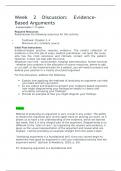
PHIL 347 Week 2 Discussion; Evidence-Based Arguments
PHIL 347 Week 2 Discussion; Evidence-Based Arguments
TeachingTechnique
Other
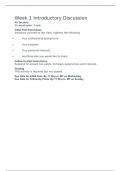
PHIL 347 Week 1 Introductory Discussion
PHIL 347 Week 1 Introductory Discussion
TeachingTechnique
Other
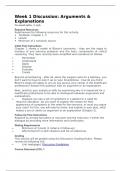
PHIL 347 Week 1 Discussion; Arguments & Explanations
PHIL 347 Week 1 Discussion; Arguments & Explanations
TeachingTechnique