
Biology (Biology)
Stanford University
Here are the best resources to pass Biology (Biology). Find Biology (Biology) study guides, notes, assignments, and much more.
Summary
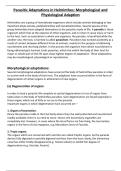
"Parasitic Adaptations in Helminthes – A Detailed Study of Morphological and Physiological Modifications" (Understanding How Helminthes Thrive as Endoparasites in Their Hosts)
NewThis document provides an in-depth explanation of the parasitic adaptations in Helminthes, focusing on both morphological and physiological modifications that enable these worms to survive and reproduce successfully within their hosts. It highlights how helminthes—comprising flatworms (Platyhelminthes) and roundworms (Nemathelminthes)—have evolved specialized structures and life processes suited to a parasitic mode of life. The document elaborates on morphological adaptations such as the ...
 binoysaha1110
Summary
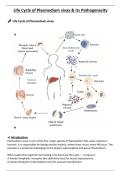
"Life Cycle and Pathogenicity of Plasmodium vivax – A Detailed Study" (Understanding the Malarial Parasite and Its Effects on the Human Body)
PopularThis document provides a comprehensive explanation of the life cycle and pathogenicity of Plasmodium vivax, one of the major species responsible for causing malaria in humans. It describes in detail the asexual and sexual stages of the parasite’s development, tracing its complete life cycle through the human host (intermediate host) and the female Anopheles mosquito (definitive host). The document also explains the pathogenic mechanisms of Plasmodium vivax, including red blood cell invasion...
binoysaha1110
Exam (elaborations)
Populations and Biological Communities Exam prep
NewWhich type of factors has the biggest impact on an organism's life history? a. Factors unique to the organism's survival and fitness b. Physiological factors c. Factors related to the predators of that species d. Environmental factors - correct answersa Which of these large organisms has a type I survivorship curve? a. An insect b. A gorilla c. A giant sequoia d. A songbird - correct answersb Which of the following is an indirect indicator that biologists can use to estimate a po...
 SteveMWill
Exam (elaborations)
Biology- Population Chapters 8-14 pre and post tests exam prep
NewThe human population is currently in which phase? A)growing rapidly B)is in the lag phase C)in the stable equilibrium phase D)in the lag phase in much of Europe - correct answersA)growing rapidly Which condition is necessary for a population to grow? A)stabilization must occur B)mortality must exceed natality C)birthrate must exceed death rate D)carrying capacity must occur - correct answersC)birthrate must exceed death rate The total fertility rate is A)high in economically less deve...
SteveMWill
Summary
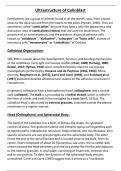
"Ultrastructure of Colloblast – A Detailed Study" (Understanding the Specialized Adhesive Cells of Ctenophores)
NewThis document provides a comprehensive and detailed explanation of the ultrastructure of colloblasts, the unique adhesive cells found exclusively in Ctenophora (comb jellies). It describes the morphology, fine structure, and functional mechanisms of these specialized cells that play a crucial role in capturing prey and defense. The document explains that each colloblast consists of a bulbous head containing secretory granules, a straight filament, and a spiral filament, all anchored to the me...
binoysaha1110
Summary
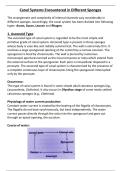
"Canal Systems in Sponges – A Detailed Study of Their Types and Functional Significance" (Exploring the Asconoid, Syconoid, and Leuconoid Types in Porifera)
NewThis document provides a comprehensive explanation of the canal systems encountered in different sponges, illustrating how the flow of water through their bodies facilitates feeding, respiration, and excretion. It elaborates on the three main types of canal systems — Asconoid, Syconoid, and Leuconoid, describing in detail their structural organization, evolutionary progression, and functional adaptations. The document explains how the Asconoid type (simplest) is found in Leucosolenia, the S...
binoysaha1110
Summary
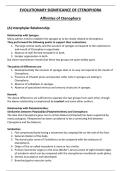
"Evolutionary Significance of Ctenophora – A Detailed Study" (Understanding the Phylogenetic Importance of Comb Jellies in Animal Evolution)
NewThis document provides a comprehensive and detailed explanation of the evolutionary significance of the phylum Ctenophora, commonly known as comb jellies. It explores the unique structural, physiological, and developmental features that make ctenophores an important group in understanding animal evolution and phylogeny. The document discusses their biradial symmetry, diploblastic organization, presence of colloblasts, and the first appearance of true tissues and a nervous system, which place ...
binoysaha1110
Summary
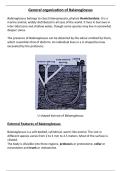
"General Organization of Balanoglossus – A Detailed Study" (Exploring the Structure and Body Organization of the Acorn Worm)
NewThis document provides a comprehensive account of the general organization of Balanoglossus, a marine hemichordate commonly known as the acorn worm. It describes in detail the external morphology, body division, and internal organization, highlighting its proboscis, collar, and trunk regions, which represent the tripartite body plan typical of hemichordates. The document elaborates on the body wall, coelomic organization, digestive, circulatory, respiratory, excretory, and nervous systems, al...
binoysaha1110
Exam (elaborations)
"MCQs on Erythropoiesis and Factors Regulating Erythropoiesis" (A Comprehensive Practice Guide for Understanding Red Blood Cell Formation)
This document presents a comprehensive collection of Multiple Choice Questions (MCQs) covering the topics Erythropoiesis and Factors Regulating Erythropoiesis, designed to help students master the concepts of red blood cell formation, maturation, and control mechanisms. The questions are arranged systematically — from basic to advanced levels — testing understanding of key concepts such as sites of erythropoiesis, stages of RBC development, hormonal regulation by erythropoietin, oxygen te...
binoysaha1110
Summary
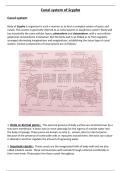
"Canal System of Scypha – A Detailed Study" (Exploring the Syconoid Type of Water Circulation in Sponges)
This document provides a comprehensive explanation of the canal system in Scypha (Sycon), a marine sponge belonging to the phylum Porifera. It focuses on the syconoid type of canal system, explaining how water enters through ostia, passes into incurrent canals, then through prosopyles into radial canals, and finally exits via the spongocoel and osculum. Detailed diagrams and step-by-step descriptions illustrate the structure and function of each canal component, emphasizing the importance of ...
binoysaha1110
Summary
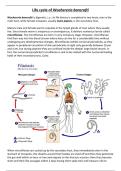
"Life Cycle of Wuchereria bancrofti – A Detailed Study" (Understanding the Human Filarial Parasite and Its Transmission)
This document provides a comprehensive explanation of the life cycle of Wuchereria bancrofti, a parasitic nematode responsible for lymphatic filariasis (elephantiasis) in humans. It describes in detail the morphology, mode of transmission, developmental stages, and host relationships of the parasite. The document explains the digenetic life cycle, involving humans as the definitive host and the female Culex mosquito as the intermediate host, outlining each stage — microfilaria, larval stage...
binoysaha1110
Summary
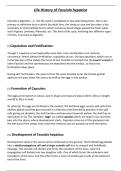
"Life History of Fasciola hepatica – A Detailed Study" (Understanding the Complex Life Cycle of the Liver Fluke)
This document presents a comprehensive explanation of the life history of Fasciola hepatica, commonly known as the liver fluke, a parasitic flatworm that infects the liver of sheep, cattle, and sometimes humans. It describes in detail the structure, mode of infection, and developmental stages of the parasite, highlighting its digenetic life cycle, which involves two hosts — the primary host (sheep or cattle) and the intermediate host (Lymnaea snail). The document explains each developmental...
binoysaha1110
Summary
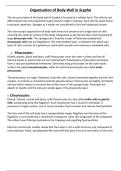
"Organization of Body Wall in Scypha – A Detailed Study" (Understanding the Structural Complexity of a Simple Sponge)
This document provides a comprehensive explanation of the body wall organization in Scypha (Sycon), a marine sponge belonging to the phylum Porifera. It describes in detail the three-layered structure of the body wall — the pinacoderm (outer layer), choanoderm (inner layer), and mesohyl (middle gelatinous layer) — along with their cellular composition and functions. The document also discusses the canal system (syconoid type) associated with Scypha, explaining how the ostia, incurrent can...
binoysaha1110
Summary
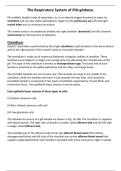
"Respiratory System and Mechanism of Pila globosa – A Detailed Study" (Understanding Dual Respiration in the Apple Snail)
This document presents a comprehensive explanation of the respiratory system and mechanism of Pila globosa, commonly known as the apple snail. It describes in detail the structure and function of both aquatic and aerial respiratory organs, including the ctenidium (gill) for aquatic respiration and the pulmonary sac (lung) for aerial respiration. The document further explains the mechanism of respiration under different conditions — how Pila breathes in water and on land, detailing the inhal...
binoysaha1110
Summary
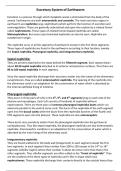
"Excretory System of Earthworm – A Detailed Study" (Understanding the Structure and Function of Nephridia in Annelids)
This document provides a comprehensive explanation of the excretory system of the earthworm (Lumbricus terrestris), focusing on the structure, types, and function of nephridia, the main excretory organs. It describes the three types of nephridia — septal, integumentary, and pharyngeal — along with their distribution, anatomy, and mode of action in maintaining osmoregulation and waste removal. The document also explains the process of excretion, showing how nitrogenous wastes are eliminate...
binoysaha1110
Summary
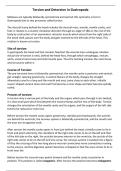
"Torsion and Detorsion in Gastropoda – A Detailed Study" (Understanding the Morphological and Evolutionary Changes in Molluscs)
This document provides a comprehensive explanation of torsion and detorsion in gastropods, key processes that play a major role in the evolution and body organization of molluscs. It describes in detail the mechanism, causes, and consequences of torsion, a 180° twisting of the visceral mass during larval development, and the subsequent detorsion that occurs in certain advanced gastropods. The document also highlights the anatomical changes resulting from torsion — such as the repositioning...
binoysaha1110
Summary
"Antigen Processing and Presentation Pathways – A Detailed Study" (Understanding How the Immune System Recognizes and Responds to Pathogens)
This document provides a comprehensive explanation of the antigen processing and presentation pathways, which are essential mechanisms that enable the immune system to identify and respond to foreign substances. It describes in detail how antigens are processed inside cells and presented on the Major Histocompatibility Complex (MHC) molecules for recognition by T lymphocytes. The document clearly distinguishes between the endogenous (MHC Class I) and exogenous (MHC Class II) pathways, explain...
binoysaha1110
Summary
"Antigen Specificity : Epitopes – A Detailed Study" (Understanding the Molecular Basis of Immune Recognition)
This document provides a comprehensive explanation of antigen specificity and the concept of epitopes, which are the specific regions on an antigen recognized by antibodies or T-cell receptors. It describes the types of epitopes — linear (sequential) and conformational (discontinuous) — along with their structural characteristics, location, and immune interactions. The document also explains how antigen-antibody specificity is determined by the molecular shape, charge, and chemical bondin...
binoysaha1110
Summary
"Major Histocompatibility Complex (MHC) – A Detailed Study" (Understanding the Genetic Basis of Immune Recognition)
This document provides a comprehensive explanation of the Major Histocompatibility Complex (MHC), a vital component of the immune system responsible for recognizing and presenting foreign antigens to immune cells. It discusses the structure, classes, genes, and functions of MHC molecules in detail, including Class I, Class II, and Class III MHC, along with their roles in antigen presentation and immune response regulation. The document also explores the genetic organization of the MHC on chro...
binoysaha1110
Summary
"Factors Regulating Erythropoiesis – A Detailed Study" (Understanding the Control of Red Blood Cell Production)
This document provides a comprehensive explanation of the factors that regulate erythropoiesis, the process of red blood cell formation. It discusses the physiological, hormonal, nutritional, and environmental factors that influence erythrocyte production in the bone marrow. Key topics include the role of erythropoietin hormone, tissue oxygen levels (hypoxia), nutritional elements like iron, vitamin B₁₂, and folic acid, as well as bone marrow activity, age, and general health conditions. ...
binoysaha1110
Summary
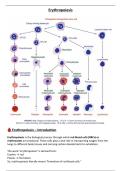
"Erythropoiesis – The Process of Red Blood Cell Formation" (A Detailed Study of Stages and Regulatory Factors)
This document provides a comprehensive explanation of Erythropoiesis, the biological process by which red blood cells (erythrocytes) are produced from stem cells in the bone marrow. It covers each stage of development, from hematopoietic stem cells to mature erythrocytes, with clear descriptions and diagrams to illustrate cellular changes. The document also explores the factors regulating erythropoiesis, including erythropoietin hormone, oxygen levels, nutrition, and bone marrow function, exp...
binoysaha1110