

1
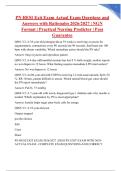
PN HESI Exit Exam Actual Exam Questions and
Answers with Rationales 2026/2027 | NGN
Format | Practical Nursing Predictor | Pass
Guarantee
Q001-V2: A 38-year-old primigravida at 39 weeks is receiving oxytocin for
augmentation; contractions every 90 seconds last 90 seconds, fetal heart rate 100
bpm with absent variability. Which immediate action should the PN take?
Answer: Stop oxytocin and reposition patient
Q002-V2: A 4-day-old breastfed neonate has lost 8 % birth weight, mother reports
no wet diapers in 12 hours. What finding requires immediate LPN intervention?
Answer: No wet diapers in 12 hours
Q003-V2: An 80-year-old with COPD is receiving 2 L/min nasal cannula; SpO₂ 94
%, RR 10/min, patient difficult to arouse. Which arterial blood gas value should
the PN report immediately?
Answer: PaCO₂ 75 mmHg
Q004-V2: A 7-year-old with newly diagnosed type 1 diabetes asks why insulin is
needed. Which explanation by PN is most appropriate?
Answer: Insulin helps sugar enter body cells for energy
Q005-V2: A 25-year-old post
Output stopped
put the choices
Edit
Copy
Share
PN HESI EXIT EXAM 2026/2027 | HESI PN EXIT EXAM WITH NGN
ACTUAL EXAM - COMPLETE EXAM QUESTIONS AND CORRECT
, 2
VERIFIED ANSWERS LATEST 2026/2027, ALREADY GRADED A+ (HESI PN
EXIT EXAM)
Q001-V2: A postpartum client who delivered vaginally 8 hours ago tells the PN
she feels dizzy when getting out of bed for the first time. Which action should the
PN take first?
A. Check orthostatic vital signs
B. Encourage increased oral fluids
C. Assist her slowly to a standing position
D. Document the complaint
Answer: A
Q002-V2: A 2-day-old newborn is prescribed phototherapy for hyperbilirubinemia.
The PN notes the infant’s skin is dry and cracked. Which intervention is most
appropriate?
A. Apply a moisturizing lotion
B. Decrease the phototherapy time
C. Increase the frequency of diaper changes
D. Place the infant on a fiber-optic blanket
Answer: C
Q003-V2: An 82-year-old client with dementia repeatedly tries to remove the nasal
cannula delivering 2 L/min O₂. Which measure should the PN implement?
A. Apply soft mitts
B. Increase O₂ flow
C. Switch to face mask
D. Notify respiratory therapy
Answer: A
, 3
Q004-V2: A client on lithium carbonate reports nausea and mild hand tremor. The
PN checks the lithium level drawn earlier; it is 1.4 mEq/L. What is the PN’s
priority?
A. Encourage PO fluids
B. Hold the next dose and notify the RN
C. Give the dose as scheduled
D. Reassure the client these are expected
Answer: B
Q005-V2: A 6-year-old with asthma is to receive albuterol 2.5 mg via nebulizer.
Which observation indicates to the PN that the treatment is effective?
A. Heart rate increases from 100 to 110 bpm
B. Respiratory rate decreases from 30 to 22/min
C. O₂ saturation remains 94 % on room air
D. The child coughs once
Answer: B
Q006-V2: A pregnant client at 28 weeks reports sudden gushing of clear fluid and
mild abdominal cramping. The PN should first:
A. Check cervical dilation
B. Test fluid with nitrazine paper
C. Monitor fetal heart rate
D. Start an IV line
Answer: B
Q007-V2: An LPN is preparing to give an IM injection to a 10-month-old. Which
site is preferred?
A. Ventrogluteal
B. Dorsogluteal
, 4
C. Vastus lateralis
D. Deltoid
Answer: C
Q008-V2: A client with major depression states, “I’m a burden to everyone.” The
PN’s best response is:
A. “Don’t say that; you’re loved.”
B. “You feel like a burden right now?”
C. “Cheer up and think positive.”
D. “Let’s talk about your family.”
Answer: B
Q009-V2: A 4-year-old post-tonsillectomy is crying and swallowing frequently.
The PN notes a small amount of blood at the mouth corner. What should the PN do
first?
A. Offer ice chips
B. Position on side and call RN
C. Give prescribed acetaminophen
D. Provide a popsicle
Answer: B
Q010-V2: An older adult with heart failure is prescribed digoxin 0.125 mg PO
daily. The morning HR is 52 bpm. The PN should:
A. Give the dose
B. Check BP then give
C. Hold the dose and report
D. Split the tablet
Answer: C
PN HESI Exit Exam Actual Exam Questions and
Answers with Rationales 2026/2027 | NGN
Format | Practical Nursing Predictor | Pass
Guarantee
Q001-V2: A 38-year-old primigravida at 39 weeks is receiving oxytocin for
augmentation; contractions every 90 seconds last 90 seconds, fetal heart rate 100
bpm with absent variability. Which immediate action should the PN take?
Answer: Stop oxytocin and reposition patient
Q002-V2: A 4-day-old breastfed neonate has lost 8 % birth weight, mother reports
no wet diapers in 12 hours. What finding requires immediate LPN intervention?
Answer: No wet diapers in 12 hours
Q003-V2: An 80-year-old with COPD is receiving 2 L/min nasal cannula; SpO₂ 94
%, RR 10/min, patient difficult to arouse. Which arterial blood gas value should
the PN report immediately?
Answer: PaCO₂ 75 mmHg
Q004-V2: A 7-year-old with newly diagnosed type 1 diabetes asks why insulin is
needed. Which explanation by PN is most appropriate?
Answer: Insulin helps sugar enter body cells for energy
Q005-V2: A 25-year-old post
Output stopped
put the choices
Edit
Copy
Share
PN HESI EXIT EXAM 2026/2027 | HESI PN EXIT EXAM WITH NGN
ACTUAL EXAM - COMPLETE EXAM QUESTIONS AND CORRECT
, 2
VERIFIED ANSWERS LATEST 2026/2027, ALREADY GRADED A+ (HESI PN
EXIT EXAM)
Q001-V2: A postpartum client who delivered vaginally 8 hours ago tells the PN
she feels dizzy when getting out of bed for the first time. Which action should the
PN take first?
A. Check orthostatic vital signs
B. Encourage increased oral fluids
C. Assist her slowly to a standing position
D. Document the complaint
Answer: A
Q002-V2: A 2-day-old newborn is prescribed phototherapy for hyperbilirubinemia.
The PN notes the infant’s skin is dry and cracked. Which intervention is most
appropriate?
A. Apply a moisturizing lotion
B. Decrease the phototherapy time
C. Increase the frequency of diaper changes
D. Place the infant on a fiber-optic blanket
Answer: C
Q003-V2: An 82-year-old client with dementia repeatedly tries to remove the nasal
cannula delivering 2 L/min O₂. Which measure should the PN implement?
A. Apply soft mitts
B. Increase O₂ flow
C. Switch to face mask
D. Notify respiratory therapy
Answer: A
, 3
Q004-V2: A client on lithium carbonate reports nausea and mild hand tremor. The
PN checks the lithium level drawn earlier; it is 1.4 mEq/L. What is the PN’s
priority?
A. Encourage PO fluids
B. Hold the next dose and notify the RN
C. Give the dose as scheduled
D. Reassure the client these are expected
Answer: B
Q005-V2: A 6-year-old with asthma is to receive albuterol 2.5 mg via nebulizer.
Which observation indicates to the PN that the treatment is effective?
A. Heart rate increases from 100 to 110 bpm
B. Respiratory rate decreases from 30 to 22/min
C. O₂ saturation remains 94 % on room air
D. The child coughs once
Answer: B
Q006-V2: A pregnant client at 28 weeks reports sudden gushing of clear fluid and
mild abdominal cramping. The PN should first:
A. Check cervical dilation
B. Test fluid with nitrazine paper
C. Monitor fetal heart rate
D. Start an IV line
Answer: B
Q007-V2: An LPN is preparing to give an IM injection to a 10-month-old. Which
site is preferred?
A. Ventrogluteal
B. Dorsogluteal
, 4
C. Vastus lateralis
D. Deltoid
Answer: C
Q008-V2: A client with major depression states, “I’m a burden to everyone.” The
PN’s best response is:
A. “Don’t say that; you’re loved.”
B. “You feel like a burden right now?”
C. “Cheer up and think positive.”
D. “Let’s talk about your family.”
Answer: B
Q009-V2: A 4-year-old post-tonsillectomy is crying and swallowing frequently.
The PN notes a small amount of blood at the mouth corner. What should the PN do
first?
A. Offer ice chips
B. Position on side and call RN
C. Give prescribed acetaminophen
D. Provide a popsicle
Answer: B
Q010-V2: An older adult with heart failure is prescribed digoxin 0.125 mg PO
daily. The morning HR is 52 bpm. The PN should:
A. Give the dose
B. Check BP then give
C. Hold the dose and report
D. Split the tablet
Answer: C


