

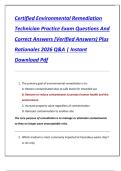
Certified Environmental Remediation
Technician Practice Exam Questions And
Correct Answers (Verified Answers) Plus
Rationales 2026 Q&A | Instant
Download Pdf
1. The primary goal of environmental remediation is to:
A. Restore contaminated sites to safe levels for intended use
B. Remove or reduce contaminants to protect human health and the
environment
C. Increase property value regardless of contamination
D. Relocate contamination to another site
The core purpose of remediation is to manage or eliminate contaminants
so they no longer pose unacceptable risks.
2. Which medium is most commonly impacted at hazardous waste sites?
A. Air only
, B. Surface water only
C. Soil only
D. Soil and groundwater
Most contaminants migrate through soil and can reach groundwater,
making both critical remediation targets.
3. A Phase I Environmental Site Assessment primarily involves:
A. Soil sampling
B. Groundwater monitoring
C. Records review and site inspection
D. Contaminant removal
Phase I ESAs are non-intrusive and focus on identifying potential
contamination through historical and visual review.
4. Which contaminant is classified as a volatile organic compound (VOC)?
A. Lead
B. Benzene
C. Mercury
D. Asbestos
VOCs like benzene readily evaporate and are common at fuel-
contaminated sites.
, 5. The Comprehensive Environmental Response, Compensation, and
Liability Act (CERCLA) is also known as:
A. RCRA
B. CWA
C. Superfund
D. TSCA
CERCLA established the Superfund program to address abandoned
hazardous waste sites.
6. Which remediation method relies on microorganisms to degrade
contaminants?
A. Soil washing
B. Bioremediation
C. Excavation
D. Capping
Bioremediation uses bacteria or fungi to biologically break down
contaminants.
7. In situ remediation means:
A. Removing soil for off-site treatment
B. Treating contaminated material in a laboratory
, C. Treating contamination in place without excavation
D. Using only physical removal methods
In situ methods minimize disturbance by addressing contamination where
it exists.
8. Which personal protective equipment (PPE) is MOST critical when
handling hazardous chemicals?
A. Hard hat
B. Steel-toed boots
C. Chemical-resistant gloves
D. Hearing protection
Gloves provide direct protection against dermal exposure to hazardous
substances.
9. What is the primary purpose of groundwater monitoring wells?
A. Pump drinking water
B. Sample and measure groundwater quality
C. Dispose of waste
D. Increase groundwater flow
Monitoring wells allow sampling and tracking of contaminant migration.
Technician Practice Exam Questions And
Correct Answers (Verified Answers) Plus
Rationales 2026 Q&A | Instant
Download Pdf
1. The primary goal of environmental remediation is to:
A. Restore contaminated sites to safe levels for intended use
B. Remove or reduce contaminants to protect human health and the
environment
C. Increase property value regardless of contamination
D. Relocate contamination to another site
The core purpose of remediation is to manage or eliminate contaminants
so they no longer pose unacceptable risks.
2. Which medium is most commonly impacted at hazardous waste sites?
A. Air only
, B. Surface water only
C. Soil only
D. Soil and groundwater
Most contaminants migrate through soil and can reach groundwater,
making both critical remediation targets.
3. A Phase I Environmental Site Assessment primarily involves:
A. Soil sampling
B. Groundwater monitoring
C. Records review and site inspection
D. Contaminant removal
Phase I ESAs are non-intrusive and focus on identifying potential
contamination through historical and visual review.
4. Which contaminant is classified as a volatile organic compound (VOC)?
A. Lead
B. Benzene
C. Mercury
D. Asbestos
VOCs like benzene readily evaporate and are common at fuel-
contaminated sites.
, 5. The Comprehensive Environmental Response, Compensation, and
Liability Act (CERCLA) is also known as:
A. RCRA
B. CWA
C. Superfund
D. TSCA
CERCLA established the Superfund program to address abandoned
hazardous waste sites.
6. Which remediation method relies on microorganisms to degrade
contaminants?
A. Soil washing
B. Bioremediation
C. Excavation
D. Capping
Bioremediation uses bacteria or fungi to biologically break down
contaminants.
7. In situ remediation means:
A. Removing soil for off-site treatment
B. Treating contaminated material in a laboratory
, C. Treating contamination in place without excavation
D. Using only physical removal methods
In situ methods minimize disturbance by addressing contamination where
it exists.
8. Which personal protective equipment (PPE) is MOST critical when
handling hazardous chemicals?
A. Hard hat
B. Steel-toed boots
C. Chemical-resistant gloves
D. Hearing protection
Gloves provide direct protection against dermal exposure to hazardous
substances.
9. What is the primary purpose of groundwater monitoring wells?
A. Pump drinking water
B. Sample and measure groundwater quality
C. Dispose of waste
D. Increase groundwater flow
Monitoring wells allow sampling and tracking of contaminant migration.


