

PAS2054 FINAL EXAM QUESTIONS AND CORRECT ANSWERS
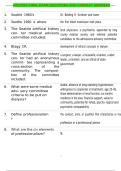
1. Seattle 1960's Dr. Belding H. Scribner and team
2. Seattle 1960 is where the first blood transfusion took place
3. The Seattle artificial kidney local physicians, a psychiatrist, appointed by king
cen- ter medical advisory county medical society and referred potential
committee included: candidates to the admissions advisory committee
4. Blagg CR. development of ethical concepts in dialysis
5. The Seattle artificial kidney a surgeon, a lawyer, a housewife, a banker, a labor
cen- ter had an anonymous leader, a minister, and an oflcial of state
commit- tee representing a government
cross-section of the
community. The composi-
tion of the committee
included:
stable, absence of long-standing hypertension,
6. What were some medical
advi- sory committee willingness to cooperate in treatment, age 25-45,
criteria to be put on show deterioration of renal function, six months
dialysis? residence in the area, financial support, value to
community, potential for rehab, psycho- logical and
psychiatric compatability
7. Define professionalism the conduct, aims, or qualities that characterize or ma
a
profession or a professional person
8. What are the six elements
of professionalism? 9.
1/
51
, PAS2054 FINAL EXAM QUESTIONS AND CORRECT ANSWERS
1.Altruism
2.Accountability
3.Excellence
4.Duty
5.Honor and Integrity
6.Respect for Others
2/
51
, PAS2054 final
Study online at
https://quizlet.com/_bwqoey
What are the seven challenges 1. Abuse of power
to elements of professionalism? 2. Arrogance
3. Greed
4. Misrepresentation
5. Impairment
6. Lack of conscientiousness
7. Conflict of interest
10. the discipline dealing with ethics
what is good and bad and
with moral duty and
obligation is called
11. According to Jame Childress and 1. Autonomy
Thomas Beauchamp, there are 2. Beneficence
four major principles of 3. Nonmaleficence
bio- medical ethics which 4. Just
are:
ice
12. the right to make one's
own choices is called: autonom
13. Do good to the patient, y
avoid evil, is called:
beneficence
14. Do not harm is called: nonmaleficence
15. fairness is called: justice
16. When students from two collaboration and improve
or more professionals learn health outcomes is called:
about, from and with each
other to enable effective
3/
51
, PAS2054 final
Study online at
https://quizlet.com/_bwqoey
interprofessional education
4/
51
1. Seattle 1960's Dr. Belding H. Scribner and team
2. Seattle 1960 is where the first blood transfusion took place
3. The Seattle artificial kidney local physicians, a psychiatrist, appointed by king
cen- ter medical advisory county medical society and referred potential
committee included: candidates to the admissions advisory committee
4. Blagg CR. development of ethical concepts in dialysis
5. The Seattle artificial kidney a surgeon, a lawyer, a housewife, a banker, a labor
cen- ter had an anonymous leader, a minister, and an oflcial of state
commit- tee representing a government
cross-section of the
community. The composi-
tion of the committee
included:
stable, absence of long-standing hypertension,
6. What were some medical
advi- sory committee willingness to cooperate in treatment, age 25-45,
criteria to be put on show deterioration of renal function, six months
dialysis? residence in the area, financial support, value to
community, potential for rehab, psycho- logical and
psychiatric compatability
7. Define professionalism the conduct, aims, or qualities that characterize or ma
a
profession or a professional person
8. What are the six elements
of professionalism? 9.
1/
51
, PAS2054 FINAL EXAM QUESTIONS AND CORRECT ANSWERS
1.Altruism
2.Accountability
3.Excellence
4.Duty
5.Honor and Integrity
6.Respect for Others
2/
51
, PAS2054 final
Study online at
https://quizlet.com/_bwqoey
What are the seven challenges 1. Abuse of power
to elements of professionalism? 2. Arrogance
3. Greed
4. Misrepresentation
5. Impairment
6. Lack of conscientiousness
7. Conflict of interest
10. the discipline dealing with ethics
what is good and bad and
with moral duty and
obligation is called
11. According to Jame Childress and 1. Autonomy
Thomas Beauchamp, there are 2. Beneficence
four major principles of 3. Nonmaleficence
bio- medical ethics which 4. Just
are:
ice
12. the right to make one's
own choices is called: autonom
13. Do good to the patient, y
avoid evil, is called:
beneficence
14. Do not harm is called: nonmaleficence
15. fairness is called: justice
16. When students from two collaboration and improve
or more professionals learn health outcomes is called:
about, from and with each
other to enable effective
3/
51
, PAS2054 final
Study online at
https://quizlet.com/_bwqoey
interprofessional education
4/
51


