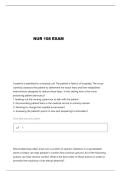
A patient is admitted to a medical unit. The patient is fearful of hospitals. The nurse
carefully assesses the patient to determine the exact fears and then establishes
interventions designed to reduce these fears. In this setting how is the nurse
practicing patient advocacy?
1. Seeking out the nursing supervisor to talk with the patient
2. Documenting patient fears in the medical record in a timely manner
3. Working to change the hospital environment
4. Assessing the patient's point of view and preparing to articulate it
Give this one a try later!
4
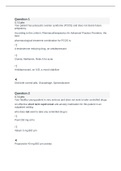
Ethical dilemmas often arise over a conflict of opinion. Reliance on a predictable
series of steps can help people in conflict find common ground. All of the following
actions can help resolve conflict. What is the best order of these actions in order to
promote the resolution of an ethical dilemma?
,1. List the actions that could be taken to resolve the dilemma.
2. Agree on a statement of the problem or dilemma that you are trying to resolve.
3. Agree on a plan to evaluate the action over time.
4. Gather all relevant information regarding the clinical, social, and spiritual aspects of
the dilemma.
5. Take time to clarify values and distinguish between facts and opinions—your own
and those of others involved.
6. Negotiate a plan.
Give this one a try later!
4, 5, 2, 1, 6, 3
Research Ethics
Give this one a try later!
Conduct of research using humans and animals
Ethical Issues in Nursing Today
Give this one a try later!
Abortion
Advance Directives
Organ Donation
Withdrawal of food/fluid
Public health issues
Justice
, Give this one a try later!
Fairness
Each patient must be treated equally
The patient for whom you are caring needs a liver transplant to survive. This patient
has been out of work for several months and doesn't have health insurance or enough
cash. Even though several ethical principles are at work in this case, list the principles
from highest to lowest priority.
1. Accountability: You as the nurse are accountable for the well-being of this patient.
2. Respect for autonomy: This patient's autonomy will be violated if he does not
receive the liver transplant.
3. Ethics of care: The caring thing that a nurse could provide this patient is resources
for a liver transplant.
4. Justice: The greatest question in this situation is how to determine the just
distribution of resources.
Give this one a try later!
4, 2, 3, 1
Patient Advocacy
Give this one a try later!
Protection and support of the patient's rights
Personal Ethics
carefully assesses the patient to determine the exact fears and then establishes
interventions designed to reduce these fears. In this setting how is the nurse
practicing patient advocacy?
1. Seeking out the nursing supervisor to talk with the patient
2. Documenting patient fears in the medical record in a timely manner
3. Working to change the hospital environment
4. Assessing the patient's point of view and preparing to articulate it
Give this one a try later!
4
Ethical dilemmas often arise over a conflict of opinion. Reliance on a predictable
series of steps can help people in conflict find common ground. All of the following
actions can help resolve conflict. What is the best order of these actions in order to
promote the resolution of an ethical dilemma?
,1. List the actions that could be taken to resolve the dilemma.
2. Agree on a statement of the problem or dilemma that you are trying to resolve.
3. Agree on a plan to evaluate the action over time.
4. Gather all relevant information regarding the clinical, social, and spiritual aspects of
the dilemma.
5. Take time to clarify values and distinguish between facts and opinions—your own
and those of others involved.
6. Negotiate a plan.
Give this one a try later!
4, 5, 2, 1, 6, 3
Research Ethics
Give this one a try later!
Conduct of research using humans and animals
Ethical Issues in Nursing Today
Give this one a try later!
Abortion
Advance Directives
Organ Donation
Withdrawal of food/fluid
Public health issues
Justice
, Give this one a try later!
Fairness
Each patient must be treated equally
The patient for whom you are caring needs a liver transplant to survive. This patient
has been out of work for several months and doesn't have health insurance or enough
cash. Even though several ethical principles are at work in this case, list the principles
from highest to lowest priority.
1. Accountability: You as the nurse are accountable for the well-being of this patient.
2. Respect for autonomy: This patient's autonomy will be violated if he does not
receive the liver transplant.
3. Ethics of care: The caring thing that a nurse could provide this patient is resources
for a liver transplant.
4. Justice: The greatest question in this situation is how to determine the just
distribution of resources.
Give this one a try later!
4, 2, 3, 1
Patient Advocacy
Give this one a try later!
Protection and support of the patient's rights
Personal Ethics