Terms in this set (105)
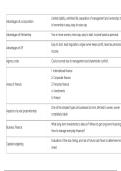
sole proprietorship
3 types of companies partnership
corporation
advantages:
closely related to NPV
%'s are the language of business
easy to understand and communicate
advantages/disadvantages of IRR
disadvantages:
does not distinguish between investing and borrowing
irr may not exist, or there might be multiple irrs
problems with mutually exclusive investments
arises when one or more individuals (principals) hires another
agency relationship individual/organization called an agent to perform some service and then
delegates decision-making authority to that agent
annuity due same as "ordinary" but cash flows come at the beginning of the period
, annual percentage rate
APR does not account for effects of compounding
the nominal rate
the rate that banks are required by law to report to potential borrowers
asset utilization / turnover ratios
average total taxes paid divided by taxable income
a snapshot of the firm's assets and liabilities at a given point in time
balance sheet assets (left hand, in order of decreasing liquidity)
liability & owner's equity (in ascending order of when due to be paid)
balance sheet identity assets = liabilities + equity
benchmarking for diversified firms difficult
1. IRR
2. NPV
capital budgeting methods
3. Payback Period
4. Profitability Index
capital intensity total assets / sales
, occurs when a firm or division has limited resources
capital rationing
good for rationing --> Profitability Index
cash coverage (EBIT + DEP) / Interest
OCF - net capital spending - changes in NWC
cash flow from assets OR
cash flow to creditors + cash flow to stockholders
cash flow to creditors interest paid - new long term debt
cash flow to stockholders dividends paid - net new equity
most conservative
cash ratio
cash / current liabilities
ch 3
make it easier to compare financial information as a company grows
good for comparing companies of different sizes within the same
common-size statements industry
balance sheet: % of total assets
income statement: % of sales
sole proprietorship
3 types of companies partnership
corporation
advantages:
closely related to NPV
%'s are the language of business
easy to understand and communicate
advantages/disadvantages of IRR
disadvantages:
does not distinguish between investing and borrowing
irr may not exist, or there might be multiple irrs
problems with mutually exclusive investments
arises when one or more individuals (principals) hires another
agency relationship individual/organization called an agent to perform some service and then
delegates decision-making authority to that agent
annuity due same as "ordinary" but cash flows come at the beginning of the period
, annual percentage rate
APR does not account for effects of compounding
the nominal rate
the rate that banks are required by law to report to potential borrowers
asset utilization / turnover ratios
average total taxes paid divided by taxable income
a snapshot of the firm's assets and liabilities at a given point in time
balance sheet assets (left hand, in order of decreasing liquidity)
liability & owner's equity (in ascending order of when due to be paid)
balance sheet identity assets = liabilities + equity
benchmarking for diversified firms difficult
1. IRR
2. NPV
capital budgeting methods
3. Payback Period
4. Profitability Index
capital intensity total assets / sales
, occurs when a firm or division has limited resources
capital rationing
good for rationing --> Profitability Index
cash coverage (EBIT + DEP) / Interest
OCF - net capital spending - changes in NWC
cash flow from assets OR
cash flow to creditors + cash flow to stockholders
cash flow to creditors interest paid - new long term debt
cash flow to stockholders dividends paid - net new equity
most conservative
cash ratio
cash / current liabilities
ch 3
make it easier to compare financial information as a company grows
good for comparing companies of different sizes within the same
common-size statements industry
balance sheet: % of total assets
income statement: % of sales