

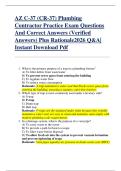
AZ C-37 (CR-37) Plumbing
Contractor Practice Exam Questions
And Correct Answers (Verified
Answers) Plus Rationale2026 Q&A|
Instant Download Pdf
1. What is the primary purpose of a trap in a plumbing fixture?
A) To filter debris from wastewater
B) To prevent sewer gases from entering the building
C) To regulate water flow
D) To reduce water consumption
Rationale: A trap maintains a water seal that blocks sewer gases from
entering the building, ensuring a sanitary, odor-free interior.
2. Which type of trap is most commonly used under a lavatory sink?
A) S-trap
B) P-trap
C) Drum trap
D) Bell trap
Rationale: P-traps are the standard under sinks because they reliably
maintain a water seal, are easy to clean and maintain, and comply with
modern plumbing code requirements.
3. In a drainage system, what is the purpose of a vent pipe?
A) To carry waste to the sewer
B) To provide a path for heat to escape
C) To filter waste before disposal
D) To allow fresh air into the system to prevent vacuum formation
and prevent siphoning of traps
Rationale: Vent pipes equalize air pressure in drain-waste-vent (DWV)
, systems, preventing trap siphonage and allowing wastewater to flow
smoothly.
4. Which material is most suitable for drainage-waste-vent (DWV) piping
in many plumbing installations?
A) PVC
B) ABS
C) Cast iron
D) Copper
Rationale: Cast iron is durable, handles heat well, and is commonly
used in commercial or heavy-duty DWV systems — especially where
rigidity and fire-resistance matter.
5. What is the minimum diameter commonly used for a residential
bathroom sink (lavatory) drain line under typical plumbing code?
A) 1 inch
B) 1.25 inches
C) 1.5 inches
D) 2 inches
Rationale: A 1.5-inch drain line gives adequate capacity for typical
sink waste water flow and is widely accepted under plumbing codes for
lavatories.
6. What is the function of a cleanout in a drainage system?
A) To prevent backflow of waste into the fixture
B) To provide access for cleaning and maintaining the drainage system
C) To allow connection of additional fixtures
D) To filter waste before disposal
Rationale: Cleanouts provide maintenance access so blockages or
buildup can be cleared — essential for maintaining system function
over time.
7. What is the typical slope required for a horizontal drainage pipe to
ensure proper flow?
A) Level / no slope
B) 1/16 inch per foot
C) 1/8 inch per foot
D) 1/2 inch per foot
Rationale: A slope of 1/8 inch per foot is generally acceptable for
gravity-assisted flow without excessive velocity or risk of siphoning.
, 8. Which of the following is true about the function of a vented trap?
A) It prevents waste from entering the system.
B) It connects the drain and vent systems to prevent siphoning of the
trap.
C) It is used only for kitchen sinks.
D) It is only used at toilets.
Rationale: A vented trap connects both to the drain and vent system,
enabling proper air equalization to maintain the trap seal during
discharge.
9. In a plumbing installation, what is a “combination waste and vent”
system?
A) A system that separates drainage and venting
B) A system that uses a single pipe for both drainage and venting
C) A system that filters waste before venting
D) A system that uses electrical pumps for waste flow
Rationale: Combination waste-and-vent systems are designed to use a
single pipe for both waste flow and venting — common in compact
installations or where separate vent piping is impractical.
10. Which type of piping material is commonly used for venting
purposes?
A) CPVC
B) ABS
C) Copper
D) PVC
Rationale: PVC is widely used for vent piping because of its durability,
ease of installation, resistance to corrosion, and suitability for venting
gases.
11. What is the primary purpose of a backflow prevention device in a
potable water supply system?
A) To filter debris from water
B) To regulate water pressure
C) To increase water flow
D) To prevent contaminated water from flowing back into the
potable water supply
Rationale: Backflow preventers protect drinking water by ensuring
waste or non-potable water cannot reverse-flow into the clean water
supply.
Contractor Practice Exam Questions
And Correct Answers (Verified
Answers) Plus Rationale2026 Q&A|
Instant Download Pdf
1. What is the primary purpose of a trap in a plumbing fixture?
A) To filter debris from wastewater
B) To prevent sewer gases from entering the building
C) To regulate water flow
D) To reduce water consumption
Rationale: A trap maintains a water seal that blocks sewer gases from
entering the building, ensuring a sanitary, odor-free interior.
2. Which type of trap is most commonly used under a lavatory sink?
A) S-trap
B) P-trap
C) Drum trap
D) Bell trap
Rationale: P-traps are the standard under sinks because they reliably
maintain a water seal, are easy to clean and maintain, and comply with
modern plumbing code requirements.
3. In a drainage system, what is the purpose of a vent pipe?
A) To carry waste to the sewer
B) To provide a path for heat to escape
C) To filter waste before disposal
D) To allow fresh air into the system to prevent vacuum formation
and prevent siphoning of traps
Rationale: Vent pipes equalize air pressure in drain-waste-vent (DWV)
, systems, preventing trap siphonage and allowing wastewater to flow
smoothly.
4. Which material is most suitable for drainage-waste-vent (DWV) piping
in many plumbing installations?
A) PVC
B) ABS
C) Cast iron
D) Copper
Rationale: Cast iron is durable, handles heat well, and is commonly
used in commercial or heavy-duty DWV systems — especially where
rigidity and fire-resistance matter.
5. What is the minimum diameter commonly used for a residential
bathroom sink (lavatory) drain line under typical plumbing code?
A) 1 inch
B) 1.25 inches
C) 1.5 inches
D) 2 inches
Rationale: A 1.5-inch drain line gives adequate capacity for typical
sink waste water flow and is widely accepted under plumbing codes for
lavatories.
6. What is the function of a cleanout in a drainage system?
A) To prevent backflow of waste into the fixture
B) To provide access for cleaning and maintaining the drainage system
C) To allow connection of additional fixtures
D) To filter waste before disposal
Rationale: Cleanouts provide maintenance access so blockages or
buildup can be cleared — essential for maintaining system function
over time.
7. What is the typical slope required for a horizontal drainage pipe to
ensure proper flow?
A) Level / no slope
B) 1/16 inch per foot
C) 1/8 inch per foot
D) 1/2 inch per foot
Rationale: A slope of 1/8 inch per foot is generally acceptable for
gravity-assisted flow without excessive velocity or risk of siphoning.
, 8. Which of the following is true about the function of a vented trap?
A) It prevents waste from entering the system.
B) It connects the drain and vent systems to prevent siphoning of the
trap.
C) It is used only for kitchen sinks.
D) It is only used at toilets.
Rationale: A vented trap connects both to the drain and vent system,
enabling proper air equalization to maintain the trap seal during
discharge.
9. In a plumbing installation, what is a “combination waste and vent”
system?
A) A system that separates drainage and venting
B) A system that uses a single pipe for both drainage and venting
C) A system that filters waste before venting
D) A system that uses electrical pumps for waste flow
Rationale: Combination waste-and-vent systems are designed to use a
single pipe for both waste flow and venting — common in compact
installations or where separate vent piping is impractical.
10. Which type of piping material is commonly used for venting
purposes?
A) CPVC
B) ABS
C) Copper
D) PVC
Rationale: PVC is widely used for vent piping because of its durability,
ease of installation, resistance to corrosion, and suitability for venting
gases.
11. What is the primary purpose of a backflow prevention device in a
potable water supply system?
A) To filter debris from water
B) To regulate water pressure
C) To increase water flow
D) To prevent contaminated water from flowing back into the
potable water supply
Rationale: Backflow preventers protect drinking water by ensuring
waste or non-potable water cannot reverse-flow into the clean water
supply.


