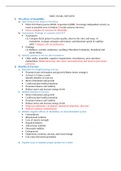
Taxation of Property Transactions Outline
I. Terminology
A. TP = taxpayer
1. Can be a person or an entity
II. Tax System
A. In order from highest authority to last
B. Law: constitution → treatises → court decisions → IRC
C. Not law: treasury regulations → revenue procedure → private letter rulings
1. Treasury regulations are typically not law but court gives them weight
2. Revenue procedure/ruling: interpretation of IRC by the IRS
a) Do not represent congressional intent regarding how a
particular provision of the Internal Revenue Code should be
interpreted.
3. Private letter ruling: Can write to the IRS and they will write back and
tell you the tax consequences of your actions
a) Binding on the IRS
D. Pathways to a Tax Case
1. Option 1: When there is a deficiency (IRS wants $) → U.S. tax court →
circuit court of appeals → SCOTUS
2. Option 2: When there is a deficiency (IRS wants $) → US federal district
court → circuit court of appeals → SCOTUS
a) Very rare
3. Option 1: When there is a refund (TP wants $) → US federal district
court → circuit court of appeals → SCOTUS
4. Option 2: When there is a refund (TP wants $) → court of federal
claims → court of appeals for the federal circuit → SCOTUS
III. Legislative Process
A. Begins in the House - Treasury’s role
B. Reports yielded
C. Importance of legislative history
D. Tax legislation is the product of compromise
IV. Purpose of Income Tax
A. Economic
B. Social
C. Political
V. Reason for Tax
A. Print money
B. Borrow money
C. Tax
VI. History
A. Pre-1861
B. 1861 first federal income tax legislation
, C. Income tax act of 1862
D. Declared unconstitutional in 1895
E. Many changes from 1913 - present
F. Patchwork quilt to amendments
G. Periodic whole-cloth revisions
H. Citing the 1986 tax code now
I. Uniformity and apportionment clause
1. Taxes must be uniform in the US & apportioned (no longer need to be
apportioned though under the 16th amendment)
a) Ex: 2 states (A & B). 4 citizens. All citizens must pay a federal
sales tax of 2%. Uniformity problem?
(1) No. b/c this is a uniform tax
b) Ex: citizens of state A must pay 2% sales tax. Citizens of state
B do not have to pay the 2% sales tax. Uniformity problem?
(1) Yes.
c) Ex: 2 states. 4 citizens. Government needs to raise $4. Citizens
of state A have to contribute $2 revenue and state B.
uniformity problem?
(1) No.
(2) If different $ values in each state, possible
apportionment issue
J. 16th Amendment
1. Allows for income tax from “whatever source derived”
2. Also allows congress to tax more than they do already
VII. Tax options
A. Head tax
1. Dividing people into $
2. Equation: amount govt owes / # of people in US
B. Benefit tax
1. Tax based on benefit people receive from the govt.
2. Ex: tolls
C. Alternatives
1. Spending tax
a) Ex: sales tax
2. Wealth tax
a) Ex: inheritance tax
VIII. Rates
A. Marginal v. effective
1. Marginal rate: the percentage at which your last dollar of taxable
income is taxed
a) Equation: % found in the chart based on the person’s income
2. Effective rate: the average rate at which your total income is taxed
a) Equation: follow equation provided in the chart based on TP
income
, 3. If question ask what % of the income does TP pay in taxes
a) Equation: # obtained for the effective rate / total income for
TP
B. Rate systems
1. Flat/proportional tax rate: taxpayers all pay the same rate
2. Progressive tax rate: those with more income pay a higher
percentage
a) System in the US
b) Measure the marginal rate or the effective rate of a progressive
tax rate
(1) Effective rate: divide the tax bill by the income (positive
slope)
3. Regressive tax rate: higher income taxpayers pay a lower rate
a) Negative slope for the effective rate
IX. Policy Analysis
A. Horizontal equity: people in similar circumstances should be taxed in similar
ways
B. Vertical equity: impact of the tax on different income levels
C. Revenue collected
D. Complexity v. simplicity
X. Income Equation: gross income - deductions (X tax rate) - tax credits
A. Gross income - deductions = taxable income - 63
B. Taxable income X tax rate - tax credits and prepayments = tax owed
C. His equation: tax rate X (tax base - deductions) = tentative tax - tax credits
D. Deductions are done above the line
E. Deduction or tax credit?
1. If yes → what kind? To who? When? How is it characterized? Can the
client pay the fee?
F. Tax rate based on taxable income
XI. Adjusted Basis - 1011
A. Equation: cost + mortgage + improvements - depreciation
1. Adjust the basis up for capital improvements/expenditures
a) Ex: builds a building
b) Does not include repairs
c) Differentiate repair from improvement b/c an improvement is major
d) Do NOT count increase in FMV of the property
2. Adjust the basis down for depreciation
3. When there is a portion of property sold, take portion of the basis
a) Equation: portion of property sold / total amount of property
b) Ex: Basis = 100K but only sell a portion, so basis is ¼ of 100K =
25K
4. Cost basis - 1012
a) The amount that the TP invested in the property (paid for the
property)
, b) Ex: buy a house for 20K and 80K mortgage. Cost basis is 100K
c) If trying to find the basis of a gift, take the basis of the person that
bought that property and gifted it
5. Includes: mortgage, bonus, employee discount
B. Higher basis = lower gain***this is what a TP wants
C. Lower basis = higher gain
D. Other types of basis
1. 1011- bargain sale to charity and non-charity / part sale/gift
a) Will see a sale and a gift - He will tell us on the exam if there is
a part sale/gift
b) There is a realization event b/c of the sale
c) To party OTHER THAN CHARITY
(1) Common ex: family members
(2) Donee’s Basis:
(a) Take basis of transferee
(b) Take the greater of:
(i) Amount paid by transferee of property OR
(FMV of transfer from transferor to
transferee)
(ii) Transferor’s adjusted basis at the time of
the transfer + the amount of increase in
basis for gift tax paid (1015)
(3) Gain/loss for donor AND donee
(a) Amount realized - adjusted basis
(b) Amount realized:
(i) For donor: gift/sale transfer from donor to
donee
(ii) For donee: sale of gift***only apply if told
that donee is selling the property to a
third party
(c) If there is a loss → never recognized - 1.1001-1(e)
(i) Reasoning: amount realized cannot ever
be < basis, which is always will be when
there is a loss
d) To CHARITY
(1) To charity if facts say the gift/sale is going to an
organization under 170(c)
(2) Basis
(a) Donor’s basis in sale → price paid by charity /
FMV (at time of transfer) X donor’s basis
(b) Donor’s basis in gift → donor’s basis - donor’s
basis in sale (# from conducting basis in sale)
I. Terminology
A. TP = taxpayer
1. Can be a person or an entity
II. Tax System
A. In order from highest authority to last
B. Law: constitution → treatises → court decisions → IRC
C. Not law: treasury regulations → revenue procedure → private letter rulings
1. Treasury regulations are typically not law but court gives them weight
2. Revenue procedure/ruling: interpretation of IRC by the IRS
a) Do not represent congressional intent regarding how a
particular provision of the Internal Revenue Code should be
interpreted.
3. Private letter ruling: Can write to the IRS and they will write back and
tell you the tax consequences of your actions
a) Binding on the IRS
D. Pathways to a Tax Case
1. Option 1: When there is a deficiency (IRS wants $) → U.S. tax court →
circuit court of appeals → SCOTUS
2. Option 2: When there is a deficiency (IRS wants $) → US federal district
court → circuit court of appeals → SCOTUS
a) Very rare
3. Option 1: When there is a refund (TP wants $) → US federal district
court → circuit court of appeals → SCOTUS
4. Option 2: When there is a refund (TP wants $) → court of federal
claims → court of appeals for the federal circuit → SCOTUS
III. Legislative Process
A. Begins in the House - Treasury’s role
B. Reports yielded
C. Importance of legislative history
D. Tax legislation is the product of compromise
IV. Purpose of Income Tax
A. Economic
B. Social
C. Political
V. Reason for Tax
A. Print money
B. Borrow money
C. Tax
VI. History
A. Pre-1861
B. 1861 first federal income tax legislation
, C. Income tax act of 1862
D. Declared unconstitutional in 1895
E. Many changes from 1913 - present
F. Patchwork quilt to amendments
G. Periodic whole-cloth revisions
H. Citing the 1986 tax code now
I. Uniformity and apportionment clause
1. Taxes must be uniform in the US & apportioned (no longer need to be
apportioned though under the 16th amendment)
a) Ex: 2 states (A & B). 4 citizens. All citizens must pay a federal
sales tax of 2%. Uniformity problem?
(1) No. b/c this is a uniform tax
b) Ex: citizens of state A must pay 2% sales tax. Citizens of state
B do not have to pay the 2% sales tax. Uniformity problem?
(1) Yes.
c) Ex: 2 states. 4 citizens. Government needs to raise $4. Citizens
of state A have to contribute $2 revenue and state B.
uniformity problem?
(1) No.
(2) If different $ values in each state, possible
apportionment issue
J. 16th Amendment
1. Allows for income tax from “whatever source derived”
2. Also allows congress to tax more than they do already
VII. Tax options
A. Head tax
1. Dividing people into $
2. Equation: amount govt owes / # of people in US
B. Benefit tax
1. Tax based on benefit people receive from the govt.
2. Ex: tolls
C. Alternatives
1. Spending tax
a) Ex: sales tax
2. Wealth tax
a) Ex: inheritance tax
VIII. Rates
A. Marginal v. effective
1. Marginal rate: the percentage at which your last dollar of taxable
income is taxed
a) Equation: % found in the chart based on the person’s income
2. Effective rate: the average rate at which your total income is taxed
a) Equation: follow equation provided in the chart based on TP
income
, 3. If question ask what % of the income does TP pay in taxes
a) Equation: # obtained for the effective rate / total income for
TP
B. Rate systems
1. Flat/proportional tax rate: taxpayers all pay the same rate
2. Progressive tax rate: those with more income pay a higher
percentage
a) System in the US
b) Measure the marginal rate or the effective rate of a progressive
tax rate
(1) Effective rate: divide the tax bill by the income (positive
slope)
3. Regressive tax rate: higher income taxpayers pay a lower rate
a) Negative slope for the effective rate
IX. Policy Analysis
A. Horizontal equity: people in similar circumstances should be taxed in similar
ways
B. Vertical equity: impact of the tax on different income levels
C. Revenue collected
D. Complexity v. simplicity
X. Income Equation: gross income - deductions (X tax rate) - tax credits
A. Gross income - deductions = taxable income - 63
B. Taxable income X tax rate - tax credits and prepayments = tax owed
C. His equation: tax rate X (tax base - deductions) = tentative tax - tax credits
D. Deductions are done above the line
E. Deduction or tax credit?
1. If yes → what kind? To who? When? How is it characterized? Can the
client pay the fee?
F. Tax rate based on taxable income
XI. Adjusted Basis - 1011
A. Equation: cost + mortgage + improvements - depreciation
1. Adjust the basis up for capital improvements/expenditures
a) Ex: builds a building
b) Does not include repairs
c) Differentiate repair from improvement b/c an improvement is major
d) Do NOT count increase in FMV of the property
2. Adjust the basis down for depreciation
3. When there is a portion of property sold, take portion of the basis
a) Equation: portion of property sold / total amount of property
b) Ex: Basis = 100K but only sell a portion, so basis is ¼ of 100K =
25K
4. Cost basis - 1012
a) The amount that the TP invested in the property (paid for the
property)
, b) Ex: buy a house for 20K and 80K mortgage. Cost basis is 100K
c) If trying to find the basis of a gift, take the basis of the person that
bought that property and gifted it
5. Includes: mortgage, bonus, employee discount
B. Higher basis = lower gain***this is what a TP wants
C. Lower basis = higher gain
D. Other types of basis
1. 1011- bargain sale to charity and non-charity / part sale/gift
a) Will see a sale and a gift - He will tell us on the exam if there is
a part sale/gift
b) There is a realization event b/c of the sale
c) To party OTHER THAN CHARITY
(1) Common ex: family members
(2) Donee’s Basis:
(a) Take basis of transferee
(b) Take the greater of:
(i) Amount paid by transferee of property OR
(FMV of transfer from transferor to
transferee)
(ii) Transferor’s adjusted basis at the time of
the transfer + the amount of increase in
basis for gift tax paid (1015)
(3) Gain/loss for donor AND donee
(a) Amount realized - adjusted basis
(b) Amount realized:
(i) For donor: gift/sale transfer from donor to
donee
(ii) For donee: sale of gift***only apply if told
that donee is selling the property to a
third party
(c) If there is a loss → never recognized - 1.1001-1(e)
(i) Reasoning: amount realized cannot ever
be < basis, which is always will be when
there is a loss
d) To CHARITY
(1) To charity if facts say the gift/sale is going to an
organization under 170(c)
(2) Basis
(a) Donor’s basis in sale → price paid by charity /
FMV (at time of transfer) X donor’s basis
(b) Donor’s basis in gift → donor’s basis - donor’s
basis in sale (# from conducting basis in sale)