

1
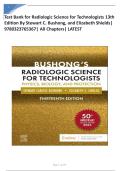
Test Bank for Radiologic Science for Technologists 13th
Edition By Stewart C. Bushong, and Elizabeth Shields|
9780323765367| All Chapters| LATEST
Page 1 of 237
,2
TABLE OF CONTENTS
PART I: RADIOLOGIC PHYSICS
1. Essential Concepts of Radiologic Science
2. Basic Physics Primer
3. The Structure of Matter
4. Electromagnetic Energy
5. Electricity, Magnetism, and Electromagnetism
PART II: X-RADIATION
6. The X-Ray Imaging System
7. The X-Ray Tube
8. X-Ray Production
9. X-Ray Emission
10. X-Ray Interaction with Matter
PART III: X-RAY IMAGING
11. Computed Radiography
12. Digital Radiography
13. Digital Radiographic Technique
14. Image Acquisition
15. Scatter Radiation
16. Digital Image Descriptors and Evaluation
17. Radiographic Artifacts
PART IV: ADVANCED MEDICAL IMAGING
18. Mammography
19. Fluoroscopy
20. Interventional Radiology
21. Computed Tomography
22. Tomosynthesis
PART V: MEDICAL IMAGE DISPLAY
23. Patient-Image Optimization
24. Viewing the Medical Image
25. Medical Image Informatics
26. Digital Display Device
PART VI: THE MEDICAL IMAGE
27. Imaging Science
28. Artificial Intelligence
29. Quantum Computing
30. Image Perception
PART VII: RADIOBIOLOGY
31. Human Biology
Page 2 of 237
, 32. Fundamental Principles of Radiobiology
3
33. Molecular Radiobiology
34. Cellular Radiobiology
35. Deterministic Effects of Radiation
36. Stochastic Effects of Radiation
PART VIII: RADIATION PROTECTION
37. Health Physics
38. Designing for Radiation Protection
39. Radiography/Fluoroscopy Patient Radiation Dose
40. Computed Tomography Patient Radiation Dose
41. Patient Radiation Dose Management
42. Occupational Radiation Dose Management
Page 3 of 237
, 4
Chapter 01: Essential Concepts of Radiologic Science Bushong: Radiologic Science for Technologists, 13th Edition
MULTIPLE CHOICE
1. Matter is measured in .
a. Kilograms
b. Joules
c. Electron volts
d. Rems
ANS: A
Matter is measured in kilograms.
2. Atoms and molecules are the fundamental building blocks of .
a. Energy
b. Radiation
c. Matter
d. Gravity
ANS: C
Atoms and molecules are the fundamental building blocks of matter.
3. Ice and steam are examples of two forms of .
a. Matter
b. Radiation
c. Energy
d. Work
ANS: A
Ice and steam are examples of two forms of matter.
4. The formula E = mc2 is the basis for the theory that led to the development of .
a. X-rays
b. Electromagnetic radiation
c. Nuclear power
d. Cathode ray tubes
ANS: C
The formula E = mc2 is the basis for the theory that led to the development of nuclear power.
5. Radio waves, light, and x-rays are all examples of energy.
a. Nuclear
b. Thermal
c. Electrical
d. Electromagnetic
ANS: D
Electromagnetic energy includes radio waves, light, and x-rays as well as other parts of the
spectrum.
Page 4 of 237
Test Bank for Radiologic Science for Technologists 13th
Edition By Stewart C. Bushong, and Elizabeth Shields|
9780323765367| All Chapters| LATEST
Page 1 of 237
,2
TABLE OF CONTENTS
PART I: RADIOLOGIC PHYSICS
1. Essential Concepts of Radiologic Science
2. Basic Physics Primer
3. The Structure of Matter
4. Electromagnetic Energy
5. Electricity, Magnetism, and Electromagnetism
PART II: X-RADIATION
6. The X-Ray Imaging System
7. The X-Ray Tube
8. X-Ray Production
9. X-Ray Emission
10. X-Ray Interaction with Matter
PART III: X-RAY IMAGING
11. Computed Radiography
12. Digital Radiography
13. Digital Radiographic Technique
14. Image Acquisition
15. Scatter Radiation
16. Digital Image Descriptors and Evaluation
17. Radiographic Artifacts
PART IV: ADVANCED MEDICAL IMAGING
18. Mammography
19. Fluoroscopy
20. Interventional Radiology
21. Computed Tomography
22. Tomosynthesis
PART V: MEDICAL IMAGE DISPLAY
23. Patient-Image Optimization
24. Viewing the Medical Image
25. Medical Image Informatics
26. Digital Display Device
PART VI: THE MEDICAL IMAGE
27. Imaging Science
28. Artificial Intelligence
29. Quantum Computing
30. Image Perception
PART VII: RADIOBIOLOGY
31. Human Biology
Page 2 of 237
, 32. Fundamental Principles of Radiobiology
3
33. Molecular Radiobiology
34. Cellular Radiobiology
35. Deterministic Effects of Radiation
36. Stochastic Effects of Radiation
PART VIII: RADIATION PROTECTION
37. Health Physics
38. Designing for Radiation Protection
39. Radiography/Fluoroscopy Patient Radiation Dose
40. Computed Tomography Patient Radiation Dose
41. Patient Radiation Dose Management
42. Occupational Radiation Dose Management
Page 3 of 237
, 4
Chapter 01: Essential Concepts of Radiologic Science Bushong: Radiologic Science for Technologists, 13th Edition
MULTIPLE CHOICE
1. Matter is measured in .
a. Kilograms
b. Joules
c. Electron volts
d. Rems
ANS: A
Matter is measured in kilograms.
2. Atoms and molecules are the fundamental building blocks of .
a. Energy
b. Radiation
c. Matter
d. Gravity
ANS: C
Atoms and molecules are the fundamental building blocks of matter.
3. Ice and steam are examples of two forms of .
a. Matter
b. Radiation
c. Energy
d. Work
ANS: A
Ice and steam are examples of two forms of matter.
4. The formula E = mc2 is the basis for the theory that led to the development of .
a. X-rays
b. Electromagnetic radiation
c. Nuclear power
d. Cathode ray tubes
ANS: C
The formula E = mc2 is the basis for the theory that led to the development of nuclear power.
5. Radio waves, light, and x-rays are all examples of energy.
a. Nuclear
b. Thermal
c. Electrical
d. Electromagnetic
ANS: D
Electromagnetic energy includes radio waves, light, and x-rays as well as other parts of the
spectrum.
Page 4 of 237


