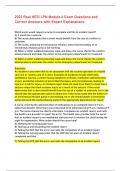
TMC PRACTICE EXAM SCRIPT B 2026
QUESTIONS AND FULL SOLUTIONS
GRADED A+
⩥ A premature infant is receiving O2 via a 50% O2 hood and has a
PaO2 of 43 torr and a PaCO2 of 40 torr. The RT should recommend
which of the following?
a. Increase the O2 to 70%
b. Intubate and institute mech. ventilation
c. Initiate CPAP of 4cm H2O and 50% O2
d. Increase the O2 to 100%. Answer: c. Initiate CPAP of 4cm H2O and
50% O2
As with adults, if the infant is hypoxemic with a normal or low PaCO2,
increase the PaO2 by increasing oxygen to no more than 60%. Studies
show that oxygen levels exceeding 60% increase damage to the lungs. If
60% doesn't reverse the hypoxemia, place the infant on CPAP
⩥ A patient arrives in the ED after being pulled from a burning house.
The RT should recommend obtaining which of the following
measurements to best determine the severity of the patient's smoke
inhalation?
,a. SpO2
b. HbCO
c. PaO2
d. Hb. Answer: b. HbCO
To best determine the severity of smoke inhalation, an HbCO level
should be determined with a co-oximeter.
⩥ The physician has ordered O2 to be administered to an active 3 year
old with an SpO2 of 86%. Which of the following delivery devices
would you recommend for this patient?
a. 1 to 2 L NC
b. Air Entrainment Mask
c. Simple O2 Mask
d. O2 Hood. Answer: a. 1 to 2 L NC
An active 3-year-old generally tolerates a cannula much better than any
kind of mask and is too large for an O2 hood.
⩥ The ability of the patient to follow instructions would be indicated by
which of the following?
,a. Orientation to person
b. Performance of task when asked.
c. Ability to feed himself
d. Awareness of time. Answer: b. Performance of task when asked
If the patient is able to perform simple tasks when asked, this best
determines his or her ability to follow instructions. This is important
before administering an incentive spirometry or IPPB treatment, which
requires the patient to be able to follow instructions well or the treatment
will not be effective
⩥ You suspect a patient may have a pulmonary embolism. Which of the
following would be the most appropriate recommendation for diagnosis
of this condition?
a. Bronchoscopy
b. V/Q Lung Scan
c. Coagulation Studies
d. Shunt Study. Answer: b. V/Q Lung Scan
The best diagnostic test to determine whether a pulmonary embolism is
present is the V/Q lung scan.
, ⩥ To most effectively increase a sedated, paralyzed patient's alveolar
minute ventilation while the patient is on volume controlled ventilation
in the assist-control mode, you would recommend increasing which of
the following?
a. PEEP
b. Insp. Flow
c. Vt
d. Ventilator Rate. Answer: c. Vt
Alveolar minute ventilation = (VT - VD) × respiratory rate
It represents the volume actually reaching the alveoli per minute. It takes
into account anatomic dead space (VD), which is approximately 1 mL/lb
of body weight. Anatomic VD is that portion of the airway where no gas
exchange occurs. If a patient's alveolar minute ventilation is to be
increased, the VT must be increased. If only the ventilator rate is
increased, the same VT is delivered, even though the minute ventilation
(VT × RR) increases.
⩥ Failure to hyperoxygenate a patient on a ventilator before ET
suctioning may result in
1. Hypocapnia
2. Hpoxemia
3. Hypertension
QUESTIONS AND FULL SOLUTIONS
GRADED A+
⩥ A premature infant is receiving O2 via a 50% O2 hood and has a
PaO2 of 43 torr and a PaCO2 of 40 torr. The RT should recommend
which of the following?
a. Increase the O2 to 70%
b. Intubate and institute mech. ventilation
c. Initiate CPAP of 4cm H2O and 50% O2
d. Increase the O2 to 100%. Answer: c. Initiate CPAP of 4cm H2O and
50% O2
As with adults, if the infant is hypoxemic with a normal or low PaCO2,
increase the PaO2 by increasing oxygen to no more than 60%. Studies
show that oxygen levels exceeding 60% increase damage to the lungs. If
60% doesn't reverse the hypoxemia, place the infant on CPAP
⩥ A patient arrives in the ED after being pulled from a burning house.
The RT should recommend obtaining which of the following
measurements to best determine the severity of the patient's smoke
inhalation?
,a. SpO2
b. HbCO
c. PaO2
d. Hb. Answer: b. HbCO
To best determine the severity of smoke inhalation, an HbCO level
should be determined with a co-oximeter.
⩥ The physician has ordered O2 to be administered to an active 3 year
old with an SpO2 of 86%. Which of the following delivery devices
would you recommend for this patient?
a. 1 to 2 L NC
b. Air Entrainment Mask
c. Simple O2 Mask
d. O2 Hood. Answer: a. 1 to 2 L NC
An active 3-year-old generally tolerates a cannula much better than any
kind of mask and is too large for an O2 hood.
⩥ The ability of the patient to follow instructions would be indicated by
which of the following?
,a. Orientation to person
b. Performance of task when asked.
c. Ability to feed himself
d. Awareness of time. Answer: b. Performance of task when asked
If the patient is able to perform simple tasks when asked, this best
determines his or her ability to follow instructions. This is important
before administering an incentive spirometry or IPPB treatment, which
requires the patient to be able to follow instructions well or the treatment
will not be effective
⩥ You suspect a patient may have a pulmonary embolism. Which of the
following would be the most appropriate recommendation for diagnosis
of this condition?
a. Bronchoscopy
b. V/Q Lung Scan
c. Coagulation Studies
d. Shunt Study. Answer: b. V/Q Lung Scan
The best diagnostic test to determine whether a pulmonary embolism is
present is the V/Q lung scan.
, ⩥ To most effectively increase a sedated, paralyzed patient's alveolar
minute ventilation while the patient is on volume controlled ventilation
in the assist-control mode, you would recommend increasing which of
the following?
a. PEEP
b. Insp. Flow
c. Vt
d. Ventilator Rate. Answer: c. Vt
Alveolar minute ventilation = (VT - VD) × respiratory rate
It represents the volume actually reaching the alveoli per minute. It takes
into account anatomic dead space (VD), which is approximately 1 mL/lb
of body weight. Anatomic VD is that portion of the airway where no gas
exchange occurs. If a patient's alveolar minute ventilation is to be
increased, the VT must be increased. If only the ventilator rate is
increased, the same VT is delivered, even though the minute ventilation
(VT × RR) increases.
⩥ Failure to hyperoxygenate a patient on a ventilator before ET
suctioning may result in
1. Hypocapnia
2. Hpoxemia
3. Hypertension