100% satisfaction guarantee Immediately available after payment Both online and in PDF No strings attached 4.6 TrustPilot
logo-home
Exam (elaborations)

NURS 667 QUESTIONS AND ANSWERS EXAM 2025

Rating
-
Sold
-
Pages
11
Grade
A+
Uploaded on
22-11-2025
Written in
2025/2026

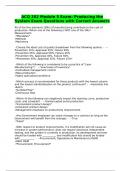
NURS 667 QUESTIONS AND ANSWERS EXAM 2025 What are common symptoms of hypertension? - -May be asymptomatic or occipital headache, headache upon waking, blurry vision What are non-pharmacological interventions for hypertension? - -Weight loss, 30 mins aerobic exercise 5x/week, smoking cessation, alcohol cessation, diet improvement (avoid salt) What are pharmacological interventions for hypertension? - -Start with Thiazide Diuretic- HCTZ CCB- Amlodipine ACE/ARB- Lisinopril What labs would you check for a patient with hypertension? - -CBC, CMP, fasting glucose, lipid panel, UA What diagnostics would you check for a patient with HTN? - -EKG Who would you refer a patient with hypertension to? - -Cardiology if EKG is abnormal. When would you follow up with a patient with hypertension? - -2-4 weeks What are common symptoms of hyperlipidemia? - -Usually asymptomatic. Xanthelasma (fat deposits around eyes) or Corneal arcus in patients under 50. What non-pharmacological interventions can be done for a patient with hyperlipidemia? - -Diet and exercise to raise HDL. What pharmacological interventions can be done for a patient with hyperlipidemia? - Statins. Pravastatin, Simvastatin, Atorvastatin, Rosuvastatin. If muscle pain try Ezetimibe or Colesevelam. What labs would you check for a patient with hyperlipidemia? - -Lipid panel, CBC, CMP, UA and creatinine (check for nephrotic syndrome), TSH (hypothyroidism) When would you follow up for a patient with hyperlipidemia? - -6-8 weeks Who would you refer a patient with hyperlipidemia to? - -Nutritionist What are common symptoms of Type 2 Diabetes? - -Polydipsia, polyuria, polyphagia. Obesity, nervousness, blurry vision, fatigue. A1C of 6.5% or higher on two tests or fasting BG greater than 126. Nurs 667 Nurs 667 What are non-pharmacological interventions you would do for a patient with T2DM? - Lifestyle modification, diet, exercise. Monitor BG at home. Avoid alcohol and smoking. What are pharmacological interventions you would do for a patient with T2DM? - -Start with metformin combined with dietary changes. Sulfonylureas (Amaryl, Glucotrol XL) SGLT2 (Jardiance, Farxiga) Etc. and add insulin if PO medication is insufficient. What diagnostics would be done for a patient who has T2DM? - -CBC, CMP, A1C, TSH, fasting glucose, urine for microalbumin, lipid panel When would you follow up for a patient with T2DM? - -2-4 weeks Who would you refer a patient with T2DM to? - -Ophthalmology, Podiatry, Diabetic Educator How does a patient with back pain typically present? - -C/O pain may be localized, referred or radiating. OLDCARTS. What are some contributing factors of back pain? - -Trauma, surgery, pre-existing condition, jobs What is the gold standard for diagnosing back pain? - -CT or MRI What imaging would you get if a patient with back pain experienced trauma? - -X-RAY to rule out fracture or degeneration What labs would you check for a patient with back pain? - -CBC, CMP, UA What is non-pharmacological management that can be done for a patient with back pain? - -Avoid heavy lifting. Apply heat for 20-30 minutes a few times per day. Weight loss. Gradually resume activity. What is pharmacological management that can be done for a patient with back pain? - NSAIDs like naproxen or ibuprofen. Muscle relaxer like cyclobenzaprine. When would you have a patient with back pain follow up? - -If severe 24-48 hours. If not severe 7-10 days. Nurs 667 Nurs 667 Who would you refer a patient with back pain to? - -Physical therapy What are the common symptoms of anxiety? - -tachycardia, sweating, trembling, palpitations, fatigue, sleep disturbances. Somatic complaints such as dizziness, palpitation, near syncope What labs would you do for a patient presenting with anxiety? - -TSH, CBC, CMP, UA, urine drug screen, glucose, EKG What scales can be used to assess for anxiety? - -Hamilton Anxiety scale (>18 is positive), GAD-7 What are non-pharmacological treatments for anxiety? - -Psychology/counseling, exercise, stress relief, healthy diet What are pharmacological treatments for anxiety? - -SSRIs Buspar, Klonopin What medication class should only be used short-term for anxiety? - -Benzodiazepines due to addiction/abuse potential When should you follow up on a patient with anxiety? - -2-4 weeks Who would you refer a patient with anxiety to? - -Psychologist/Psychiatrist What are the common symptoms of a patient with depressive disorder? - -Loss of interest, excessive sleeping, suicidal ideation possible What labs would you do for a patient with depressive disorder? - -CBC, CMP, TSH, urine drug screen, EKG, vitamin D, B12, folate What PHQ-9 score indicates depression? - -5 or more What are non-pharmacological treatments for depressive disorder? - -Counseling, sleep hygiene, home safety, offer hotline resources What are pharmacological treatments for depressive disorder? - -SSRI Sertraline, Prozac When should you follow up on a patient with depressive disorder? - -2 weeks. May need up to 8 weeks for medication to be therapeutic. Who would you refer a patient with depressive disorder to? - -Psychologist/psychiatrist What are the common symptoms of a patient with obesity? - -Excessive fat accumulation Nurs 667 Nurs 667 What labs would you do for a patient presenting with obesity? - -CBC, CMP, TSH, lipid panel, fasting glucose, A1C, lipase, EKG (baseline for adipex/phentermine) What BMI is considered obese? - -greater than 30 What are the non-pharmacological treatments for obesity? - -Diet and exercise (lifestyle modifications) What are pharmacological treatments for obesity? - -Adipex-P/Phentermine; consider GLP-1 if risk factors When would you follow up on a patient with obesity? - -2-4 weeks. Who would you refer a patient with obesity to? - -Nutritionist What are common symptoms of a patient presenting with reflux esophagitis (GERD)? - Heartburn, cough, burning beneath sternum, regurgitation, chest pain neck pain What labs would you do for a patient with GERD? - -CBC, CMP, EKG (to rule out cardiac cause) How is GERD diagnosed? - -Hx and clinical impression, barium swallow (hiatal hernia, loss of LES tone) How can GERD be managed non-pharmacologically? - -Remove trigger foods like coffee, spices, or chocolate Small frequent meals Sit up for 2 hours after eating Do not eat before bedtime What is the pharmacological management for GERD? - -Omeprazole daily When would you follow up for a patient with GERD? - -2-4 weeks What are common symptoms of allergic rhinitis? - -sneezing, rhinorrhea, pruritus, nasal congestion/edema, pale boggy turbinates, red conjunctivae, sore throat, palpable lymph nodes What are some non-pharmacological measures that can be taken to lessen allergic rhinitis symptoms? - -Avoid allergens Frequent vacuuming, dusting Remove feather/down materials from bedding Remove carpet or house plants Nurs 667 Nurs 667 What are pharmacological measures that can be done for treatment of allergic rhinitis? - -Claritin (antihistamines) then if those don't work alone add intranasal corticosteroid such as flonase When would you follow up on a patient with allergic rhinitis? - -1-2 weeks if symptoms persist What are common symptoms of an upper respiratory infection? - -Nasal stuffiness, sneezing, scratchy throat, hoarseness, irritated nasal mucosa with clear or yellow discharge, malaise, headache, cough, possible low grade fever What are most common URI causes? - -Rhinovirus or adenovirus What are diagnostics used for a URI? - -Nasal washing/flu wash What are non-pharmacological interventions for a URI? - -Increase fluid intake and rest, humidifier, lozenges, saline nose rinse, hand washing What are pharmacological methods for treatment of URI? - -Tylenol/ibuprofen for fever and body aches Saline nasal spray Antibiotic if illness lasts longer than 10 days When would you follow up on a patient with a URI? - -If symptoms persist over 10 days. What are common symptoms of hypothyroidism? - -Fatigue, constipation, weight gain, hoarseness, headaches, arthralgia (joint pain), edema, brittle hair/fingernails What labs would you do for a patient with hypothyroidism? - -TSH, T4, T3, CBC, CMP, lipid panel, EKG What would labs show if a patient has hypothyroidism? - -High TSH, low T4, possibly decreased T3 What nonpharmacologic methods can be used to manage hypothyroidism? - -High fiber diet to prevent constipation, diet for weight loss, educate on medication compliance, report signs of infection, toxicity or cardiac symptoms What are signs of thyroid medication toxicity? - -Anxiety, nervousness, tremors, insomnia, rapid heart rate, palpitations, elevated BP, sweating, heat intolerance, weight loss, fatigue What pharmacologic methods can be used to manage hypothyroidism? - -Levothyroxine on an empty stomach. Start with low dose and titrate upward. When would you follow up for a patient with hypothyroidism? - -6 weeks. Nurs 667 Nurs 667 What are common symptoms for a patient presenting with osteoarthritis? - -Very generalized disease, ASYMMETRIC joint pain, morning stiffness. Usually develops insidiously or follows physical activity. What would you assess for in a patient with osteoarthritis? - -Morning stiffness lasting less than one hour, stiffness resumes at end of day or after activity. Look for crepitus or bunions. Look for site redness or warmth. What diagnostics would you do for a patient presenting with osteoarthritis? - -X-Ray (joint space narrowing); CBC, CMP, ESR, rheumatoid factors What are non-pharmacolocial treatments for osteoarthritis? - -Weight loss, braces to stabilize joints, heat/cold What are pharmacological treatments for osteoarthritis? - -Acetaminophen for pain, voltaren cream as needed When would you follow up on a patient with osteoarthritis? - -2-4 weeks Who would you refer a patient with osteoarthritis to? - -Physical therapy What is the common presentation of a patient with fibromyalgia/myositis? - -Chronic, widespread body pain. Almost always accompanied by fatigue, memory difficulties, sleep and mood disturbances. Physical exam is usually normal but may have areas of tenderness. What diagnostics should be done for a patient with fibromyalgia? - -ESR, C-RP, TSH,

Show more Read less
Institution
NURS 667
Course
NURS 667


Whoops! We can’t load your doc right now. Try again or contact support.

Written for

Institution
NURS 667
Course
NURS 667

Document information

Uploaded on
November 22, 2025
Number of pages
11
Written in
2025/2026
Type
Exam (elaborations)
Contains
Questions & answers

Subjects

  • nurs 667

Content preview

Nurs 667


NURS 667 QUESTIONS AND
ANSWERS EXAM 2025
What are common symptoms of hypertension? - -May be asymptomatic or occipital
headache, headache upon waking, blurry vision

What are non-pharmacological interventions for hypertension? - -Weight loss, 30 mins
aerobic exercise 5x/week, smoking cessation, alcohol cessation, diet improvement
(avoid salt)

What are pharmacological interventions for hypertension? - -Start with Thiazide
Diuretic- HCTZ
CCB- Amlodipine
ACE/ARB- Lisinopril

What labs would you check for a patient with hypertension? - -CBC, CMP, fasting
glucose, lipid panel, UA

What diagnostics would you check for a patient with HTN? - -EKG

Who would you refer a patient with hypertension to? - -Cardiology if EKG is abnormal.

When would you follow up with a patient with hypertension? - -2-4 weeks

What are common symptoms of hyperlipidemia? - -Usually asymptomatic. Xanthelasma
(fat deposits around eyes) or Corneal arcus in patients under 50.

What non-pharmacological interventions can be done for a patient with hyperlipidemia?
- -Diet and exercise to raise HDL.

What pharmacological interventions can be done for a patient with hyperlipidemia? - -
Statins. Pravastatin, Simvastatin, Atorvastatin, Rosuvastatin.
If muscle pain try Ezetimibe or Colesevelam.

What labs would you check for a patient with hyperlipidemia? - -Lipid panel, CBC, CMP,
UA and creatinine (check for nephrotic syndrome), TSH (hypothyroidism)

When would you follow up for a patient with hyperlipidemia? - -6-8 weeks

Who would you refer a patient with hyperlipidemia to? - -Nutritionist

What are common symptoms of Type 2 Diabetes? - -Polydipsia, polyuria, polyphagia.
Obesity, nervousness, blurry vision, fatigue. A1C of 6.5% or higher on two tests or
fasting BG greater than 126.

Nurs 667

, Nurs 667


What are non-pharmacological interventions you would do for a patient with T2DM? - -
Lifestyle modification, diet, exercise.
Monitor BG at home.
Avoid alcohol and smoking.

What are pharmacological interventions you would do for a patient with T2DM? - -Start
with metformin combined with dietary changes.
Sulfonylureas (Amaryl, Glucotrol XL)
SGLT2 (Jardiance, Farxiga)
Etc. and add insulin if PO medication is insufficient.

What diagnostics would be done for a patient who has T2DM? - -CBC, CMP, A1C, TSH,
fasting glucose, urine for microalbumin, lipid panel

When would you follow up for a patient with T2DM? - -2-4 weeks

Who would you refer a patient with T2DM to? - -Ophthalmology, Podiatry, Diabetic
Educator

How does a patient with back pain typically present? - -C/O pain may be localized,
referred or radiating. OLDCARTS.

What are some contributing factors of back pain? - -Trauma, surgery, pre-existing
condition, jobs

What is the gold standard for diagnosing back pain? - -CT or MRI

What imaging would you get if a patient with back pain experienced trauma? - -X-RAY
to rule out fracture or degeneration

What labs would you check for a patient with back pain? - -CBC, CMP, UA

What is non-pharmacological management that can be done for a patient with back
pain? - -Avoid heavy lifting.
Apply heat for 20-30 minutes a few times per day.
Weight loss.
Gradually resume activity.

What is pharmacological management that can be done for a patient with back pain? - -
NSAIDs like naproxen or ibuprofen.
Muscle relaxer like cyclobenzaprine.

When would you have a patient with back pain follow up? - -If severe 24-48 hours. If not
severe 7-10 days.


Nurs 667
$26.99
Get access to the full document:

100% satisfaction guarantee
Immediately available after payment
Both online and in PDF
No strings attached

Get to know the seller
Seller avatar
AlexScorer
4.0
(1)

Get to know the seller

Seller avatar
AlexScorer Chamberlain College Of Nursing
View profile
Follow You need to be logged in order to follow users or courses
Sold
5
Member since
1 year
Number of followers
0
Documents
1566
Last sold
4 months ago
Best Scorers Review Guide

Hesitate not to get 100% Recent updated and Verified Documents .Total Guarantee to success

4.0

1 reviews

5
0
4
1
3
0
2
0
1
0

Recently viewed by you

Why students choose Stuvia

Created by fellow students, verified by reviews

Quality you can trust: written by students who passed their tests and reviewed by others who've used these notes.

Didn't get what you expected? Choose another document

No worries! You can instantly pick a different document that better fits what you're looking for.

Pay as you like, start learning right away

No subscription, no commitments. Pay the way you're used to via credit card and download your PDF document instantly.

Student with book image

“Bought, downloaded, and aced it. It really can be that simple.”

Alisha Student

Frequently asked questions