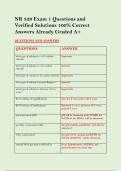
NR 329 Exam 1 Questions and
Verified Solutions 100% Correct
Answers Already Graded A+
QUESTIONS AND ANSWERS
QUESTIONS ANSWER
what type of solution is 0.45% sodium hypotonic
chloride
what type of solution is 0.9% sodium isotonic
chloride
what type of solution is 3% sodium chloride hypertonic
what type of solution Lactated Ringers? isotonic
what type of solution is dextrose 10% in hypertonic
water?
ECG findings of hypERkalemia loss of a P wave and a tall T wave
ECG findings of hypOkalemia flattened T wave, presence of U wave,
peaked P wave
uncompensated ABG pH will be abnormal and EITHER the
PaCO2 or the HCO3- will be abnormal
partially compensated ABG the pH, PaCO2, and HCO3- will ALL be
abnormal
Fully compensated the pH will be normal and BOTH the
PaCO2 and HCO3- will be abnormal
arterial blood gas may be affected by fever, hypothermia, ANEMIA, and
polycythemia (too many rbc)
, avoid doing these before drawing abg changing rate of 02, repositioning in bed
common causes of respiratory alkalosis salicylate poisoning, anxiety, liver
failure
common causes of respiratory acidosis COPD, sedative overdose, severe
pneumonia, pulmonary edema
common causes of metabolic alkalosis vomiting, gastric suctioning, diuretic
therapy, excessive use of bicarbonate-
containing antacids. often seen with
hypokalemia
common causes of metabolic acidosis DKA, kidney (renal) failure, lactic
acidosis, uncontrolled DM1
expected findings of a bronchoscopy blood streaked sputum, bronchospasm,
and a dry cough
NOT dyspnea
common COPD exacerbation symptoms tachypnea, increased AP chest diameter,
and a non-productive cough
pneumonia clinical manifestations fever, confusion from hypoxia (OA),
productive cough, SOB, tachypnea,
decreased 02, pleuritic chest pain
pneumonia risk factors Pts on a ventilator, pts with dysphagia,
pts with ALOC
upper resp tract infections, copd,
asthma, covid
pneumonia medications antibiotics (penicillin, cephalosporins),
bronchodilators (albuterol,
ipratropium), anti-inflammatory
(fluticasone, prednisone)
what does the p wave represent atrial depolarization
Verified Solutions 100% Correct
Answers Already Graded A+
QUESTIONS AND ANSWERS
QUESTIONS ANSWER
what type of solution is 0.45% sodium hypotonic
chloride
what type of solution is 0.9% sodium isotonic
chloride
what type of solution is 3% sodium chloride hypertonic
what type of solution Lactated Ringers? isotonic
what type of solution is dextrose 10% in hypertonic
water?
ECG findings of hypERkalemia loss of a P wave and a tall T wave
ECG findings of hypOkalemia flattened T wave, presence of U wave,
peaked P wave
uncompensated ABG pH will be abnormal and EITHER the
PaCO2 or the HCO3- will be abnormal
partially compensated ABG the pH, PaCO2, and HCO3- will ALL be
abnormal
Fully compensated the pH will be normal and BOTH the
PaCO2 and HCO3- will be abnormal
arterial blood gas may be affected by fever, hypothermia, ANEMIA, and
polycythemia (too many rbc)
, avoid doing these before drawing abg changing rate of 02, repositioning in bed
common causes of respiratory alkalosis salicylate poisoning, anxiety, liver
failure
common causes of respiratory acidosis COPD, sedative overdose, severe
pneumonia, pulmonary edema
common causes of metabolic alkalosis vomiting, gastric suctioning, diuretic
therapy, excessive use of bicarbonate-
containing antacids. often seen with
hypokalemia
common causes of metabolic acidosis DKA, kidney (renal) failure, lactic
acidosis, uncontrolled DM1
expected findings of a bronchoscopy blood streaked sputum, bronchospasm,
and a dry cough
NOT dyspnea
common COPD exacerbation symptoms tachypnea, increased AP chest diameter,
and a non-productive cough
pneumonia clinical manifestations fever, confusion from hypoxia (OA),
productive cough, SOB, tachypnea,
decreased 02, pleuritic chest pain
pneumonia risk factors Pts on a ventilator, pts with dysphagia,
pts with ALOC
upper resp tract infections, copd,
asthma, covid
pneumonia medications antibiotics (penicillin, cephalosporins),
bronchodilators (albuterol,
ipratropium), anti-inflammatory
(fluticasone, prednisone)
what does the p wave represent atrial depolarization