@PROFDOCDIGITALLIBRARIES
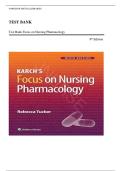
TEST BANK
Test Bank Focus on Nursing Pharmacology
9th Edition
JN
U
R
SE
,@PROFDOCDIGITALLIBRARIES
Table of Content
Table of Contents 1
Chapter 01 - Introduction to Drugs 3
Chapter 02 - Drugs and the Body 20
Chapter 03 - Toxic Effects of Drugs 37
Chapter 04 - The Nursing Process in Drug Therapy and Patient Safety Chapter 54
05 - Dosage Calculations 71
Chapter 06 - Challenges to Effective Drug Therapy 86
Chapter 07 - Introduction to Cell Physiology Chapter 08 - 103
Antiinfective Agents 120
Chapter 09 - Antibiotics Chapter 10 138
- Antiviral Agents Chapter 11 - 155
Antifungal Agents 172
Chapter 12 - Antiprotozoal Agents 188
Chapter 13 - Anthelmintic Agents 204
Chapter 14 - Antineoplastic Agents 220
Chapter 15 - Introduction to the Immune Response and Inflammation Chapter 237
16 - Antiinflammatory, Antiarthritis, and Related Agents Chapter 17 - Immune 254
JN
Modulators 270
Chapter 18 - Vaccines and Sera 287
Chapter 19 - Introduction to Nerves and the Nervous System Chapter 304
20 - Anxiolytic and Hypnotic Agents 320
Chapter 21 - Antidepressant Agents Chapter 337
U
22 - Psychotherapeutic Agents Chapter 23 - 354
Antiseizure Agents Chapter 24 - 371
Antiparkinsonism Agents Chapter 25 - 388
R
Muscle Relaxants 404
Chapter 26 - Narcotics, Narcotic Antagonists, and Antimigraine Agents Chapter 420
27 - General and Local Anesthetic Agents 436
SE
Chapter 28 - Neuromuscular Junction Blocking Agents Chapter 29 - 453
Introduction to the Autonomic Nervous System Chapter 30 - 470
Adrenergic Agonists 487
Chapter 31 - Adrenergic Antagonists Chapter 503
32 - Cholinergic Agonists Chapter 33 - 520
Anticholinergic Agents 536
Chapter 34 - Introduction to the Endocrine System 553
Chapter 35 - Hypothalamic and Pituitary Agents Chapter 569
36 - Adrenocortical Agents 585
Chapter 37 - Thyroid and Parathyroid Agents Chapter 38 - 602
Agents to Control Blood Glucose Levels Chapter 39 - 619
Introduction to the Reproductive System 636
Chapter 40 - Drugs Affecting the Female Reproductive System 653
Chapter 41 - Drugs Affecting the Male Reproductive System Chapter 669
42 - Introduction to the Cardiovascular System Chapter 43 - Drugs 685
Affecting Blood Pressure 702
Chapter 44 - Agents for Treating Heart Failure Chapter 45 719
- Antiarrhythmic Agents 735
Chapter 46 - Antianginal Agents Chapter 752
47 - Lipid-Lowering Agents 768
Chapter 48 - Drugs Affecting Blood Coagulation Chapter 785
49 - Drugs Used to Treat Anemias Chapter 50 - 801
Introduction to the Renal System 817
,@PROFDOCDIGITALLIBRARIES
Chapter 51 - Diuretic Agents 833
Chapter 52 - Drugs Affecting the Urinary Tract and the Bladder Chapter 849
53 - Introduction to the Respiratory System 866
Chapter 54 - Drugs Acting on the Upper Respiratory Tract Chapter 883
55 - Drugs Acting on the Lower Respiratory Tract Chapter 56 - 900
Introduction to the Gastrointestinal System Chapter 57 - Drugs 917
Affecting Gastrointestinal Secretions Chapter 58 - Drugs Affecting 933
Gastrointestinal Motility Chapter 59 - Antiemetic Agents 949
965
JN
U
R
SE
, @PROFDOCDIGITALLIBRARIES
Amy Karch: Focus on Nursing Pharmacology, 9e
Chapter 01- Introduction to Drugs
Multiple Choice
1.A nurse working in radiology administers iodine to a patient who is having a computed tomography(CT)
scan. The nurse working on the oncology unit administers chemotherapy to patients who have cancer. At the
Public Health Department, a nurse administers a measles-mumps-rubella (MMR) vaccine to a 14-month-old
child as a routine immunization. Which branch of pharmacology best describes the actions of all three nurses?
Pharmacoeconomics
Pharmacotherapeutics
Pharmacodynamics
Pharmacokinetics Ans:
JN
Ans B
Feedback:
U
Pharmacology is the study of the biologic effects of chemicals. Nurses are involved with clinical pharmacology
or pharmacotherapeutics, which is a branch of pharmacology that deals with the uses of drugs to treat, prevent,
R
and diagnose disease. The radiology nurse is administering a drug to help diagnose a disease. The oncology nurse
is administering a drug to help treat a disease.
Pharmacoeconomics includes any costs involved in drug therapy. Pharmacodynamics involves how a drug affects
SE
the body and pharmacokinetics is how the body acts on the body.
2. A physician has ordered intramuscular (IM) injections of morphine, a narcotic, every 4 hours as neededfor
pain in a motor vehicle accident victim. The nurse is aware this drug has a high abuse potential. Under what
category would morphine be classified?
Schedule I
Schedule II
Schedule III
Schedule IV
Ans: B
Feedback:
Narcotics with a high abuse potential are classified as Schedule II drugs because of severe dependence
TEST BANK
Test Bank Focus on Nursing Pharmacology
9th Edition
JN
U
R
SE
,@PROFDOCDIGITALLIBRARIES
Table of Content
Table of Contents 1
Chapter 01 - Introduction to Drugs 3
Chapter 02 - Drugs and the Body 20
Chapter 03 - Toxic Effects of Drugs 37
Chapter 04 - The Nursing Process in Drug Therapy and Patient Safety Chapter 54
05 - Dosage Calculations 71
Chapter 06 - Challenges to Effective Drug Therapy 86
Chapter 07 - Introduction to Cell Physiology Chapter 08 - 103
Antiinfective Agents 120
Chapter 09 - Antibiotics Chapter 10 138
- Antiviral Agents Chapter 11 - 155
Antifungal Agents 172
Chapter 12 - Antiprotozoal Agents 188
Chapter 13 - Anthelmintic Agents 204
Chapter 14 - Antineoplastic Agents 220
Chapter 15 - Introduction to the Immune Response and Inflammation Chapter 237
16 - Antiinflammatory, Antiarthritis, and Related Agents Chapter 17 - Immune 254
JN
Modulators 270
Chapter 18 - Vaccines and Sera 287
Chapter 19 - Introduction to Nerves and the Nervous System Chapter 304
20 - Anxiolytic and Hypnotic Agents 320
Chapter 21 - Antidepressant Agents Chapter 337
U
22 - Psychotherapeutic Agents Chapter 23 - 354
Antiseizure Agents Chapter 24 - 371
Antiparkinsonism Agents Chapter 25 - 388
R
Muscle Relaxants 404
Chapter 26 - Narcotics, Narcotic Antagonists, and Antimigraine Agents Chapter 420
27 - General and Local Anesthetic Agents 436
SE
Chapter 28 - Neuromuscular Junction Blocking Agents Chapter 29 - 453
Introduction to the Autonomic Nervous System Chapter 30 - 470
Adrenergic Agonists 487
Chapter 31 - Adrenergic Antagonists Chapter 503
32 - Cholinergic Agonists Chapter 33 - 520
Anticholinergic Agents 536
Chapter 34 - Introduction to the Endocrine System 553
Chapter 35 - Hypothalamic and Pituitary Agents Chapter 569
36 - Adrenocortical Agents 585
Chapter 37 - Thyroid and Parathyroid Agents Chapter 38 - 602
Agents to Control Blood Glucose Levels Chapter 39 - 619
Introduction to the Reproductive System 636
Chapter 40 - Drugs Affecting the Female Reproductive System 653
Chapter 41 - Drugs Affecting the Male Reproductive System Chapter 669
42 - Introduction to the Cardiovascular System Chapter 43 - Drugs 685
Affecting Blood Pressure 702
Chapter 44 - Agents for Treating Heart Failure Chapter 45 719
- Antiarrhythmic Agents 735
Chapter 46 - Antianginal Agents Chapter 752
47 - Lipid-Lowering Agents 768
Chapter 48 - Drugs Affecting Blood Coagulation Chapter 785
49 - Drugs Used to Treat Anemias Chapter 50 - 801
Introduction to the Renal System 817
,@PROFDOCDIGITALLIBRARIES
Chapter 51 - Diuretic Agents 833
Chapter 52 - Drugs Affecting the Urinary Tract and the Bladder Chapter 849
53 - Introduction to the Respiratory System 866
Chapter 54 - Drugs Acting on the Upper Respiratory Tract Chapter 883
55 - Drugs Acting on the Lower Respiratory Tract Chapter 56 - 900
Introduction to the Gastrointestinal System Chapter 57 - Drugs 917
Affecting Gastrointestinal Secretions Chapter 58 - Drugs Affecting 933
Gastrointestinal Motility Chapter 59 - Antiemetic Agents 949
965
JN
U
R
SE
, @PROFDOCDIGITALLIBRARIES
Amy Karch: Focus on Nursing Pharmacology, 9e
Chapter 01- Introduction to Drugs
Multiple Choice
1.A nurse working in radiology administers iodine to a patient who is having a computed tomography(CT)
scan. The nurse working on the oncology unit administers chemotherapy to patients who have cancer. At the
Public Health Department, a nurse administers a measles-mumps-rubella (MMR) vaccine to a 14-month-old
child as a routine immunization. Which branch of pharmacology best describes the actions of all three nurses?
Pharmacoeconomics
Pharmacotherapeutics
Pharmacodynamics
Pharmacokinetics Ans:
JN
Ans B
Feedback:
U
Pharmacology is the study of the biologic effects of chemicals. Nurses are involved with clinical pharmacology
or pharmacotherapeutics, which is a branch of pharmacology that deals with the uses of drugs to treat, prevent,
R
and diagnose disease. The radiology nurse is administering a drug to help diagnose a disease. The oncology nurse
is administering a drug to help treat a disease.
Pharmacoeconomics includes any costs involved in drug therapy. Pharmacodynamics involves how a drug affects
SE
the body and pharmacokinetics is how the body acts on the body.
2. A physician has ordered intramuscular (IM) injections of morphine, a narcotic, every 4 hours as neededfor
pain in a motor vehicle accident victim. The nurse is aware this drug has a high abuse potential. Under what
category would morphine be classified?
Schedule I
Schedule II
Schedule III
Schedule IV
Ans: B
Feedback:
Narcotics with a high abuse potential are classified as Schedule II drugs because of severe dependence