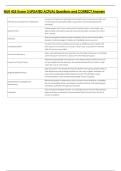
NUR 425 Exam 3 UPDATED ACTUAL Questions and CORRECT Answers
Government (Medicare & Medicaid), private health insurance (through your job), and
3 Primary Sources that Pay for Healthcare out-of-pocket (includes deductibles, copayments, and anything paid by the
individual)
Federal program that is the insurance plan for hospital, hospice, home health, and
Medicare Part A skilled nursing care paid through with social security taxes. Nursing home care is
NOT covered.
State level programs funded by state and federal. Pays for services for the blind,
Medicaid
disabled, medically indigent, children with disabilities and covers a lot.
Consists of the cost of providing a service plus an additional cost for profit. Third
Cost-Based System party payers costs decided by surveying a certain area, and payment is selected
after the service is provided.
Given when reimbursed amount is less than the full charge of service in a cost-based
Contractual Allowance
system because it is similar to a "discount" for the third party payer.
Third-party payer decides what and how much will be paid for a service. If the cost
Prospective Payment System of care is higher than the payment, the provider absorbs the loss. Profit is made
when the cost of care is lower.
Basis of payment in the Prospective Payment System which groups people based on
their diagnosis on their average hospital stay, lab costs, surgeries, therapies, etc.
Diagnosis Related Groups
Does not accurately reflect patient intensity or acuity. PPS with DRG caused
increased patient acuity and decreased length of stay in hospitals
Reimbursed based on performance and outcomes versus rather than considering
Value Based Purchasing/Pay-for-
the cost of providing certain care. Based on quality outcomes, staff responsiveness,
Performance
cleanliness, quietness of hospital environment
Form of Prospective Based Payment. It is a Decided amount of what will be paid per
Capitation patient per days, not based on the procedure. There is a profit when the stay is
shorter for patients.
, Nurse must strive to do more in a visit to prevent return visits and complications as
Nurse's Role in Capitation they are working on only a set amount of days that is being paid for. They need to
complete care under the set amount of paid days for the company to make a profit
Knowledge of patient goals and anticipated discharge date. Appropriate and timely
Nurse's Role with Case Management interventions when the patient isn't progressing as expected. Ongoing patient and
family education. Identifying barriers to discharge.
Financial plan generated from daily operations which takes into account a day's
Operating Budget Defined personnel, supply, expenses, and revenue. THE EXPENSE PORTION is the most time
consuming. More specifically, personnel is determined with unit of service
Essentially, it is personnel on the unit. Contains nurse to bed ratios, acuity, and type
Unit of Service of staff (RNs, LPNs). Predicts the volume of work required, and the personnel budget
is established from there
Used when determining personnel budgets and simplifying who works full-time and
Full-Time Equivalents (FTEs) part-time but not considering their roles. Full time equivalents are 2,080 paid hours
per year which can be productive and nonproductive
Productive= paid time that is worked
Productive vs. Nonproductive Hours
Nonproductive=paid time that is not worked (PTO, vacation, orientation, sick time)
reflects expenses related to the purchase of major capital items such as equipment
and physical plant. The capital expenditure must have a useful life of more than one
Capital Expenditure Budget year (usually 1-5 years) and must exceed the organization's cost. Kept separate from
the operating budget because the high cost would be reflected in the cost of
patient care, also showing way too high
Difference between the projected budget & the actual performance for a particular
Variance Defined account. Positive (favorable) variance means that the budget was larger than the
actual amount spent
Position Descriptions provide... Written guidelines detailing the roles and responsibilities of a specific position
Behavioral Interviewing Purpose and Requires applicants to describe a situation that happened to them and how they
Example handled it. For example, stating how the reacted to a conflict with another employee.
Process that acknowledges the values and judgement of individuals and trusts them
Empowerment Strategies
to make correct decisions. Useful in professional and organizational development
The interviewer should indicate when the applicant will hear back from them, and
How does an interviewer and an
they should be thanked for their time. Applicants should thank the nurse manager
interviewee end the interview?
formally and provide any specific follow up info the manager asked for.
When does retention of the new employee Begins on the day of their hire
begin?
Informal can be immediately praising the employee for their work, a compliment
Formal vs. Informal Performance Appraisals from a patient/family member is conveyed, etc. Formal can include written
documentation according to specific organization guidelines
Key Behaviors for a Performance Review Create a calm environment, put the employee at ease, allow the employee to
Session express opinions, be sincere and constructive, set follow-up dates if needed
Coaching is an approach where the manager and the employee interact with
Coaching vs. Mentoring eachother frequently and on a regular basis to provide the employee with ideas,
support and inspiration. Mentoring is a more personal, long term approach.
Role of the manager when dealing with Provide support, encouragement, and refer to assistance but NEVER take on the role
emotionally troubled employees of a therapist
Managers role for chemically dependent Know Nurse Practice Act and employing agencies guidelines. Must recognize early
employee and refer to treatment. Keep them away from patients.
Government (Medicare & Medicaid), private health insurance (through your job), and
3 Primary Sources that Pay for Healthcare out-of-pocket (includes deductibles, copayments, and anything paid by the
individual)
Federal program that is the insurance plan for hospital, hospice, home health, and
Medicare Part A skilled nursing care paid through with social security taxes. Nursing home care is
NOT covered.
State level programs funded by state and federal. Pays for services for the blind,
Medicaid
disabled, medically indigent, children with disabilities and covers a lot.
Consists of the cost of providing a service plus an additional cost for profit. Third
Cost-Based System party payers costs decided by surveying a certain area, and payment is selected
after the service is provided.
Given when reimbursed amount is less than the full charge of service in a cost-based
Contractual Allowance
system because it is similar to a "discount" for the third party payer.
Third-party payer decides what and how much will be paid for a service. If the cost
Prospective Payment System of care is higher than the payment, the provider absorbs the loss. Profit is made
when the cost of care is lower.
Basis of payment in the Prospective Payment System which groups people based on
their diagnosis on their average hospital stay, lab costs, surgeries, therapies, etc.
Diagnosis Related Groups
Does not accurately reflect patient intensity or acuity. PPS with DRG caused
increased patient acuity and decreased length of stay in hospitals
Reimbursed based on performance and outcomes versus rather than considering
Value Based Purchasing/Pay-for-
the cost of providing certain care. Based on quality outcomes, staff responsiveness,
Performance
cleanliness, quietness of hospital environment
Form of Prospective Based Payment. It is a Decided amount of what will be paid per
Capitation patient per days, not based on the procedure. There is a profit when the stay is
shorter for patients.
, Nurse must strive to do more in a visit to prevent return visits and complications as
Nurse's Role in Capitation they are working on only a set amount of days that is being paid for. They need to
complete care under the set amount of paid days for the company to make a profit
Knowledge of patient goals and anticipated discharge date. Appropriate and timely
Nurse's Role with Case Management interventions when the patient isn't progressing as expected. Ongoing patient and
family education. Identifying barriers to discharge.
Financial plan generated from daily operations which takes into account a day's
Operating Budget Defined personnel, supply, expenses, and revenue. THE EXPENSE PORTION is the most time
consuming. More specifically, personnel is determined with unit of service
Essentially, it is personnel on the unit. Contains nurse to bed ratios, acuity, and type
Unit of Service of staff (RNs, LPNs). Predicts the volume of work required, and the personnel budget
is established from there
Used when determining personnel budgets and simplifying who works full-time and
Full-Time Equivalents (FTEs) part-time but not considering their roles. Full time equivalents are 2,080 paid hours
per year which can be productive and nonproductive
Productive= paid time that is worked
Productive vs. Nonproductive Hours
Nonproductive=paid time that is not worked (PTO, vacation, orientation, sick time)
reflects expenses related to the purchase of major capital items such as equipment
and physical plant. The capital expenditure must have a useful life of more than one
Capital Expenditure Budget year (usually 1-5 years) and must exceed the organization's cost. Kept separate from
the operating budget because the high cost would be reflected in the cost of
patient care, also showing way too high
Difference between the projected budget & the actual performance for a particular
Variance Defined account. Positive (favorable) variance means that the budget was larger than the
actual amount spent
Position Descriptions provide... Written guidelines detailing the roles and responsibilities of a specific position
Behavioral Interviewing Purpose and Requires applicants to describe a situation that happened to them and how they
Example handled it. For example, stating how the reacted to a conflict with another employee.
Process that acknowledges the values and judgement of individuals and trusts them
Empowerment Strategies
to make correct decisions. Useful in professional and organizational development
The interviewer should indicate when the applicant will hear back from them, and
How does an interviewer and an
they should be thanked for their time. Applicants should thank the nurse manager
interviewee end the interview?
formally and provide any specific follow up info the manager asked for.
When does retention of the new employee Begins on the day of their hire
begin?
Informal can be immediately praising the employee for their work, a compliment
Formal vs. Informal Performance Appraisals from a patient/family member is conveyed, etc. Formal can include written
documentation according to specific organization guidelines
Key Behaviors for a Performance Review Create a calm environment, put the employee at ease, allow the employee to
Session express opinions, be sincere and constructive, set follow-up dates if needed
Coaching is an approach where the manager and the employee interact with
Coaching vs. Mentoring eachother frequently and on a regular basis to provide the employee with ideas,
support and inspiration. Mentoring is a more personal, long term approach.
Role of the manager when dealing with Provide support, encouragement, and refer to assistance but NEVER take on the role
emotionally troubled employees of a therapist
Managers role for chemically dependent Know Nurse Practice Act and employing agencies guidelines. Must recognize early
employee and refer to treatment. Keep them away from patients.