COMPLETE TEST BANK
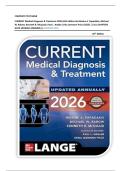
CURRENT Medical Diagnosis & Treatment 2026 65th Edition By Maxine A. Papadakis, Michael
W. Rabow, Kenneth R. Mcquaid, Paul L. Nadler, Erika Leemann Price (2025) || ALL CHAPTERS
WITH VERIFIED ANSWERS|| GRANTEE PASS
65th Edition
,Table of Contents
Chapter 1. Disease Prevention & Health Promotion .................................................................. 4
Chapter 2. Common symptoms ................................................................................................ 27
Chapter 3. Preoperative Evaluation & Perioperative Management ......................................... 32
Chapter 4. Geriatric disorders ................................................................................................... 68
Chapter 5. Palliative Care & Pain Management ........................................................................ 80
Chapter 6. Dermatologic Disorders......................................................................................... 105
Chapter 7. Disorders of the Eyes & Lids .................................................................................. 116
Chapter 8. Otolaryngology Disorders...................................................................................... 140
Chapter 9. Pulmonary Disorders ............................................................................................. 152
Chapter 10 Coronary Artery Disease, Valvular Disease, & Other Key Topics in Cardiology ... 175
Chapter 11. Heart Failure & Cardiomyopathy......................................................................... 184
Chapter 12. Disorders of Cardiac Rhythm .............................................................................. 207
Chapter 13. Systemic hypertension ........................................................................................ 224
Chapter 14. Blood vessel & lymphatic disorders .................................................................... 235
Chapter 13. Blood Disorders ................................................................................................... 247
Chapter 16. Disorders of Hemostasis, Thrombosis, & Antithrombotic Therapy .................... 258
Chapter 17. Gastrointestinal disorders ................................................................................... 282
Chapter 18. Liver, Biliary Tract, & Pancreas Disorders ............................................................ 306
Chapter 19. Breast Disorders .................................................................................................. 317
Chapter 20. Women’s Health Issues ....................................................................................... 329
Chapter 21. Gynecologic disorders ......................................................................................... 338
Chapter 22. Obstetrics & Obstetric Disorders ......................................................................... 350
Chapter 23. Rheumatologic, Immunologic, & Allergic Disorders ........................................... 362
Chapter 24. Electrolyte & Acid-Base Disorders....................................................................... 386
Chapter 25. Kidney Disease .................................................................................................... 399
Chapter 26. Urologic Disorders ............................................................................................... 424
Chapter 27. Nervous System Disorders .................................................................................. 437
Chapter 28. Psychiatric disorders............................................................................................ 462
,Chapter 29. Disorders of the Pituitary, Thyroid, & Adrenal Glands ........................................ 480
Chapter 30. Disorders of Parathyroid Glands & Bone Metabolism ........................................ 504
Chapter 31. Male Hypogonadism & Gynecomastia, Hirsutism & Virilization ......................... 517
Chapter 32. Diabetes Mellitus & Hypoglycemia ..................................................................... 527
Chapter 33. Lipid Disorders ..................................................................................................... 540
Chapter 34. Nutrition, Nutritional Disorders, & Obesity ........................................................ 544
Chapter 35. Common Problems in Infectious Diseases & Antimicrobial Therapy .................. 556
Chapter 36. HIV Infection & AIDS............................................................................................ 563
Chapter 37. Viral & Rickettsial Infections ................................................................................ 577
Chapter 38. Bacterial & Chlamydial Infections ....................................................................... 582
Chapter 39. Spirochetal Infections .......................................................................................... 589
Chapter 40. Protozoal & Helminthic Infections...................................................................... 596
Chapter 41. Mycotic Infections ............................................................................................... 599
Chapter 42. Disorders Related to Environmental Emergencies .............................................. 601
Chapter 43. Poisoning ............................................................................................................. 607
Chapter 44. Cancer.................................................................................................................. 611
Chapter 45. Genetic & Genomic Disorders ............................................................................. 624
Chapter 46. Orthopedic Disorders & Sports Medicine ........................................................... 636
Chapter 47. Sexual & Gender Minority Health ....................................................................... 652
Chapter 48. Substance Use Disorders ..................................................................................... 682
,Chapter 1. Disease Prevention & Health Promotion
1. Which of the following behaviors indicates the highest potential for spreading
infections among clients? The nurse:
1) disinfects dirty hands with antibacterial soap.
2) allows alcohol-based rub to dry for 10 seconds.
3) washes hands only after leaving each room.
4) uses cold water for medical asepsis.
Correct Answer: 4.
2. What is the most frequent cause of the spread of infection among institutionalized
Patients?
1) airborne microbes from other patients
2) contact with contaminated equipment
3) hands of healthcare workers
4) exposure from family members
Correct Answer: 3
3. Which of the following nursing activities is of highest priority for maintaining
medical asepsis?
1) washing hands
2) donning gloves
3) applying sterile drapes
4) wearing a gown
Correct Answer: 3
4. A patient infected with a virus but who does not have any outward sign of the
disease is considered a:
1) pathogen.
,2) fomite.
3) vector.
4) carrier.
Correct Answer: 1
5. A patient is admitted to the hospital with tuberculosis. Which precautions
must the nurse institute when caring for this patient?
1) droplet transmission
2) airborne transmission
3) direct contact
4) indirect contact
Correct Answer: 3
6. A patient becomes infected with oral candidiasis (thrush) while receiving
intravenous antibiotics to treat a systemic infection. Which type of infection has the patient
developed?
1) endogenous nosocomial
2) exogenous nosocomial
3) latent
4) primary
Correct Answer: 2
7.the nurse assists a surgeon with central venous catheter insertion. Which
action is necessary to help maintain sterile technique?
, 1) closing the patients door to limit room traffic while preparing the sterile field
2) using clean procedure gloves to handle sterile equipment
3) placing the nonsterile syringes containing flush solution on the sterile field
4) remaining 6 inches away from the sterile field during the procedure
Correct Answer: 3
8.a patient admitted to the hospital with pneumonia has been receiving antibiotics for 2 days.
His condition has stabilized, and his temperature has returned to normal. Which stage of
infection is the patient most likely experiencing?
1) incubation
2) prodromal
3) decline
4) convalescence
5) 8
Correct Answer: 1
9. A patient develops localized heat and erythema over an area on the lower leg.
These findings are indicative of which secondary defense against infection?
1) phagocytosis
2) complement cascade
3) inflammation
4) immunity
Correct Answer: 1
10. The patient suddenly develops hives, shortness of breath, and wheezing after
receiving an antibiotic. Which antibody is primarily responsible for this patients response?
1) iga
CURRENT Medical Diagnosis & Treatment 2026 65th Edition By Maxine A. Papadakis, Michael
W. Rabow, Kenneth R. Mcquaid, Paul L. Nadler, Erika Leemann Price (2025) || ALL CHAPTERS
WITH VERIFIED ANSWERS|| GRANTEE PASS
65th Edition
,Table of Contents
Chapter 1. Disease Prevention & Health Promotion .................................................................. 4
Chapter 2. Common symptoms ................................................................................................ 27
Chapter 3. Preoperative Evaluation & Perioperative Management ......................................... 32
Chapter 4. Geriatric disorders ................................................................................................... 68
Chapter 5. Palliative Care & Pain Management ........................................................................ 80
Chapter 6. Dermatologic Disorders......................................................................................... 105
Chapter 7. Disorders of the Eyes & Lids .................................................................................. 116
Chapter 8. Otolaryngology Disorders...................................................................................... 140
Chapter 9. Pulmonary Disorders ............................................................................................. 152
Chapter 10 Coronary Artery Disease, Valvular Disease, & Other Key Topics in Cardiology ... 175
Chapter 11. Heart Failure & Cardiomyopathy......................................................................... 184
Chapter 12. Disorders of Cardiac Rhythm .............................................................................. 207
Chapter 13. Systemic hypertension ........................................................................................ 224
Chapter 14. Blood vessel & lymphatic disorders .................................................................... 235
Chapter 13. Blood Disorders ................................................................................................... 247
Chapter 16. Disorders of Hemostasis, Thrombosis, & Antithrombotic Therapy .................... 258
Chapter 17. Gastrointestinal disorders ................................................................................... 282
Chapter 18. Liver, Biliary Tract, & Pancreas Disorders ............................................................ 306
Chapter 19. Breast Disorders .................................................................................................. 317
Chapter 20. Women’s Health Issues ....................................................................................... 329
Chapter 21. Gynecologic disorders ......................................................................................... 338
Chapter 22. Obstetrics & Obstetric Disorders ......................................................................... 350
Chapter 23. Rheumatologic, Immunologic, & Allergic Disorders ........................................... 362
Chapter 24. Electrolyte & Acid-Base Disorders....................................................................... 386
Chapter 25. Kidney Disease .................................................................................................... 399
Chapter 26. Urologic Disorders ............................................................................................... 424
Chapter 27. Nervous System Disorders .................................................................................. 437
Chapter 28. Psychiatric disorders............................................................................................ 462
,Chapter 29. Disorders of the Pituitary, Thyroid, & Adrenal Glands ........................................ 480
Chapter 30. Disorders of Parathyroid Glands & Bone Metabolism ........................................ 504
Chapter 31. Male Hypogonadism & Gynecomastia, Hirsutism & Virilization ......................... 517
Chapter 32. Diabetes Mellitus & Hypoglycemia ..................................................................... 527
Chapter 33. Lipid Disorders ..................................................................................................... 540
Chapter 34. Nutrition, Nutritional Disorders, & Obesity ........................................................ 544
Chapter 35. Common Problems in Infectious Diseases & Antimicrobial Therapy .................. 556
Chapter 36. HIV Infection & AIDS............................................................................................ 563
Chapter 37. Viral & Rickettsial Infections ................................................................................ 577
Chapter 38. Bacterial & Chlamydial Infections ....................................................................... 582
Chapter 39. Spirochetal Infections .......................................................................................... 589
Chapter 40. Protozoal & Helminthic Infections...................................................................... 596
Chapter 41. Mycotic Infections ............................................................................................... 599
Chapter 42. Disorders Related to Environmental Emergencies .............................................. 601
Chapter 43. Poisoning ............................................................................................................. 607
Chapter 44. Cancer.................................................................................................................. 611
Chapter 45. Genetic & Genomic Disorders ............................................................................. 624
Chapter 46. Orthopedic Disorders & Sports Medicine ........................................................... 636
Chapter 47. Sexual & Gender Minority Health ....................................................................... 652
Chapter 48. Substance Use Disorders ..................................................................................... 682
,Chapter 1. Disease Prevention & Health Promotion
1. Which of the following behaviors indicates the highest potential for spreading
infections among clients? The nurse:
1) disinfects dirty hands with antibacterial soap.
2) allows alcohol-based rub to dry for 10 seconds.
3) washes hands only after leaving each room.
4) uses cold water for medical asepsis.
Correct Answer: 4.
2. What is the most frequent cause of the spread of infection among institutionalized
Patients?
1) airborne microbes from other patients
2) contact with contaminated equipment
3) hands of healthcare workers
4) exposure from family members
Correct Answer: 3
3. Which of the following nursing activities is of highest priority for maintaining
medical asepsis?
1) washing hands
2) donning gloves
3) applying sterile drapes
4) wearing a gown
Correct Answer: 3
4. A patient infected with a virus but who does not have any outward sign of the
disease is considered a:
1) pathogen.
,2) fomite.
3) vector.
4) carrier.
Correct Answer: 1
5. A patient is admitted to the hospital with tuberculosis. Which precautions
must the nurse institute when caring for this patient?
1) droplet transmission
2) airborne transmission
3) direct contact
4) indirect contact
Correct Answer: 3
6. A patient becomes infected with oral candidiasis (thrush) while receiving
intravenous antibiotics to treat a systemic infection. Which type of infection has the patient
developed?
1) endogenous nosocomial
2) exogenous nosocomial
3) latent
4) primary
Correct Answer: 2
7.the nurse assists a surgeon with central venous catheter insertion. Which
action is necessary to help maintain sterile technique?
, 1) closing the patients door to limit room traffic while preparing the sterile field
2) using clean procedure gloves to handle sterile equipment
3) placing the nonsterile syringes containing flush solution on the sterile field
4) remaining 6 inches away from the sterile field during the procedure
Correct Answer: 3
8.a patient admitted to the hospital with pneumonia has been receiving antibiotics for 2 days.
His condition has stabilized, and his temperature has returned to normal. Which stage of
infection is the patient most likely experiencing?
1) incubation
2) prodromal
3) decline
4) convalescence
5) 8
Correct Answer: 1
9. A patient develops localized heat and erythema over an area on the lower leg.
These findings are indicative of which secondary defense against infection?
1) phagocytosis
2) complement cascade
3) inflammation
4) immunity
Correct Answer: 1
10. The patient suddenly develops hives, shortness of breath, and wheezing after
receiving an antibiotic. Which antibody is primarily responsible for this patients response?
1) iga