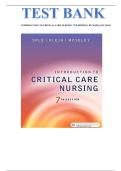
INTRODUCTION TO CRITICAL CARE NURSING, 7TH EDITION, BY MARY LOU SOLE
Test Bank for Introduction to Critical Care Nursing, 7th Edition
Build unbreakable expertise in high-acuity nursing with the Test Bank for Introduction to Critical Care
Nursing, 7th Edition by Mary Lou Sole, Deborah Goldenberg Klein, and Marthe J. Moseley. This
essential resource packs over 1,000 multiple-choice, true/false, and scenario-based questions across 21
chapters, with detailed rationales, answer keys, and references to evidence-based protocols. Explore
core pillars like critical care overview, patient/family responses, ethical/legal issues, pain management,
sedation, mechanical ventilation, hemodynamic monitoring, multisystem organ dysfunction, and end-
of-life care—updated for 2025 with AACN synergies, tele-ICU advancements, and health equity in
diverse populations.
Aligned with NCLEX-RN and CCRN standards, it's perfect for BSN/MSN students, new ICU nurses,
or certification aspirants, sharpening rapid assessment, interdisciplinary collaboration, and crisis
intervention through realistic vignettes on sepsis and ARDS. Simulate exams, expose gaps, and
cultivate resilient, patient-centered practice.
Instantly downloadable on Stuvia, all chapters included. Ignite your critical care confidence—
download today and thrive in the ICU!
, TEST BANK FOR INTRODUCTION TO CRITICAL CARE NURSING, 7TH EDITION, BY
MARY LOU SOLE, DEBORAH GOLDENBERG KLEIN, MARTHE J. MOSELEY, ISBN:
9780323375511, ISBN: 9780323375498, ISBN: 9780323375528, ISBN: 9780323377034
TABLE OF CONTENT
PART I: FUNDAMENTAL CONCEPTS
1. Overview of Critical Care Nursing
2. Patient and Family Response to the Critical Care Experience
3. Ethical and Legal Issues in Critical Care Nursing
4. Palliative and End-of-Life Care
PART II: TOOLS FOR THE CRITICAL CARE NURSE
5. Comfort and Sedation
6. Nutritional Therapy
7. Dysrhythmia Interpretation and Management
8. Hemodynamic Monitoring
9. Ventilatory Assistance
10. Rapid Response Teams and Code Management
11. Organ Donation
PART III: NURSING CARE DURING CRITICAL ILLNESS
,12. Shock, Sepsis, and Multiple Organ Dysfunction Syndrome
13. Cardiovascular Alterations
14. Nervous System Alterations
15. Acute Respiratory Failure
16. Acute Kidney Injury
17. Hematological and Immune Disorders
18. Gastrointestinal Alterations
19. Endocrine Alterations
20. Trauma and Surgical Management
21. Burns
, 1
Table of Contents
Table of Contents 2
Chapter 01: Overview of Critical Care Nursing 1
Chapter 02: Patient and Family Response to the Critical Care Experience 14
Chapter 03: Ethical and Legal Issues in Critical Care Nursing 31
Chapter 04: Palliative and End-of-Life Care 44
Chapter 05: Comfort and Sedation 58
Chapter 06: Nutritional Therapy 72
Chapter 07: Dysrhythmia Interpretation and Management 86
Chapter 08: Hemodynamic Monitoring 121
Chapter 09: Ventilatory Assistance 143
Chapter 10: Rapid Response Teams and Code Management 163
Chapter 11: Organ Donation 179
Chapter 12: Shock, Sepsis, and Multiple Organ Dysfunction Syndrome 197
Chapter 13: Cardiovascular Alterations 220
Chapter 14: Nervous System Alterations 242
Chapter 15: Acute Respiratory Failure 264
Chapter 16: Acute Kidney Injury 284
Chapter 17: Gastrointestinal Alterations 316
Chapter 17: Hematological and Immune Disorders 350
Chapter 19: Endocrine Alterations 386
Chapter 20: Trauma and Surgical Management 410
Chapter 21: Burns 429
Chapter 01: Overview of Critical Care Nursing
MULTIPLE CHOICE
1. Which of the following professional organizations best supports critical care nursing practice?
a. American Association of Critical-Care Nurses
b. American Heart Association
Test Bank for Introduction to Critical Care Nursing, 7th Edition
Build unbreakable expertise in high-acuity nursing with the Test Bank for Introduction to Critical Care
Nursing, 7th Edition by Mary Lou Sole, Deborah Goldenberg Klein, and Marthe J. Moseley. This
essential resource packs over 1,000 multiple-choice, true/false, and scenario-based questions across 21
chapters, with detailed rationales, answer keys, and references to evidence-based protocols. Explore
core pillars like critical care overview, patient/family responses, ethical/legal issues, pain management,
sedation, mechanical ventilation, hemodynamic monitoring, multisystem organ dysfunction, and end-
of-life care—updated for 2025 with AACN synergies, tele-ICU advancements, and health equity in
diverse populations.
Aligned with NCLEX-RN and CCRN standards, it's perfect for BSN/MSN students, new ICU nurses,
or certification aspirants, sharpening rapid assessment, interdisciplinary collaboration, and crisis
intervention through realistic vignettes on sepsis and ARDS. Simulate exams, expose gaps, and
cultivate resilient, patient-centered practice.
Instantly downloadable on Stuvia, all chapters included. Ignite your critical care confidence—
download today and thrive in the ICU!
, TEST BANK FOR INTRODUCTION TO CRITICAL CARE NURSING, 7TH EDITION, BY
MARY LOU SOLE, DEBORAH GOLDENBERG KLEIN, MARTHE J. MOSELEY, ISBN:
9780323375511, ISBN: 9780323375498, ISBN: 9780323375528, ISBN: 9780323377034
TABLE OF CONTENT
PART I: FUNDAMENTAL CONCEPTS
1. Overview of Critical Care Nursing
2. Patient and Family Response to the Critical Care Experience
3. Ethical and Legal Issues in Critical Care Nursing
4. Palliative and End-of-Life Care
PART II: TOOLS FOR THE CRITICAL CARE NURSE
5. Comfort and Sedation
6. Nutritional Therapy
7. Dysrhythmia Interpretation and Management
8. Hemodynamic Monitoring
9. Ventilatory Assistance
10. Rapid Response Teams and Code Management
11. Organ Donation
PART III: NURSING CARE DURING CRITICAL ILLNESS
,12. Shock, Sepsis, and Multiple Organ Dysfunction Syndrome
13. Cardiovascular Alterations
14. Nervous System Alterations
15. Acute Respiratory Failure
16. Acute Kidney Injury
17. Hematological and Immune Disorders
18. Gastrointestinal Alterations
19. Endocrine Alterations
20. Trauma and Surgical Management
21. Burns
, 1
Table of Contents
Table of Contents 2
Chapter 01: Overview of Critical Care Nursing 1
Chapter 02: Patient and Family Response to the Critical Care Experience 14
Chapter 03: Ethical and Legal Issues in Critical Care Nursing 31
Chapter 04: Palliative and End-of-Life Care 44
Chapter 05: Comfort and Sedation 58
Chapter 06: Nutritional Therapy 72
Chapter 07: Dysrhythmia Interpretation and Management 86
Chapter 08: Hemodynamic Monitoring 121
Chapter 09: Ventilatory Assistance 143
Chapter 10: Rapid Response Teams and Code Management 163
Chapter 11: Organ Donation 179
Chapter 12: Shock, Sepsis, and Multiple Organ Dysfunction Syndrome 197
Chapter 13: Cardiovascular Alterations 220
Chapter 14: Nervous System Alterations 242
Chapter 15: Acute Respiratory Failure 264
Chapter 16: Acute Kidney Injury 284
Chapter 17: Gastrointestinal Alterations 316
Chapter 17: Hematological and Immune Disorders 350
Chapter 19: Endocrine Alterations 386
Chapter 20: Trauma and Surgical Management 410
Chapter 21: Burns 429
Chapter 01: Overview of Critical Care Nursing
MULTIPLE CHOICE
1. Which of the following professional organizations best supports critical care nursing practice?
a. American Association of Critical-Care Nurses
b. American Heart Association