

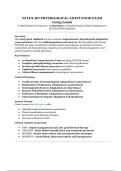
NCLEX-RN PHYSIOLOGICAL ADAPTATION EXAM
(2025/2026)
Verified Questions & Answers | 70 Questions | Pathophysiology & Clinical Management |
NCLEX®-RN® Readiness
Overview
This 2025/2026 validated resource contains comprehensive physiological adaptation
exam questions with 70 verified questions and answers, directly aligned with current
NCLEX® test plans. Essential for nursing students and graduates preparing for licensure
examination and demonstrating competency in pathophysiology, clinical management, and
patient response to health alterations.
Key Features
● 70-Question Comprehensive Exam matching NCLEX® format
● Complex pathophysiology scenarios with clinical applications
● System-specific disease processes and adaptive responses
● Updated 2025/2026 clinical practice guidelines
● Critical illness management and emergency interventions
Content Domains
● Cardiovascular & Hematological Adaptations (15 Questions)
● Respiratory & Pulmonary Adaptations (14 Questions)
● Neurological & Sensory Adaptations (12 Questions)
● Renal & Fluid/Electrolyte Adaptations (12 Questions)
● Endocrine & Metabolic Adaptations (9 Questions)
● Gastrointestinal & Hepatic Adaptations (8 Questions)
Answer Format
Correct answers in bold green with:
● Pathophysiological mechanism explanations
● Clinical manifestation correlations
● Intervention prioritization rationales
● Outcome evaluation criteria
Critical Updates 2025/2026
● NEW - Sepsis management and early goal-directed therapy
● UPDATED - Heart failure classification and treatment protocols
● REVISED - Stroke intervention and neuroprotection strategies
● MODIFIED - Acute kidney injury prevention and management
,CARDIOVASCULAR & HEMATOLOGICAL ADAPTATIONS (Questions
1–15)
1. STEMI: ST elevation in II, III, aVF. Occlusion?
a) LAD
b) LCx
c) RCA
d) LM
c) RCA
Pathophysiology: Inferior wall → RV involvement risk.
Intervention: Reperfusion <90 min; check RV infarct.
2. HFpEF: EF 62%, BNP 1,200. Primary mechanism?
a) Systolic dysfunction
b) Diastolic stiffness
c) Valvular
d) Arrhythmia
b) Diastolic stiffness
Mechanism: ↑LVEDP → pulmonary congestion despite normal EF.
Priority: Diuretics + BP control.
3. Aortic dissection: tearing chest pain, BP 190/110. First action?
a) CT angio
b) Esmolol IV
c) Nitroprusside
d) Surgery
b) Esmolol IV
Pathophysiology: ↑dP/dt → propagation.
Priority: HR <60, SBP 100–120 mmHg.
4. Cardiogenic shock: CI 1.6, PCWP 26. Drug?
a) Dopamine
b) Dobutamine
c) Norepi
d) Milrinone
b) Dobutamine
Mechanism: ↑contractility + ↓afterload.
Outcome: CI >2.2, ScvO₂ >70%.
5. PE: RV dilation, D-dimer 3,800. Therapy?
a) Heparin
b) Thrombolysis
c) Embolectomy
d) Observe
b) Thrombolysis
, Pathophysiology: Massive → hemodynamic instability.
Priority: If SBP <90 mmHg.
6. DIC: platelets 38k, fibrinogen 82. Trigger?
a) Sepsis
b) Trauma
c) Malignancy
d) All
d) All
Mechanism: Consumptive coagulopathy.
Intervention: Treat underlying + FFP/cryo.
7. Tamponade: pulsus paradoxus 18 mmHg. Intervention?
a) Pericardiocentesis
b) Fluids
c) Inotropes
d) Diuretics
a) Pericardiocentesis
Pathophysiology: Equalization of pressures → ↓CO.
Priority: Echo-guided drainage.
8. HOCM: syncope on exertion. Avoid?
a) Beta-blocker
b) Dehydration
c) Digoxin
d) Both b & c
d) Both b & c
Mechanism: ↓Preload → ↑obstruction.
Outcome: Avoid ↓SV.
9. Afib RVR: HR 168, SBP 88. First?
a) Synchronized cardioversion
b) Amiodarone
c) Diltiazem
d) Metoprolol
a) Synchronized cardioversion
Pathophysiology: Unstable → immediate restoration.
Priority: ACLS unstable tachycardia.
10. Endocarditis: Janeway lesions. Organism?
a) S. aureus
b) S. viridans
c) Enterococcus
d) HACEK
a) S. aureus
(2025/2026)
Verified Questions & Answers | 70 Questions | Pathophysiology & Clinical Management |
NCLEX®-RN® Readiness
Overview
This 2025/2026 validated resource contains comprehensive physiological adaptation
exam questions with 70 verified questions and answers, directly aligned with current
NCLEX® test plans. Essential for nursing students and graduates preparing for licensure
examination and demonstrating competency in pathophysiology, clinical management, and
patient response to health alterations.
Key Features
● 70-Question Comprehensive Exam matching NCLEX® format
● Complex pathophysiology scenarios with clinical applications
● System-specific disease processes and adaptive responses
● Updated 2025/2026 clinical practice guidelines
● Critical illness management and emergency interventions
Content Domains
● Cardiovascular & Hematological Adaptations (15 Questions)
● Respiratory & Pulmonary Adaptations (14 Questions)
● Neurological & Sensory Adaptations (12 Questions)
● Renal & Fluid/Electrolyte Adaptations (12 Questions)
● Endocrine & Metabolic Adaptations (9 Questions)
● Gastrointestinal & Hepatic Adaptations (8 Questions)
Answer Format
Correct answers in bold green with:
● Pathophysiological mechanism explanations
● Clinical manifestation correlations
● Intervention prioritization rationales
● Outcome evaluation criteria
Critical Updates 2025/2026
● NEW - Sepsis management and early goal-directed therapy
● UPDATED - Heart failure classification and treatment protocols
● REVISED - Stroke intervention and neuroprotection strategies
● MODIFIED - Acute kidney injury prevention and management
,CARDIOVASCULAR & HEMATOLOGICAL ADAPTATIONS (Questions
1–15)
1. STEMI: ST elevation in II, III, aVF. Occlusion?
a) LAD
b) LCx
c) RCA
d) LM
c) RCA
Pathophysiology: Inferior wall → RV involvement risk.
Intervention: Reperfusion <90 min; check RV infarct.
2. HFpEF: EF 62%, BNP 1,200. Primary mechanism?
a) Systolic dysfunction
b) Diastolic stiffness
c) Valvular
d) Arrhythmia
b) Diastolic stiffness
Mechanism: ↑LVEDP → pulmonary congestion despite normal EF.
Priority: Diuretics + BP control.
3. Aortic dissection: tearing chest pain, BP 190/110. First action?
a) CT angio
b) Esmolol IV
c) Nitroprusside
d) Surgery
b) Esmolol IV
Pathophysiology: ↑dP/dt → propagation.
Priority: HR <60, SBP 100–120 mmHg.
4. Cardiogenic shock: CI 1.6, PCWP 26. Drug?
a) Dopamine
b) Dobutamine
c) Norepi
d) Milrinone
b) Dobutamine
Mechanism: ↑contractility + ↓afterload.
Outcome: CI >2.2, ScvO₂ >70%.
5. PE: RV dilation, D-dimer 3,800. Therapy?
a) Heparin
b) Thrombolysis
c) Embolectomy
d) Observe
b) Thrombolysis
, Pathophysiology: Massive → hemodynamic instability.
Priority: If SBP <90 mmHg.
6. DIC: platelets 38k, fibrinogen 82. Trigger?
a) Sepsis
b) Trauma
c) Malignancy
d) All
d) All
Mechanism: Consumptive coagulopathy.
Intervention: Treat underlying + FFP/cryo.
7. Tamponade: pulsus paradoxus 18 mmHg. Intervention?
a) Pericardiocentesis
b) Fluids
c) Inotropes
d) Diuretics
a) Pericardiocentesis
Pathophysiology: Equalization of pressures → ↓CO.
Priority: Echo-guided drainage.
8. HOCM: syncope on exertion. Avoid?
a) Beta-blocker
b) Dehydration
c) Digoxin
d) Both b & c
d) Both b & c
Mechanism: ↓Preload → ↑obstruction.
Outcome: Avoid ↓SV.
9. Afib RVR: HR 168, SBP 88. First?
a) Synchronized cardioversion
b) Amiodarone
c) Diltiazem
d) Metoprolol
a) Synchronized cardioversion
Pathophysiology: Unstable → immediate restoration.
Priority: ACLS unstable tachycardia.
10. Endocarditis: Janeway lesions. Organism?
a) S. aureus
b) S. viridans
c) Enterococcus
d) HACEK
a) S. aureus


