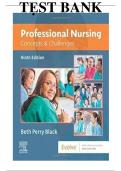
TEST BANK
Evidence-Based Physical Examination
Best Practices for Health and Well-Being Assessment,
Second Edition
Kate Sustersic Gawlik
Bernadette Mazurek Melnyk
Alice M. Teall
,
,Contents
CHAPTER 1: Approach to Evidence-Based Assessment of Health and Well-Being (Test bank intentionally
omitted) Error! Bookmark not defined.
CHAPTER 2: Evidence-Based Assessment of Clinician Well-Being Error! Bookmark not defined.
CHAPTER 3: Evidence-Based History Taking, Approach to Patient Visits, and Documentation Error!
Bookmark not defined.
CHAPTER 4: Evidence-Based, Culturally Sensitive, Therapeutic Communication Error! Bookmark not
defined.
CHAPTER 5: Evidence-Based Assessment of Children and Adolescents Error! Bookmark not defined.
CHAPTER 6: Evidence-Based Assessment of the Older Adult Error! Bookmark not defined.
CHAPTER 7: Evidence-Based General Survey Including Assessment of Vital Signs Error! Bookmark not
defined.
CHAPTER 8: Evidence-Based Assessment of Body Habitus, Body Mass Index, and Nutrition Error!
Bookmark not defined.
CHAPTER 9: Evidence-Based Assessment of the Cardiovascular System Error! Bookmark not defined.
CHAPTER 10: Evidence-Based Assessment of the Vascular System Error! Bookmark not defined.
CHAPTER 11: Evidence-Based Assessment of the Lungs and Respiratory System Error! Bookmark not
defined.
CHAPTER 12: Evidence-Based Assessment of the Skin, Hair, and Nails Error! Bookmark not defined.
CHAPTER 13: Evidence-Based Assessment of the Lymphatic System Error! Bookmark not defined.
CHAPTER 14: Evidence-Based Assessment of the Head and Neck Error! Bookmark not defined.
CHAPTER 15: Evidence-Based Assessment of the Eyes Error! Bookmark not defined.
CHAPTER 16: Evidence-Based Assessment of the Ears, Nose, and Throat Error! Bookmark not defined.
CHAPTER 17: Evidence-Based Assessment of the Nervous System Error! Bookmark not defined.
CHAPTER 18: Evidence-Based Assessment of the Musculoskeletal System Error! Bookmark not defined.
CHAPTER 19: Evidence-Based Assessment of the Abdominal, Gastrointestinal, and Urological Systems
Error! Bookmark not defined.
CHAPTER 20: Evidence-Based Assessment of Sexual Orientation and Gender Identity Error! Bookmark not
defined.
CHAPTER 21: Evidence-Based Assessment of the Breasts and Axillae Error! Bookmark not defined.
CHAPTER 22: Evidence-Based Assessment of Male Genitalia, Prostate, Rectum, and Anus Error! Bookmark
not defined.
CHAPTER 23: Evidence-Based Assessment of the Female Genitourinary System Error! Bookmark not
defined.
CHAPTER 24: Evidence-Based Obstetric Assessment Error! Bookmark not defined.
CHAPTER 25: Evidence-Based Assessment of Mental Health Error! Bookmark not defined.
©
,CHAPTER 26: Evidence-Based Assessment of Substance use Disorder Error! Bookmark not defined.
CHAPTER 27: Evidence-Based Assessment and Screening for Traumatic Experiences: Abuse, Neglect,
and Intimate Partner Violence Error! Bookmark not defined.
CHAPTER 28: Evidence-Based Assessment for Medical Clearance Error! Bookmark not defined.
CHAPTER 29: Evidence-Based Assessment using Telehealth Technologies Error! Bookmark not defined.
CHAPTER 30: Evidence-Based Health and Well-Being Assessment: Putting It All Together (Test Bank
intentionally omitted) Error! Bookmark not defined.
©
, CHAPTER 1
Approach to Evidence-Based Assessment of
Health and Well-Being
Test bank intentionally omitted.
© 1
, CHAPTER 2
Evidence-Based Assessment of Clinician
Well-Being
MULTIPLE CHOICE QUESTIONS
1. Which dimension of wellness refers to the ability to understand and cope with feelings, stress, and
challenges?
A. Physical wellness
B. Emotional wellness
C. Social wellness
D. Spiritual wellness
Answer: B. Emotional wellness. Emotional wellness involves being aware and accepting of one’s
emotions and coping with stress and challenges in a healthy way.
2. Which dimension of wellness refers to engaging in activities that contribute to a healthy and fit body?
A. Physical wellness
B. Emotional wellness
C. Social wellness
D. Occupational wellness
Answer: A. Physical wellness. Physical wellness involves engaging in activities that contribute to a
healthy and fit body, such as exercise, good nutrition, and regular physical exams.
3. Which dimension of wellness involves developing meaningful relationships with family, friends, and
others?
A. Physical wellness
B. Emotional wellness
C. Social wellness
D. Environmental wellness
Answer: C. Social wellness. Social wellness involves developing and maintaining meaningful
relationships with family, friends, and others, and contributing to one’s community.
4. Which dimension of wellness refers to finding purpose and meaning in life?
A. Intellectual wellness
B. Occupational wellness
C. Spiritual wellness
D. Environmental wellness
Answer: C. Spiritual wellness. Spiritual wellness involves finding purpose and meaning in life and
living in harmony with oneself and others.
2 ©
Evidence-Based Physical Examination
Best Practices for Health and Well-Being Assessment,
Second Edition
Kate Sustersic Gawlik
Bernadette Mazurek Melnyk
Alice M. Teall
,
,Contents
CHAPTER 1: Approach to Evidence-Based Assessment of Health and Well-Being (Test bank intentionally
omitted) Error! Bookmark not defined.
CHAPTER 2: Evidence-Based Assessment of Clinician Well-Being Error! Bookmark not defined.
CHAPTER 3: Evidence-Based History Taking, Approach to Patient Visits, and Documentation Error!
Bookmark not defined.
CHAPTER 4: Evidence-Based, Culturally Sensitive, Therapeutic Communication Error! Bookmark not
defined.
CHAPTER 5: Evidence-Based Assessment of Children and Adolescents Error! Bookmark not defined.
CHAPTER 6: Evidence-Based Assessment of the Older Adult Error! Bookmark not defined.
CHAPTER 7: Evidence-Based General Survey Including Assessment of Vital Signs Error! Bookmark not
defined.
CHAPTER 8: Evidence-Based Assessment of Body Habitus, Body Mass Index, and Nutrition Error!
Bookmark not defined.
CHAPTER 9: Evidence-Based Assessment of the Cardiovascular System Error! Bookmark not defined.
CHAPTER 10: Evidence-Based Assessment of the Vascular System Error! Bookmark not defined.
CHAPTER 11: Evidence-Based Assessment of the Lungs and Respiratory System Error! Bookmark not
defined.
CHAPTER 12: Evidence-Based Assessment of the Skin, Hair, and Nails Error! Bookmark not defined.
CHAPTER 13: Evidence-Based Assessment of the Lymphatic System Error! Bookmark not defined.
CHAPTER 14: Evidence-Based Assessment of the Head and Neck Error! Bookmark not defined.
CHAPTER 15: Evidence-Based Assessment of the Eyes Error! Bookmark not defined.
CHAPTER 16: Evidence-Based Assessment of the Ears, Nose, and Throat Error! Bookmark not defined.
CHAPTER 17: Evidence-Based Assessment of the Nervous System Error! Bookmark not defined.
CHAPTER 18: Evidence-Based Assessment of the Musculoskeletal System Error! Bookmark not defined.
CHAPTER 19: Evidence-Based Assessment of the Abdominal, Gastrointestinal, and Urological Systems
Error! Bookmark not defined.
CHAPTER 20: Evidence-Based Assessment of Sexual Orientation and Gender Identity Error! Bookmark not
defined.
CHAPTER 21: Evidence-Based Assessment of the Breasts and Axillae Error! Bookmark not defined.
CHAPTER 22: Evidence-Based Assessment of Male Genitalia, Prostate, Rectum, and Anus Error! Bookmark
not defined.
CHAPTER 23: Evidence-Based Assessment of the Female Genitourinary System Error! Bookmark not
defined.
CHAPTER 24: Evidence-Based Obstetric Assessment Error! Bookmark not defined.
CHAPTER 25: Evidence-Based Assessment of Mental Health Error! Bookmark not defined.
©
,CHAPTER 26: Evidence-Based Assessment of Substance use Disorder Error! Bookmark not defined.
CHAPTER 27: Evidence-Based Assessment and Screening for Traumatic Experiences: Abuse, Neglect,
and Intimate Partner Violence Error! Bookmark not defined.
CHAPTER 28: Evidence-Based Assessment for Medical Clearance Error! Bookmark not defined.
CHAPTER 29: Evidence-Based Assessment using Telehealth Technologies Error! Bookmark not defined.
CHAPTER 30: Evidence-Based Health and Well-Being Assessment: Putting It All Together (Test Bank
intentionally omitted) Error! Bookmark not defined.
©
, CHAPTER 1
Approach to Evidence-Based Assessment of
Health and Well-Being
Test bank intentionally omitted.
© 1
, CHAPTER 2
Evidence-Based Assessment of Clinician
Well-Being
MULTIPLE CHOICE QUESTIONS
1. Which dimension of wellness refers to the ability to understand and cope with feelings, stress, and
challenges?
A. Physical wellness
B. Emotional wellness
C. Social wellness
D. Spiritual wellness
Answer: B. Emotional wellness. Emotional wellness involves being aware and accepting of one’s
emotions and coping with stress and challenges in a healthy way.
2. Which dimension of wellness refers to engaging in activities that contribute to a healthy and fit body?
A. Physical wellness
B. Emotional wellness
C. Social wellness
D. Occupational wellness
Answer: A. Physical wellness. Physical wellness involves engaging in activities that contribute to a
healthy and fit body, such as exercise, good nutrition, and regular physical exams.
3. Which dimension of wellness involves developing meaningful relationships with family, friends, and
others?
A. Physical wellness
B. Emotional wellness
C. Social wellness
D. Environmental wellness
Answer: C. Social wellness. Social wellness involves developing and maintaining meaningful
relationships with family, friends, and others, and contributing to one’s community.
4. Which dimension of wellness refers to finding purpose and meaning in life?
A. Intellectual wellness
B. Occupational wellness
C. Spiritual wellness
D. Environmental wellness
Answer: C. Spiritual wellness. Spiritual wellness involves finding purpose and meaning in life and
living in harmony with oneself and others.
2 ©