

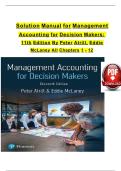
Solution Manual for Management
v v v
v Accounting for Decision Makers:
v v v v
11th Edition By Peter Atrill, Eddie
v v v v v
v McLaney All Chapters 1 - 12
v v v v v v
,TABLE OF CONTENTS
v v
1. Introduction to management accounting v v v
2. Relevant costs and benefits for decision making
v v v v v v
3. Cost–volume–profit analysis v
4. Full costing
v
5. Costing and cost management in a competitive environment
v v v v v v v
6. Budgeting
7. Accounting for control v v
8. Making capital investment decisions
v v v
9. Managing risk v
10.Strategic management accounting: performance evaluation and
v v v v v
v pricing in a competitive environment
v v v v
11.Measuring divisional performance
v v
12.Managing working capital
v v
, SECTION A v
Authors’ note to tutors v v v
Using the book v v
The book is designed to provide readers with a sound introduction to management accounting. It
v v v v v v v v v v v v v v
assumes no previous knowledge of the subject and recognises that students using it may come
v v v v v v v v v v v v v v v
from a wide variety of backgrounds. The book, therefore, tries to avoid technical jargon and does
v v v v v v v v v v v v v v v v
not assume a high level of numerical ability from students. It has been class tested by students on
v v v v v v v v v v v v v v v v v v
various courses and we have modified and refined the material to take account of their comments.
v v v v v v v v v v v v v v v v
We have also taken account of the comments made by lecturers who used the first nine editions of
v v v v v v v v v v v v v v v v v v
the book and of specially commissioned reviews.
v v v v v v v
The book aims to encourage an active approach to learning by providing activities and self-assessment
v v v v v v v v v v v v v v
questions at appropriate points. This approach is designed to stimulate thought concerning
v v v v v v v v v v v v
particular issues and to give the readers the opportunity to test their understanding of the principles
v v v v v v v v v v v v v v v v
covered.
v
The book is supplemented by a password-controlled lecturers’ website and a student website
v v v v v v v v v v v v
available to all readers.
v v v v
The structure of the book allows the tutor to deliver the subject in a number of ways. It can be used
v v v v v v v v v v v v v v v v v v v v
as recommended reading for a traditional course based on lectures and tutorials. There are critical
v v v v v v v v v v v v v v v
review questions and exercises at the end of each chapter that can be used as the basis for tutorials.
v v v v v v v v v v v v v v v v v v v
vIt could also provide the basis for a distance learning approach for part-time or off-campus
v v v v v v v v v v v v v v
students. For these students, the interactive nature of the book may be extremely useful where
v v v v v v v v v v v v v v v
access to a tutor is restricted. The book can also be used as the basis for an open learning approach
v v v v v v v v v v v v v v v v v v v v
for full-time campus-based students. We have successfully used it in this way at the University of
v v v v v v v v v v v v v v v v
Plymouth Business School. Accounting ‘surgeries’ have also been provided to give students the
v v v v v v v v v v v v v
opportunity for one-to-one help with any problems they face.
v v v v v v v v v
The book is appropriate for modules that are designed to be covered in 100 to 150 hours of study.
v v v v v v v v v v v v v v v v v v
For full-time students, this will often be covered in one academic year.
v v v v v v v v v v v v
PowerPoint slides v
The diagrams in the book, along with other diagrams and materials, are available as PowerPoint
v v v v v v v v v v v v v v
slides to help in delivering lectures and tutorials and these can be downloaded from the lecturers’
v v v v v v v v v v v v v v v v
website.
v
Practice/assessment material v
The activities, whose solutions immediately follow them, and self-assessment questions, whose
v v v v v v v v v v
solutions are at the end of the book, form an integral part of it. In addition, there are various
v v v v v v v v v v v v v v v v v v v
, v other
v v v
v Accounting for Decision Makers:
v v v v
11th Edition By Peter Atrill, Eddie
v v v v v
v McLaney All Chapters 1 - 12
v v v v v v
,TABLE OF CONTENTS
v v
1. Introduction to management accounting v v v
2. Relevant costs and benefits for decision making
v v v v v v
3. Cost–volume–profit analysis v
4. Full costing
v
5. Costing and cost management in a competitive environment
v v v v v v v
6. Budgeting
7. Accounting for control v v
8. Making capital investment decisions
v v v
9. Managing risk v
10.Strategic management accounting: performance evaluation and
v v v v v
v pricing in a competitive environment
v v v v
11.Measuring divisional performance
v v
12.Managing working capital
v v
, SECTION A v
Authors’ note to tutors v v v
Using the book v v
The book is designed to provide readers with a sound introduction to management accounting. It
v v v v v v v v v v v v v v
assumes no previous knowledge of the subject and recognises that students using it may come
v v v v v v v v v v v v v v v
from a wide variety of backgrounds. The book, therefore, tries to avoid technical jargon and does
v v v v v v v v v v v v v v v v
not assume a high level of numerical ability from students. It has been class tested by students on
v v v v v v v v v v v v v v v v v v
various courses and we have modified and refined the material to take account of their comments.
v v v v v v v v v v v v v v v v
We have also taken account of the comments made by lecturers who used the first nine editions of
v v v v v v v v v v v v v v v v v v
the book and of specially commissioned reviews.
v v v v v v v
The book aims to encourage an active approach to learning by providing activities and self-assessment
v v v v v v v v v v v v v v
questions at appropriate points. This approach is designed to stimulate thought concerning
v v v v v v v v v v v v
particular issues and to give the readers the opportunity to test their understanding of the principles
v v v v v v v v v v v v v v v v
covered.
v
The book is supplemented by a password-controlled lecturers’ website and a student website
v v v v v v v v v v v v
available to all readers.
v v v v
The structure of the book allows the tutor to deliver the subject in a number of ways. It can be used
v v v v v v v v v v v v v v v v v v v v
as recommended reading for a traditional course based on lectures and tutorials. There are critical
v v v v v v v v v v v v v v v
review questions and exercises at the end of each chapter that can be used as the basis for tutorials.
v v v v v v v v v v v v v v v v v v v
vIt could also provide the basis for a distance learning approach for part-time or off-campus
v v v v v v v v v v v v v v
students. For these students, the interactive nature of the book may be extremely useful where
v v v v v v v v v v v v v v v
access to a tutor is restricted. The book can also be used as the basis for an open learning approach
v v v v v v v v v v v v v v v v v v v v
for full-time campus-based students. We have successfully used it in this way at the University of
v v v v v v v v v v v v v v v v
Plymouth Business School. Accounting ‘surgeries’ have also been provided to give students the
v v v v v v v v v v v v v
opportunity for one-to-one help with any problems they face.
v v v v v v v v v
The book is appropriate for modules that are designed to be covered in 100 to 150 hours of study.
v v v v v v v v v v v v v v v v v v
For full-time students, this will often be covered in one academic year.
v v v v v v v v v v v v
PowerPoint slides v
The diagrams in the book, along with other diagrams and materials, are available as PowerPoint
v v v v v v v v v v v v v v
slides to help in delivering lectures and tutorials and these can be downloaded from the lecturers’
v v v v v v v v v v v v v v v v
website.
v
Practice/assessment material v
The activities, whose solutions immediately follow them, and self-assessment questions, whose
v v v v v v v v v v
solutions are at the end of the book, form an integral part of it. In addition, there are various
v v v v v v v v v v v v v v v v v v v
, v other


