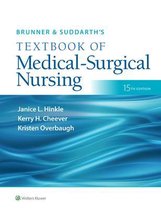
Brunner & Suddarth's Textbook of Medical-
Surgical Nursing
15th Edition
Author(s)Janice Hinkle, Kerry H. Cheever,
Kristen Overbaugh
TEST BANK
Q1
Reference: Ch. 1 — Professional Nursing Practice — The Patient:
Consumer of Nursing and Health Care
Question Stem: A 68-year-old patient with limited income
reports skipping prescription doses to save money. Which
nursing action best addresses this patient’s immediate barrier
to health care access?
A. Teach the patient about the importance of medication
adherence.
B. Refer the patient to a social worker to identify medication
assistance programs.
,C. Contact the prescriber to simplify the medication schedule.
D. Encourage the patient to prioritize medications over other
expenses.
Correct Answer: B
Rationales:
• Correct (B): Referring to a social worker addresses the
patient’s structural barrier (cost) by accessing assistance
programs and resources, aligning with patient-centered
care and advocacy per Brunner & Suddarth.
• (A): Education alone doesn’t remove financial barriers; it
may increase knowledge but not affordability.
• (C): Simplifying the regimen can help adherence but does
not resolve the cost issue causing dose skipping.
• (D): Telling the patient to reallocate funds is paternalistic
and ignores available community resources and ethical
advocacy responsibilities.
Teaching Point: Connect patients to social and financial
resources to remove care barriers.
Citation: Hinkle, J., Cheever, K., & Overbaugh, K. (2022).
Brunner & Suddarth’s Textbook of Medical-Surgical Nursing
(15th Ed.). Ch. 1.
Q2
,Reference: Ch. 1 — Professional Nursing Practice — Maslow
Hierarchy of Needs (The Patient’s Basic Needs)
Question Stem: A post-op patient is confused and attempts to
get out of bed despite orders to remain on bedrest. Which
nursing priority reflects Maslow’s highest immediate need for
this patient?
A. Provide reassurance and explain the reason for bedrest.
B. Ensure airway patency and safety to prevent falls.
C. Offer a nutritious snack to increase energy.
D. Arrange a consult with occupational therapy.
Correct Answer: B
Rationales:
• Correct (B): Safety and physiological needs (preventing
injury, ensuring airway and fall prevention) are highest
priority per Maslow and nursing prioritization in Brunner &
Suddarth.
• (A): Reassurance is important but secondary to immediate
safety needs when patient is at risk of harm.
• (C): Nutrition supports physiologic needs but is less urgent
than immediate safety/fall risk.
• (D): Occupational therapy referral is appropriate later for
mobility training, not the immediate priority.
Teaching Point: Immediate safety and physiological needs
trump other interventions.
, Citation: Hinkle, J., Cheever, K., & Overbaugh, K. (2022).
Brunner & Suddarth’s Textbook of Medical-Surgical Nursing
(15th Ed.). Ch. 1.
Q3
Reference: Ch. 1 — Professional Nursing Practice — Health
Promotion
Question Stem: A clinic nurse is designing a smoking-cessation
program for middle-aged adults. Which intervention best uses
health promotion principles to increase long-term success?
A. Provide a brochure about smoking risks.
B. Offer group counseling with goal setting and follow-up.
C. Counsel each patient to quit immediately with willpower.
D. Supply nicotine patches without follow-up.
Correct Answer: B
Rationales:
• Correct (B): Group counseling with goal setting and follow-
up applies behavior-change strategies and ongoing support
— core health promotion methods emphasized in Brunner
& Suddarth.
• (A): Brochures increase knowledge but rarely change long-
term behavior alone.
Surgical Nursing
15th Edition
Author(s)Janice Hinkle, Kerry H. Cheever,
Kristen Overbaugh
TEST BANK
Q1
Reference: Ch. 1 — Professional Nursing Practice — The Patient:
Consumer of Nursing and Health Care
Question Stem: A 68-year-old patient with limited income
reports skipping prescription doses to save money. Which
nursing action best addresses this patient’s immediate barrier
to health care access?
A. Teach the patient about the importance of medication
adherence.
B. Refer the patient to a social worker to identify medication
assistance programs.
,C. Contact the prescriber to simplify the medication schedule.
D. Encourage the patient to prioritize medications over other
expenses.
Correct Answer: B
Rationales:
• Correct (B): Referring to a social worker addresses the
patient’s structural barrier (cost) by accessing assistance
programs and resources, aligning with patient-centered
care and advocacy per Brunner & Suddarth.
• (A): Education alone doesn’t remove financial barriers; it
may increase knowledge but not affordability.
• (C): Simplifying the regimen can help adherence but does
not resolve the cost issue causing dose skipping.
• (D): Telling the patient to reallocate funds is paternalistic
and ignores available community resources and ethical
advocacy responsibilities.
Teaching Point: Connect patients to social and financial
resources to remove care barriers.
Citation: Hinkle, J., Cheever, K., & Overbaugh, K. (2022).
Brunner & Suddarth’s Textbook of Medical-Surgical Nursing
(15th Ed.). Ch. 1.
Q2
,Reference: Ch. 1 — Professional Nursing Practice — Maslow
Hierarchy of Needs (The Patient’s Basic Needs)
Question Stem: A post-op patient is confused and attempts to
get out of bed despite orders to remain on bedrest. Which
nursing priority reflects Maslow’s highest immediate need for
this patient?
A. Provide reassurance and explain the reason for bedrest.
B. Ensure airway patency and safety to prevent falls.
C. Offer a nutritious snack to increase energy.
D. Arrange a consult with occupational therapy.
Correct Answer: B
Rationales:
• Correct (B): Safety and physiological needs (preventing
injury, ensuring airway and fall prevention) are highest
priority per Maslow and nursing prioritization in Brunner &
Suddarth.
• (A): Reassurance is important but secondary to immediate
safety needs when patient is at risk of harm.
• (C): Nutrition supports physiologic needs but is less urgent
than immediate safety/fall risk.
• (D): Occupational therapy referral is appropriate later for
mobility training, not the immediate priority.
Teaching Point: Immediate safety and physiological needs
trump other interventions.
, Citation: Hinkle, J., Cheever, K., & Overbaugh, K. (2022).
Brunner & Suddarth’s Textbook of Medical-Surgical Nursing
(15th Ed.). Ch. 1.
Q3
Reference: Ch. 1 — Professional Nursing Practice — Health
Promotion
Question Stem: A clinic nurse is designing a smoking-cessation
program for middle-aged adults. Which intervention best uses
health promotion principles to increase long-term success?
A. Provide a brochure about smoking risks.
B. Offer group counseling with goal setting and follow-up.
C. Counsel each patient to quit immediately with willpower.
D. Supply nicotine patches without follow-up.
Correct Answer: B
Rationales:
• Correct (B): Group counseling with goal setting and follow-
up applies behavior-change strategies and ongoing support
— core health promotion methods emphasized in Brunner
& Suddarth.
• (A): Brochures increase knowledge but rarely change long-
term behavior alone.