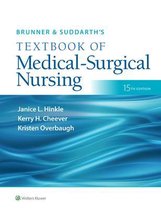
Brunner & Suddarth's Textbook of Medical-
Surgical Nursing
15th Edition
Author(s)Janice Hinkle, Kerry H. Cheever,
Kristen Overbaugh
TEST BANK
1
Reference: Ch. 1 — Nursing
Question Stem: A nurse teaching a newly admitted patient
about the role of nursing in the hospital emphasizes the nurse’s
responsibility for which activity that most directly improves
patient safety and continuity of care?
A. Performing diagnostic testing ordered by the physician
B. Advocating for the patient and coordinating care among
team members
C. Writing prescriptions for symptom management
D. Making financial decisions about the patient's care
,Correct Answer: B
Rationales:
• Correct (B): Nursing’s core function includes advocacy and
coordination of care to ensure safety and continuity; this
role reduces errors and promotes patient-centered
outcomes. (Brunner & Suddarth)
• Incorrect (A): Nurses assist with diagnostic testing but
performing physician-ordered diagnostics is not the
primary safety/coordination role.
• Incorrect (C): Prescribing medications is outside the RN
scope (except under specific advanced practice authority).
• Incorrect (D): Financial decision-making is not a primary
nursing responsibility and typically involves case
management/administration.
Teaching Point: Nurses advocate for patients and coordinate
care to enhance safety and continuity.
Citation: Hinkle, J., Cheever, K., & Overbaugh, K. (2022).
Brunner & Suddarth’s Textbook of Medical-Surgical Nursing
(15th Ed.). Ch. 1.
2
Reference: Ch. 1 — The Patient: Consumer of Nursing and
Health Care
,Question Stem: A 68-year-old with limited income is concerned
about costs for follow-up care after discharge. Which nursing
action best aligns with treating the patient as an informed
consumer?
A. Telling the patient to skip follow-up if it’s expensive
B. Arranging a social work consult to explore affordable
resources and explain options
C. Scheduling all appointments without discussing costs
D. Advising the patient to rely solely on family for
transportation
Correct Answer: B
Rationales:
• Correct (B): Supporting patient access to information and
resources empowers consumer decision-making;
coordinating social work aligns with patient advocacy and
informed choices.
• Incorrect (A): Advising to skip care risks harm and violates
patient advocacy and safety principles.
• Incorrect (C): Scheduling without discussing costs fails to
respect the patient’s role as an informed consumer.
• Incorrect (D): Assuming family solutions may be unrealistic
and neglects assessment of patient resources and
preferences.
Teaching Point: Help patients access resources so they can
make informed, affordable healthcare choices.
, Citation: Hinkle, J., Cheever, K., & Overbaugh, K. (2022).
Brunner & Suddarth’s Textbook of Medical-Surgical Nursing
(15th Ed.). Ch. 1.
3
Reference: Ch. 1 — The Patient’s Basic Needs: Maslow
Hierarchy of Needs
Question Stem: A postoperative patient on PCA reports
increasing shortness of breath, oxygen saturation 88%. Which
priority action by the nurse best reflects Maslow’s hierarchy in
acute care?
A. Evaluate psychosocial stressors contributing to dyspnea
B. Administer prescribed oxygen and assess respiratory status
immediately
C. Offer reassurance and encourage relaxation techniques
D. Provide education about PCA use
Correct Answer: B
Rationales:
• Correct (B): Physiologic needs (airway/breathing) take
priority; immediate oxygen and respiratory assessment
address the most critical deficit.
• Incorrect (A): Psychosocial needs are lower priority than
an acute physiologic compromise.
Surgical Nursing
15th Edition
Author(s)Janice Hinkle, Kerry H. Cheever,
Kristen Overbaugh
TEST BANK
1
Reference: Ch. 1 — Nursing
Question Stem: A nurse teaching a newly admitted patient
about the role of nursing in the hospital emphasizes the nurse’s
responsibility for which activity that most directly improves
patient safety and continuity of care?
A. Performing diagnostic testing ordered by the physician
B. Advocating for the patient and coordinating care among
team members
C. Writing prescriptions for symptom management
D. Making financial decisions about the patient's care
,Correct Answer: B
Rationales:
• Correct (B): Nursing’s core function includes advocacy and
coordination of care to ensure safety and continuity; this
role reduces errors and promotes patient-centered
outcomes. (Brunner & Suddarth)
• Incorrect (A): Nurses assist with diagnostic testing but
performing physician-ordered diagnostics is not the
primary safety/coordination role.
• Incorrect (C): Prescribing medications is outside the RN
scope (except under specific advanced practice authority).
• Incorrect (D): Financial decision-making is not a primary
nursing responsibility and typically involves case
management/administration.
Teaching Point: Nurses advocate for patients and coordinate
care to enhance safety and continuity.
Citation: Hinkle, J., Cheever, K., & Overbaugh, K. (2022).
Brunner & Suddarth’s Textbook of Medical-Surgical Nursing
(15th Ed.). Ch. 1.
2
Reference: Ch. 1 — The Patient: Consumer of Nursing and
Health Care
,Question Stem: A 68-year-old with limited income is concerned
about costs for follow-up care after discharge. Which nursing
action best aligns with treating the patient as an informed
consumer?
A. Telling the patient to skip follow-up if it’s expensive
B. Arranging a social work consult to explore affordable
resources and explain options
C. Scheduling all appointments without discussing costs
D. Advising the patient to rely solely on family for
transportation
Correct Answer: B
Rationales:
• Correct (B): Supporting patient access to information and
resources empowers consumer decision-making;
coordinating social work aligns with patient advocacy and
informed choices.
• Incorrect (A): Advising to skip care risks harm and violates
patient advocacy and safety principles.
• Incorrect (C): Scheduling without discussing costs fails to
respect the patient’s role as an informed consumer.
• Incorrect (D): Assuming family solutions may be unrealistic
and neglects assessment of patient resources and
preferences.
Teaching Point: Help patients access resources so they can
make informed, affordable healthcare choices.
, Citation: Hinkle, J., Cheever, K., & Overbaugh, K. (2022).
Brunner & Suddarth’s Textbook of Medical-Surgical Nursing
(15th Ed.). Ch. 1.
3
Reference: Ch. 1 — The Patient’s Basic Needs: Maslow
Hierarchy of Needs
Question Stem: A postoperative patient on PCA reports
increasing shortness of breath, oxygen saturation 88%. Which
priority action by the nurse best reflects Maslow’s hierarchy in
acute care?
A. Evaluate psychosocial stressors contributing to dyspnea
B. Administer prescribed oxygen and assess respiratory status
immediately
C. Offer reassurance and encourage relaxation techniques
D. Provide education about PCA use
Correct Answer: B
Rationales:
• Correct (B): Physiologic needs (airway/breathing) take
priority; immediate oxygen and respiratory assessment
address the most critical deficit.
• Incorrect (A): Psychosocial needs are lower priority than
an acute physiologic compromise.