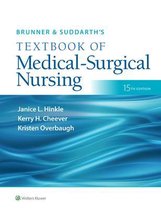
Brunner & Suddarth's Textbook of Medical-
Surgical Nursing
15th Edition
Author(s)Janice Hinkle, Kerry H. Cheever,
Kristen Overbaugh
TEST BANK
Reference — Ch. 1 — Nursing
Question Stem: A registered nurse is redesigning patient
education materials to emphasize patient-centered care. Which
action best demonstrates the nursing concept of patient-
centered nursing?
A. Creating brochures describing hospital policies and
procedures.
,B. Asking patients about their values, preferences, and goals
before planning care.
C. Providing the same standardized discharge instructions to all
patients.
D. Delegating teaching to nursing assistive personnel to save
time.
Correct Answer: B
Rationales:
• Correct (B): Asking about values and preferences
personalizes care, aligning interventions with the patient’s
priorities — a core of patient-centered nursing.
• A: Brochures describe policies but do not elicit individual
patient values or guide individualized care.
• C: Standardized instructions ignore individual learning
needs and preferences, reducing effectiveness.
• D: Delegating teaching might be efficient but can miss
individualized assessment and critical teaching by the RN.
Teaching Point: Elicit patient values and goals before
planning individualized nursing care.
Citation: Hinkle, J., Cheever, K., & Overbaugh, K. (2022).
Brunner & Suddarth’s Textbook of Medical-Surgical Nursing
(15th Ed.). Ch. 1 — Nursing.
2
,Reference — Ch. 1 — The Patient: Consumer of Nursing and
Health Care
Question Stem: A nurse is developing a care plan for an older
adult who is reluctant to accept home health services despite
clear needs. Which approach best applies consumer-driven care
principles to increase acceptance?
A. Insisting on home health because it is the safest option.
B. Explaining the legal consequences of refusing services.
C. Exploring the patient’s concerns and co-developing a flexible
service plan.
D. Offering only a pamphlet and scheduling no follow-up.
Correct Answer: C
Rationales:
• Correct (C): Exploring concerns and co-developing a plan
respects patient autonomy and consumer choice,
increasing buy-in.
• A: Insistence undermines autonomy and may reduce
cooperation.
• B: Threatening legal consequences is coercive and
inappropriate for routine care decisions.
• D: Passive information-only approaches fail to engage
patients and may not address barriers.
Teaching Point: Engage patients in shared planning to
honor autonomy and increase service uptake.
Citation: Hinkle, J., Cheever, K., & Overbaugh, K. (2022).
Brunner & Suddarth’s Textbook of Medical-Surgical Nursing
, (15th Ed.). Ch. 1 — The Patient: Consumer of Nursing and
Health Care.
3
Reference — Ch. 1 — The Patient’s Basic Needs: Maslow
Hierarchy of Needs
Question Stem: A post-op patient with stable vitals refuses to
ambulate due to fear of falling. Using Maslow’s hierarchy, which
nursing intervention should be prioritized to support mobility?
A. Teach advanced exercises for future strength gains.
B. Administer a sedative to reduce anxiety.
C. Address safety concerns by providing supervised ambulation
and gait belt assistance.
D. Tell the patient they must ambulate or discharge will be
delayed.
Correct Answer: C
Rationales:
• Correct (C): Addressing safety meets the patient’s security
needs (Maslow’s safety level), enabling higher-level
functioning like rehabilitation.
• A: Teaching advanced exercises ignores immediate
safety/anxiety barriers and is less effective until security is
addressed.
Surgical Nursing
15th Edition
Author(s)Janice Hinkle, Kerry H. Cheever,
Kristen Overbaugh
TEST BANK
Reference — Ch. 1 — Nursing
Question Stem: A registered nurse is redesigning patient
education materials to emphasize patient-centered care. Which
action best demonstrates the nursing concept of patient-
centered nursing?
A. Creating brochures describing hospital policies and
procedures.
,B. Asking patients about their values, preferences, and goals
before planning care.
C. Providing the same standardized discharge instructions to all
patients.
D. Delegating teaching to nursing assistive personnel to save
time.
Correct Answer: B
Rationales:
• Correct (B): Asking about values and preferences
personalizes care, aligning interventions with the patient’s
priorities — a core of patient-centered nursing.
• A: Brochures describe policies but do not elicit individual
patient values or guide individualized care.
• C: Standardized instructions ignore individual learning
needs and preferences, reducing effectiveness.
• D: Delegating teaching might be efficient but can miss
individualized assessment and critical teaching by the RN.
Teaching Point: Elicit patient values and goals before
planning individualized nursing care.
Citation: Hinkle, J., Cheever, K., & Overbaugh, K. (2022).
Brunner & Suddarth’s Textbook of Medical-Surgical Nursing
(15th Ed.). Ch. 1 — Nursing.
2
,Reference — Ch. 1 — The Patient: Consumer of Nursing and
Health Care
Question Stem: A nurse is developing a care plan for an older
adult who is reluctant to accept home health services despite
clear needs. Which approach best applies consumer-driven care
principles to increase acceptance?
A. Insisting on home health because it is the safest option.
B. Explaining the legal consequences of refusing services.
C. Exploring the patient’s concerns and co-developing a flexible
service plan.
D. Offering only a pamphlet and scheduling no follow-up.
Correct Answer: C
Rationales:
• Correct (C): Exploring concerns and co-developing a plan
respects patient autonomy and consumer choice,
increasing buy-in.
• A: Insistence undermines autonomy and may reduce
cooperation.
• B: Threatening legal consequences is coercive and
inappropriate for routine care decisions.
• D: Passive information-only approaches fail to engage
patients and may not address barriers.
Teaching Point: Engage patients in shared planning to
honor autonomy and increase service uptake.
Citation: Hinkle, J., Cheever, K., & Overbaugh, K. (2022).
Brunner & Suddarth’s Textbook of Medical-Surgical Nursing
, (15th Ed.). Ch. 1 — The Patient: Consumer of Nursing and
Health Care.
3
Reference — Ch. 1 — The Patient’s Basic Needs: Maslow
Hierarchy of Needs
Question Stem: A post-op patient with stable vitals refuses to
ambulate due to fear of falling. Using Maslow’s hierarchy, which
nursing intervention should be prioritized to support mobility?
A. Teach advanced exercises for future strength gains.
B. Administer a sedative to reduce anxiety.
C. Address safety concerns by providing supervised ambulation
and gait belt assistance.
D. Tell the patient they must ambulate or discharge will be
delayed.
Correct Answer: C
Rationales:
• Correct (C): Addressing safety meets the patient’s security
needs (Maslow’s safety level), enabling higher-level
functioning like rehabilitation.
• A: Teaching advanced exercises ignores immediate
safety/anxiety barriers and is less effective until security is
addressed.