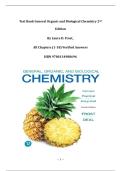
Test Bank General Organic and Biological Chemistry 2nd
Edition
By Laura D. Frost_
All Chapters (1-18) Verified Answers
ISBN 9780134988696
~1~
, TABLE OF CONTENTS
Chapter 1: Matter and Measurement ............................................................................................. 17
Chapter 2: Atoms and the Periodic Table ..................................................................................... 31
Chapter 3: Ionic and Covalent Compounds ................................................................................. 44
Chapter 4: Energy and Matter ............................................................................................................ 71
Chapter 5: Chemical Reactions .......................................................................................................... 83
Chapter 6: Gases ........................................................................................................................................ 98
Chapter 7: Solutions .............................................................................................................................. 107
Chapter 8: Acids and Bases ................................................................................................................ 121
Chapter 9: Nuclear Chemistry .......................................................................................................... 134
Chapter 10: Introduction to Organic Molecules and Functional Groups ................... 147
Chapter 11: Unsaturated Hydrocarbons..................................................................................... 176
Chapter 12: Organic Compounds That Contain Oxygen, Halogen, or Sulfur ............ 194
Chapter 13: Carboxylic Acids, Esters, Amines and Amides ............................................... 231
Chapter 14: Carbohydrates ................................................................................................................ 260
Chapter 15: Lipids .................................................................................................................................. 277
Chapter 16: Amino Acids, Proteins, and Enzymes ................................................................. 295
Chapter 17: Nucleic Acids and Protein Synthesis .................................................................. 311
Chapter 18: Energy and Metabolism ............................................................................................ 326
~2~
,Body Fluids
1. Which of the following functions is not performed by the aqueous medium of
body fluids in the human body?
A) Providing nutrients
B) Carrying away waste
C) Bringing chemicals that allow cells to communicate with each other
D) Removing nutrients
CORRECT ANSWER: D Difficulty: Easy
2. Which of the following is not true about the distribution of water in an average
human body?
A) Almost one-third of the water in the body is intracellular fluid
B) Almost one-third of the water in the body is extracellular fluid
C) Almost two-thirds of the water in the body is intracellular fluid
D) Almost one-quarter of the water in the body is interstitial fluid
CORRECT ANSWER: A Difficulty: Easy
3. Which of the following statements about body fluids is true?
A) Extracellular fluid is the most abundant body fluid
B) Interstitial fluid and plasma are the most common intracellular fluids
C) Intracellular fluid is the most abundant body fluid
D) Intracellular fluid makes up 46% of body fluid
CORRECT ANSWER: C Difficulty: Medium
4. Which one of the following is not an example of extracellular fluids that occur in
lesser amounts in the human body?
A) Urine B) Plasma C) Cerebrospinal fluid D) Lymph
CORRECT ANSWER: B Difficulty: Easy
5. What is the approximate percentage of minor components in body fluids?
A) 10% B) 8% C) 1% D) 3%
CORRECT ANSWER: D Difficulty: Medium
~3~
, 6. Which of the following is not expected to dissolve in the aqueous medium that
constitutes body fluids?
A) Large molecules that have many polar functional groups
B) Small nonpolar molecules
C) Electrolytes
D) Small polar molecules with intermolecular hydrogen bonding capabilities
CORRECT ANSWER: B Difficulty: Easy
7. What is the main difference in composition between interstitial fluid and plasma?
A) Plasma contains less protein C) Plasma contains more chloride (Cl–)
B) Plasma contains less sodium (Na+) D) Plasma contains more protein
CORRECT ANSWER: D Difficulty: Medium
8. What is the main difference in composition between intracellular and
extracellular fluids?
A) Intracellular fluid contains a high concentration of Na+ and Cl–
B) Extracellular fluid contains a high concentration of K+ and HPO 2–
C) Protein is most abundant in intracellular fluid
D) Protein is most abundant in extracellular fluid
CORRECT ANSWER: C Difficulty: Medium
9. Which of the following is true about body fluids?
A) Each type contains the same number of dissolved particles per unit volume
B) Each type contains different number of dissolved particles per unit volume
C) The principal cation in extracellular fluid is potassium (K+)
D) Protein is most abundant in extracellular fluid
CORRECT ANSWER: A Difficulty: Easy
10. Besides K+ and HPO 2–, what ions are present in a much higher concentration in
intracellular fluids compared to plasma and interstitial fluids?
A) Na+ and Cl–
B) Mg2+ and SO 2–
C) Mg2+ and HCO –
D) Na+ and SO 2–
~4~
Edition
By Laura D. Frost_
All Chapters (1-18) Verified Answers
ISBN 9780134988696
~1~
, TABLE OF CONTENTS
Chapter 1: Matter and Measurement ............................................................................................. 17
Chapter 2: Atoms and the Periodic Table ..................................................................................... 31
Chapter 3: Ionic and Covalent Compounds ................................................................................. 44
Chapter 4: Energy and Matter ............................................................................................................ 71
Chapter 5: Chemical Reactions .......................................................................................................... 83
Chapter 6: Gases ........................................................................................................................................ 98
Chapter 7: Solutions .............................................................................................................................. 107
Chapter 8: Acids and Bases ................................................................................................................ 121
Chapter 9: Nuclear Chemistry .......................................................................................................... 134
Chapter 10: Introduction to Organic Molecules and Functional Groups ................... 147
Chapter 11: Unsaturated Hydrocarbons..................................................................................... 176
Chapter 12: Organic Compounds That Contain Oxygen, Halogen, or Sulfur ............ 194
Chapter 13: Carboxylic Acids, Esters, Amines and Amides ............................................... 231
Chapter 14: Carbohydrates ................................................................................................................ 260
Chapter 15: Lipids .................................................................................................................................. 277
Chapter 16: Amino Acids, Proteins, and Enzymes ................................................................. 295
Chapter 17: Nucleic Acids and Protein Synthesis .................................................................. 311
Chapter 18: Energy and Metabolism ............................................................................................ 326
~2~
,Body Fluids
1. Which of the following functions is not performed by the aqueous medium of
body fluids in the human body?
A) Providing nutrients
B) Carrying away waste
C) Bringing chemicals that allow cells to communicate with each other
D) Removing nutrients
CORRECT ANSWER: D Difficulty: Easy
2. Which of the following is not true about the distribution of water in an average
human body?
A) Almost one-third of the water in the body is intracellular fluid
B) Almost one-third of the water in the body is extracellular fluid
C) Almost two-thirds of the water in the body is intracellular fluid
D) Almost one-quarter of the water in the body is interstitial fluid
CORRECT ANSWER: A Difficulty: Easy
3. Which of the following statements about body fluids is true?
A) Extracellular fluid is the most abundant body fluid
B) Interstitial fluid and plasma are the most common intracellular fluids
C) Intracellular fluid is the most abundant body fluid
D) Intracellular fluid makes up 46% of body fluid
CORRECT ANSWER: C Difficulty: Medium
4. Which one of the following is not an example of extracellular fluids that occur in
lesser amounts in the human body?
A) Urine B) Plasma C) Cerebrospinal fluid D) Lymph
CORRECT ANSWER: B Difficulty: Easy
5. What is the approximate percentage of minor components in body fluids?
A) 10% B) 8% C) 1% D) 3%
CORRECT ANSWER: D Difficulty: Medium
~3~
, 6. Which of the following is not expected to dissolve in the aqueous medium that
constitutes body fluids?
A) Large molecules that have many polar functional groups
B) Small nonpolar molecules
C) Electrolytes
D) Small polar molecules with intermolecular hydrogen bonding capabilities
CORRECT ANSWER: B Difficulty: Easy
7. What is the main difference in composition between interstitial fluid and plasma?
A) Plasma contains less protein C) Plasma contains more chloride (Cl–)
B) Plasma contains less sodium (Na+) D) Plasma contains more protein
CORRECT ANSWER: D Difficulty: Medium
8. What is the main difference in composition between intracellular and
extracellular fluids?
A) Intracellular fluid contains a high concentration of Na+ and Cl–
B) Extracellular fluid contains a high concentration of K+ and HPO 2–
C) Protein is most abundant in intracellular fluid
D) Protein is most abundant in extracellular fluid
CORRECT ANSWER: C Difficulty: Medium
9. Which of the following is true about body fluids?
A) Each type contains the same number of dissolved particles per unit volume
B) Each type contains different number of dissolved particles per unit volume
C) The principal cation in extracellular fluid is potassium (K+)
D) Protein is most abundant in extracellular fluid
CORRECT ANSWER: A Difficulty: Easy
10. Besides K+ and HPO 2–, what ions are present in a much higher concentration in
intracellular fluids compared to plasma and interstitial fluids?
A) Na+ and Cl–
B) Mg2+ and SO 2–
C) Mg2+ and HCO –
D) Na+ and SO 2–
~4~